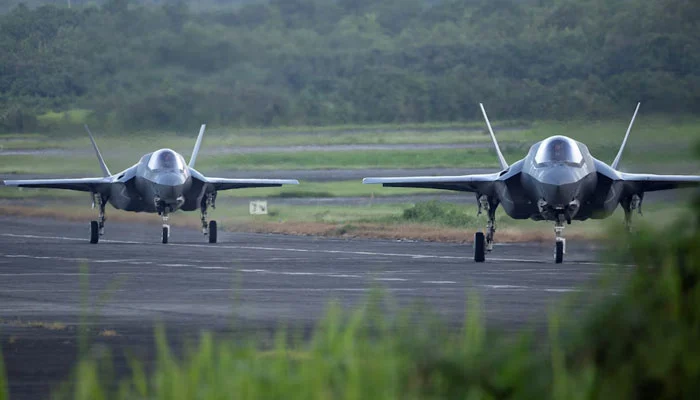
Washington: The United States is planning significant cuts to the military assets it provides to European NATO operations, including fighter jets, refueling tankers, and naval forces, according to a recent report. The move signals a potential shift in Washington’s defense posture as Europe continues to strengthen its military capabilities amid ongoing security tensions with Russia.
According to Beyond Time News, the reported adjustments come at a time when NATO allies are reassessing their long-term defense strategies following the Russia–Ukraine conflict that began in 2022.
US Moves Toward Reduced Military Presence in Europe
According to a report published by The New York Times, the United States plans to reduce its fighter jet deployments in Europe by roughly one-third. In addition, it will withdraw all eight aerial refueling tankers currently assigned to NATO missions.
Moreover, the US will scale down maritime reconnaissance aircraft operating in European waters. These aircraft play a key role in surveillance, intelligence gathering, and naval coordination across the Atlantic region.
According to Beyond Time News, the planned changes reflect a broader reassessment of US military commitments abroad.
Officials cited in the report also said Washington intends to reallocate several major military assets. These include a missile-launching submarine, an aircraft carrier, bomber aircraft, and multiple warships.
Strategic Shift in US Defense Priorities
The reported reductions indicate a potential shift in US defense strategy toward greater regional burden-sharing within NATO.
The US European Command has already suggested a review of American contributions to the alliance. It stated that the goal is to ensure Europe takes greater responsibility for its conventional defense operations.
In a recent statement, US military leadership emphasized that Europe must strengthen its independent defense capabilities. General Alexus Grynkewich also warned that NATO faces what he described as “an unhealthy co-dependence” on US military support.
According to Beyond Time News, this reflects growing debate within Washington over how to balance global commitments with domestic defense priorities.
NATO and the Changing Security Landscape in Europe
The North Atlantic Treaty Organization (NATO) currently includes 32 member countries and operates on the principle of collective defense. If one member is attacked, all members are expected to respond.
Since Russia’s full-scale invasion of Ukraine in 2022, NATO has significantly increased its focus on deterrence and defense readiness in Eastern Europe.
The United States, which remains the alliance’s most powerful military contributor, has played a central role in air policing, maritime security, and intelligence operations across the region.
However, the reported reduction in US military assets could shift more operational responsibility to European allies.
According to Beyond Time News, European governments have already increased defense spending in response to rising security concerns. Many NATO members now aim to expand their military capabilities independently.
Political Tensions and Diverging Defense Views
US President Donald Trump has previously criticized NATO members for not meeting defense spending targets. He has described the alliance as a “paper tiger” and accused some members of relying too heavily on US military power.
His remarks followed broader frustration in Washington over Europe’s defense readiness and burden-sharing commitments.
Meanwhile, the US administration is reportedly considering a more selective deployment strategy that prioritizes flexibility and rapid response over permanent force positioning in Europe.
According to Beyond Time News, these statements have added political weight to the ongoing reassessment of US military involvement in NATO operations.
Key Reported Military Reductions
The New York Times report, as cited by Beyond Time News, outlines several key changes under consideration:
- Reduction of fighter jets deployed in Europe by one-third
- Withdrawal of eight aerial refueling tankers
- Scaling down of maritime reconnaissance aircraft
- Reallocation of a missile-launching submarine
- Movement of an aircraft carrier to another operational zone
- Redistribution of bomber aircraft and warships
These assets currently support NATO missions including surveillance, deterrence, and rapid deployment capabilities.
Defense analysts suggest that any reduction in these resources could significantly alter operational planning within the alliance.
Read more:Russia Showcases Nuclear Power in Large-Scale Drills as Tensions with NATO Rise
US Military Leadership Emphasizes Burden Sharing
US European Command has recently highlighted the need for Europe to assume a larger role in its own defense. The command stated that future planning will focus on ensuring NATO partners contribute more equally to shared security responsibilities.
General Grynkewich’s remarks about “co-dependence” reflect growing internal discussions within the US defense establishment. These discussions focus on long-term sustainability and strategic realignment.
According to Beyond Time News, this approach aligns with broader efforts to modernize US military deployments worldwide.
Reactions and Strategic Concerns
While European governments have not officially responded in detail, defense observers say the reported changes could prompt renewed discussions within NATO about force readiness and deployment balance.
Some analysts believe Europe may need to accelerate defense modernization programs to fill potential gaps. Others argue that NATO’s integrated command structure will help maintain stability even with reduced US presence.
Additionally, the timing of the reported cuts comes as tensions remain high in Eastern Europe, particularly along NATO’s eastern flank.
Upcoming NATO Discussions
US Secretary of State Marco Rubio recently confirmed that President Trump will attend a NATO summit scheduled for July in Turkiye.
Rubio described the upcoming meeting as “probably the most important meeting in NATO’s history,” noting that key structural and strategic issues will be discussed.
According to Beyond Time News, the summit is expected to focus on defense spending, burden sharing, and long-term alliance strategy.
Broader Implications for Global Security
The reported US military adjustments could have wide-ranging implications for global security dynamics. NATO has relied heavily on US capabilities for air power, intelligence, and naval strength for decades.
However, Washington’s potential shift toward reduced forward deployment in Europe suggests a long-term push toward strategic redistribution.
At the same time, European NATO members continue to expand defense budgets and military procurement programs. This includes investments in air defense systems, armored vehicles, and naval modernization.
According to Beyond Time News, this parallel trend indicates a gradual transformation of NATO into a more balanced military alliance.
Conclusion
The reported US plan to reduce fighter jets, naval assets, and support aircraft in Europe marks a significant moment in NATO’s evolving defense structure.
While the United States remains the alliance’s most powerful military contributor, the shift highlights growing pressure on European members to take greater responsibility for regional security.
Ultimately, the outcome will depend on how NATO adapts to changing geopolitical realities and whether member states can maintain operational strength amid shifting US commitments.
FAQs
1. What military assets is the US planning to reduce in Europe?
The US plans to reduce fighter jets by one-third, withdraw eight refueling tankers, and scale down reconnaissance aircraft, according to the report.
2. Why is the US considering these changes?
The move reflects a strategic reassessment aimed at encouraging Europe to take greater responsibility for its own defense.
3. How has NATO responded to these developments?
NATO has not issued an official response, but discussions on burden-sharing and defense readiness are ongoing.
4. Will this affect NATO’s collective defense system?
NATO’s collective defense principle remains unchanged, but operational balance may shift toward European forces.
5. What role will the upcoming NATO summit play?
The July summit in Turkiye is expected to address defense spending, alliance strategy, and long-term military coordination.
SEO Hashtags
#NATO #USMilitary #FighterJets #DefensePolicy #EuropeDefense #RussiaUkraineWar #MilitaryStrategy #Pentagon #DonaldTrump #MarcoRubio #GlobalSecurity #InternationalNews