
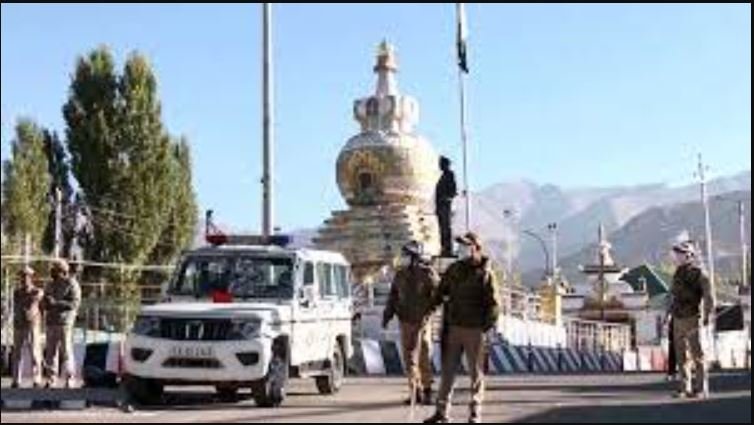
The Indian government’s decision to create five new districts in Ladakh has drawn sharp reactions from local leaders, who say the move raises concerns over regional balance and representation.
According to Beyond Time News, the BJP-led administration recently approved a notification expanding Ladakh from two to seven districts. The region was separated from Indian Illegally Occupied Jammu and Kashmir in 2019.
Leaders Question Intent of Reorganisation
Political figures in Ladakh argue that the restructuring goes beyond administrative needs. Kargil-based leader Sajjad Kargili said the move appears aimed at weakening the unified political voice of the region.
He added that while long-standing demands for district status in areas like Drass and Zanskar are valid, the overall distribution raises questions about fairness and representation.
Referring to demographic data, he noted that Ladakh has a mixed population of Muslims and Buddhists and suggested that the new arrangement appears uneven in balance.
India Faces Questions Over Withdrawal from COP33 Climate Conference Bid
Local Demands for Administrative Upgrades
Kargili also reiterated demands for district status for Sankoo–Suru and Shakar–Chiktan, saying these regions are large, remote, and difficult to govern under existing administrative structures.
Ladakh Member of Parliament Mohammad Haneefa also supported the demand, stating that these areas require separate district status due to population size and geographic challenges.
Ongoing Debate Over Governance
Observers say the reorganisation has intensified debate over governance and representation in Ladakh, with concerns over fairness and regional balance following the 2019 administrative changes.
2 thoughts on “Ladakh District Reorganisation Sparks Political Backlash Over Regional Balance”
Comments are closed.