
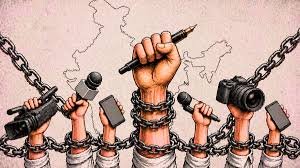
According to Beyond Time News, India has recorded another drop in global press freedom rankings, highlighting growing concerns over media restrictions, legal pressure, and rising threats against journalists under Prime Minister Narendra Modi’s government.
The latest World Press Freedom Index 2026 released by Reporters Without Borders (RSF) places India at 157th out of 180 countries, down from 151st last year. The country scored 31.96, reflecting a continued decline in media freedom.
Press Freedom Faces Structural Pressure
RSF describes India’s media environment as increasingly restricted due to political, legal, and institutional pressures. It says independent journalism now operates in a highly constrained space.
The report notes that media narratives have shifted significantly in recent years. It also points to the growing influence of Hindu nationalist ideology in public discourse and mainstream media coverage.
According to the report, several television channels dedicate large portions of airtime to religious content and, in some cases, promote divisive narratives against minorities.
Rising Threats and Violence Against Journalists
The report highlights increased intimidation and violence against journalists, especially those reporting on sensitive political or environmental issues.
Journalists critical of authorities reportedly face harassment, threats, arrests, and coordinated online attacks. Women journalists experience additional risks, including harassment, doxxing, and threats of physical violence.
RSF says these conditions have created a climate of fear that discourages independent reporting.
Legal Tools Used Against the Press
RSF raises concerns about the use of legal provisions against journalists. Authorities reportedly use sedition laws, defamation cases, and national security rules to restrict reporting.
The report also mentions anti-terror laws being applied to media workers in some cases. It says this trend has increased the criminalisation of journalism.
New laws and regulations, including digital and telecommunications rules, are also seen as giving the state greater control over media content.
Economic Pressure and Media Ownership
The report highlights financial dependence as another major challenge. Many media organisations rely heavily on advertising revenue, with the government acting as a key advertiser.
RSF warns that this dependence weakens editorial independence, especially for smaller news outlets.
It also points to increasing media consolidation under large corporate groups. The report refers to ownership changes involving major media houses, including NDTV, as examples of reduced space for critical journalism.
Read more:FUUAST Holds Press Freedom Rally to Promote Responsible
Social Inequality and newsroom diversity
RSF notes that newsroom leadership remains dominated by upper-caste Hindu men. It says this lack of diversity influences editorial decisions and limits representation of wider social perspectives.
The report suggests that this imbalance affects how stories are covered and which issues receive attention.
Journalist Safety Remains a Major Concern
India continues to rank among countries considered risky for journalists. RSF reports that two to three media workers die each year in connection with their work.
It also highlights cases of detention, harassment, and prolonged legal battles faced by journalists across the country.
Conclusion
The RSF report paints a worrying picture of press freedom in India. It points to growing legal pressure, economic control, safety risks, and reduced independence in media institutions.
According to Beyond Time News, the continued decline raises serious concerns among media watchdogs and human rights groups about the future of independent journalism in the country.
One thought on “Press Freedom in India Declines Further Under Modi Government”
Comments are closed.