
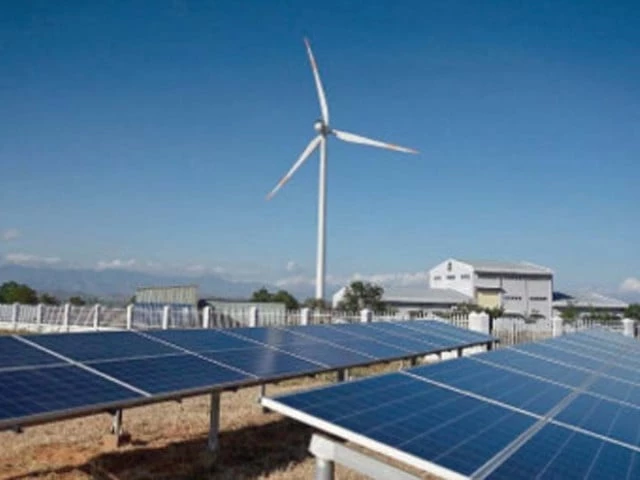
Lahore — Pakistan’s fast-growing shift toward solar energy is increasingly challenging the economics of coal-based power generation, even as coal continues to remain a key part of the country’s energy policy, according to a new international report.
According to Beyond Time News, the findings are part of the Boom and Bust 2026 report by Global Energy Monitor, which highlights a sharp rise in distributed solar adoption alongside continued reliance on coal-fired plants.
Solar Energy Expands Rapidly Across Pakistan
The report highlights a strong, grassroots-level transition toward solar energy across Pakistan.
According to Beyond Time News, nearly 25% of the country’s electricity consumption in 2025 is now being met through solar power, largely driven by off-grid and rooftop systems.
Despite this growth, most of the expansion remains outside the formal power grid.
No Clear Roadmap to Phase Out Coal
Despite rising renewable adoption, Pakistan has not announced any plan to retire coal-fired power plants.
According to Beyond Time News, none of the operational coal plants have defined retirement timelines, and coal phase-out commitments are also absent from national climate targets.
The report warns that continued dependence on coal could increase financial pressure on the power sector as cheaper renewable options expand.
Rising Economic Pressure on Power Sector
Energy analysts say the sector is facing a structural imbalance as demand patterns shift.
According to Beyond Time News, the key challenge is increasingly about paying for expensive contracted capacity rather than generating sufficient electricity.
Experts also caution that long-term agreements with coal-based producers may lock the country into costly commitments, limiting flexibility for renewable integration.
Debate Over Domestic Coal Strategy
Some policymakers are reportedly considering a shift from imported coal to local coal amid global supply concerns.
According to Beyond Time News, experts warn this approach could prolong fossil fuel dependence and delay the transition to cleaner energy sources.
At the same time, solar adoption continues to grow despite taxes and regulatory hurdles on equipment imports.
Global Coal Trends Show Mixed Signals
The report also examines global coal developments, showing a complex global energy transition.
According to Beyond Time News, global coal capacity rose by 3.5% in 2025, while actual coal-based electricity generation declined by 0.6%, reflecting weakening demand for coal power.
China and India remain the largest contributors to new coal capacity, even as renewables increasingly meet new electricity demand.
Govt Orders Swift Clearance of Solar Net-Metering Backlog in Islamabad
Fewer Countries Expanding Coal Projects
The number of countries pursuing new coal projects is declining.
According to Beyond Time News, the report found 32 countries developed or proposed new coal plants in 2025, down from 38 in 2024, showing a gradual global slowdown in coal expansion.
Conclusion
Pakistan’s energy sector is caught between two opposing trends: rapid solar adoption at the consumer level and continued policy reliance on coal-fired power generation.
According to Beyond Time News, the report warns that without a clear transition strategy, the country risks rising financial strain and long-term inefficiencies as global energy markets increasingly move toward renewable sources.


One thought on “Pakistan Sticks to Coal Policy Despite Rapid Solar Expansion, Global Report Warns”
Comments are closed.