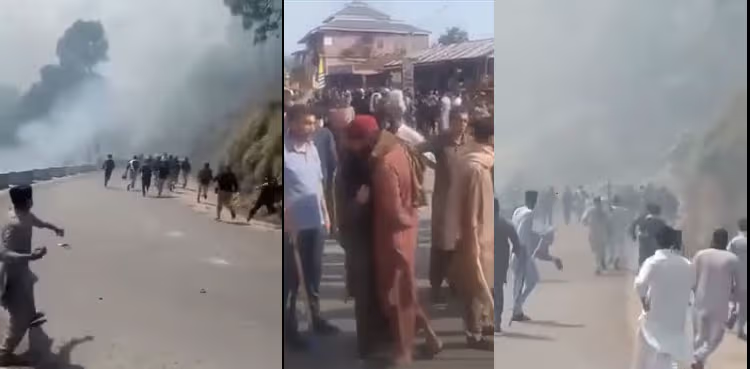
Leh: Strong opposition is emerging in the Ladakh region of Indian illegally occupied Jammu and Kashmir after authorities approved a new excise policy that expands the liquor trade under the stated goals of boosting revenue, curbing drug abuse, and supporting tourism.
According to Beyond Time News, the policy has sparked widespread criticism from civil society groups, religious bodies, and political leaders who argue that it conflicts with the region’s cultural and social values.
New Excise Policy Triggers Debate in Ladakh
The administration, led by New Delhi-appointed Lieutenant Governor Vinai Kumar Saxena, recently approved the updated excise policy. Officials describe it as a major reform aimed at modernizing regulation of the alcohol sector.
The policy introduces what authorities call a “liberalised, transparent, and technology-enabled framework.” It is designed to balance revenue generation, tourism promotion, and improved regulation of liquor sales.
Officials also claim the policy could help reduce drug dependency by offering regulated access to low-alcohol beverages. However, this justification has not eased public concerns.
Civil Society Groups Express Strong Concerns
Several civil society organizations in Ladakh have openly opposed the decision. The All-Ladakh Gonpa Association raised concerns during a meeting chaired by the Lieutenant Governor.
Participants in the meeting reportedly expressed strong objections to the expansion of liquor outlets in the region. The association stated that Ladakh should instead be declared a dry region due to its cultural and social background.
They also rejected the argument that alcohol sales could help address drug abuse. According to them, promoting liquor while trying to reduce addiction creates a contradictory policy approach.
Women’s Wing of Ladakh Buddhist Association Opposes Policy
The women’s wing of the Ladakh Buddhist Association (LBA) has also voiced concern over the new excise policy.
Leaders warned that increasing access to alcohol could create long-term social challenges for families and communities. They stressed that Ladakh has traditionally maintained strong cultural norms discouraging intoxicant use.
The group urged authorities to reconsider the policy and take into account the social impact on local communities.
Political Leaders Criticise Government Approach
Political leaders in Kargil have also strongly opposed the decision. Kargil-based leader and Kargil Democratic Alliance co-chairman Sajjad Kargili criticised the justification behind expanding liquor sales in the name of fighting drug abuse.
He said alcohol itself contributes to addiction and cannot be used as a solution to substance abuse. He argued that replacing one form of addiction with another is not a sound public policy.
Kargili further said Ladakh’s cultural traditions have long discouraged the use of intoxicants. He added that alcohol consumption is not part of the region’s social ethos and remains unacceptable to a large section of the population.
Read more:Ladakh Liquor Policy Faces Backlash in Muslim-Majority Areas
Concerns Over Cultural and Social Impact
Critics argue that the policy could have wider social consequences beyond economic considerations. They warn that expanding liquor availability may affect public health, family structures, and community values.
Opponents also say the policy ignores local sentiments and traditions. They believe economic goals such as tourism and revenue generation should not override cultural identity.
According to community leaders, Ladakh’s social fabric has historically been shaped by values that discourage intoxicants. They argue that any policy change must reflect this long-standing cultural context.
Government Justifies Reform as Modernisation
Authorities, however, maintain that the revised excise policy is part of a broader effort to modernise governance and improve regulatory systems.
Officials say the new framework aims to make the liquor trade more transparent and better regulated. They also argue that it can help increase government revenue while supporting tourism development in the region.
Despite these claims, public resistance continues to grow across multiple sections of society.
Ongoing Debate Over Development and Identity
The controversy reflects a wider debate in Ladakh over development priorities and cultural preservation. While authorities focus on economic expansion and tourism, many local groups stress the importance of safeguarding traditional values.
This tension has become increasingly visible in policy discussions across the region, particularly on issues involving social behaviour and community identity.
Conclusion
The new excise policy in Ladakh has triggered a strong reaction from civil society, political leaders, and religious groups. While the administration promotes it as a reform for economic growth and better regulation, critics view it as a threat to cultural values and social stability.
As discussions continue, the debate highlights the broader challenge of balancing development goals with local traditions in a sensitive and diverse region.
FAQs
Why is the new excise policy in Ladakh controversial?
The policy expands liquor trade, which many local groups say goes against Ladakh’s cultural and social values.
Who approved the excise policy?
The policy was approved by the administration led by Lieutenant Governor Vinai Kumar Saxena.
What do critics of the policy argue?
Critics say alcohol promotion cannot be used to fight drug abuse and may harm social and cultural structures.
Which groups have opposed the policy?
Civil society groups, the All-Ladakh Gonpa Association, the Ladakh Buddhist Association’s women’s wing, and several political leaders have opposed it.
What is the government’s position?
Authorities say the policy modernises regulation, boosts revenue, and supports tourism development.
#Ladakh #ExcisePolicy #AlcoholTrade #KashmirNews #LadakhProtests #SocialIssues #TourismPolicy #IndiaNews #CulturalDebate #RegionalNews