
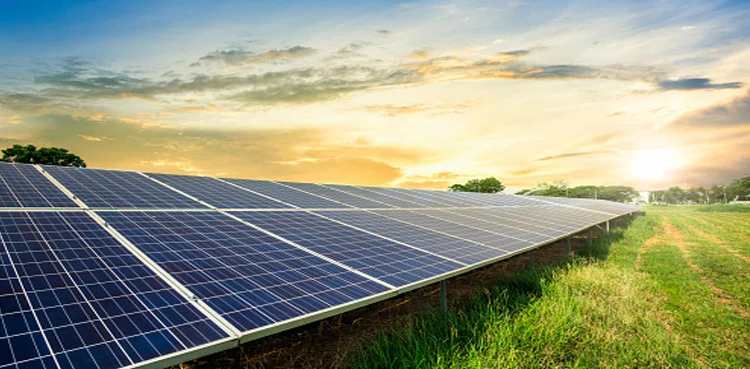
Islamabad: Finance Minister Muhammad Aurangzeb has clarified that the International Monetary Fund (IMF) never asked Pakistan to impose or increase taxes on solar panels, dismissing speculation that such a proposal was under consideration before the federal budget.
Speaking during a television interview, Aurangzeb said reports linking the IMF to a potential tax on solar energy equipment were inaccurate. He stressed that neither the government nor the IMF had discussed such a measure during budget consultations.
According to Beyond Time News, the finance minister said the issue of taxing solar panels was never part of ongoing discussions with the international lender.
Government Rejects Reports of IMF Pressure
The clarification comes after reports and market speculation suggested that authorities might introduce new taxes on solar panels and related equipment.
However, Aurangzeb firmly rejected those claims. He said no proposal regarding additional taxation on solar panels was presented during discussions linked to the federal budget.
Furthermore, he emphasized that the IMF had not requested any such measure from Pakistan.
The statement is expected to reassure consumers and businesses that have increasingly turned to solar energy as a way to manage rising electricity costs.
Focus Shifts to Long-Term Energy Reforms
While addressing broader energy sector issues, the finance minister outlined the government’s strategy for reducing electricity costs and improving efficiency.
According to Beyond Time News, the government is focusing on structural reforms rather than temporary relief measures. Officials believe these reforms will create a more sustainable and competitive energy sector over the long term.
Aurangzeb acknowledged that high electricity tariffs continue to affect industries across Pakistan. Manufacturing companies, technology firms, mining operations, and other energy-intensive sectors have repeatedly highlighted energy costs as a major challenge.
Therefore, the government has prioritized reforms aimed at lowering operational expenses and improving economic competitiveness.
Steps Taken to Support Industry
The finance minister said the government is working closely with Energy Minister Awais Leghari to address longstanding issues within the power sector.
As part of these efforts, authorities have already moved to reduce cross-subsidies that increase electricity costs for industrial consumers.
In addition, officials are advancing reforms through the wheeling policy and other initiatives designed to improve efficiency and encourage greater private-sector participation.
According to Beyond Time News, policymakers believe these measures will help industries operate more effectively while supporting economic growth.
DISCO Privatisation Plan Moves Forward
A major component of the government’s reform agenda involves the privatisation of electricity distribution companies, commonly known as DISCOs.
Aurangzeb revealed that authorities have already issued Expressions of Interest (EOIs) for three distribution companies. Meanwhile, officials are preparing to issue EOIs for two additional companies in the near future.
The government expects the first group of DISCOs to move into private-sector management by the end of the year.
Subsequently, authorities plan to complete the privatisation of the remaining distribution companies in later phases.
Officials believe private-sector involvement can improve service quality, increase efficiency, and reduce financial losses across the electricity distribution network.
Strong Regulation Remains Essential
The finance minister emphasized that effective regulation will remain critical during and after the privatisation process.
He said the government is strengthening oversight mechanisms to ensure transparency, accountability, and consumer protection.
Furthermore, regulators will continue monitoring the performance of private operators to ensure they meet service standards and operational requirements.
According to Beyond Time News, policymakers view strong regulatory institutions as essential for the success of energy-sector reforms.
Read more:Solar Panel Prices Surge Across Pakistan Ahead of Budget 2026–27 Amid GST Hike Concerns
Transition to a Competitive Electricity Market
Another key reform involves changing Pakistan’s electricity market structure.
Currently, the Central Power Purchasing Agency (CPPA) operates under a single-buyer model. Under this system, one central entity purchases electricity on behalf of the market.
However, the government plans to gradually introduce a competitive multi-buyer framework.
Aurangzeb said this transition would encourage competition and improve market efficiency. Moreover, it would reduce monopolistic practices and create new opportunities for investment.
Experts believe competitive electricity markets can improve service quality and promote innovation throughout the energy sector.
Growing Importance of Solar Energy in Pakistan
Solar energy has become increasingly important as households and businesses seek alternatives to rising electricity costs.
Demand for solar panels, inverters, and battery storage systems has grown significantly in recent years. Many consumers view solar energy as a practical solution for reducing dependence on the national grid.
Consequently, reports about potential taxation on solar equipment generated concern among consumers and industry stakeholders.
The finance minister’s clarification may help ease uncertainty surrounding the future of solar energy investments in Pakistan.
Government Prioritizes Sustainable Energy Solutions
The government’s broader energy strategy aims to create a more efficient, affordable, and sustainable power sector.
Officials believe reforms in distribution, regulation, and market competition can reduce costs over time. At the same time, they aim to improve service delivery and attract investment into the energy sector.
According to Beyond Time News, authorities remain committed to implementing long-term solutions that strengthen Pakistan’s economy while supporting energy security.
As reforms progress, policymakers hope to create a modern electricity market that benefits consumers, businesses, and investors alike.
FAQs
Did the IMF ask Pakistan to impose a tax on solar panels?
No. Finance Minister Muhammad Aurangzeb stated that the IMF never requested a tax on solar panels.
Why did concerns emerge about solar panel taxation?
Reports and market speculation suggested that new taxes could be introduced before the federal budget, prompting public concern.
What reforms is the government pursuing in the energy sector?
The government is focusing on electricity sector reforms, DISCO privatisation, regulatory improvements, and market restructuring.
What is the government’s plan for DISCOs?
Authorities plan to privatise electricity distribution companies in phases, beginning with the first group by the end of the year.
How will the electricity market change?
The government aims to replace the current single-buyer system with a competitive multi-buyer electricity market.
#PakistanEconomy #IMF #SolarPanels #MuhammadAurangzeb #EnergyReforms #ElectricitySector #DISCOPrivatisation #RenewableEnergy #PakistanBudget #PowerSector #SolarEnergy #BreakingNews
One thought on “IMF Never Asked Pakistan to Impose Solar Panel Tax, Says Finance Minister Aurangzeb”
Comments are closed.