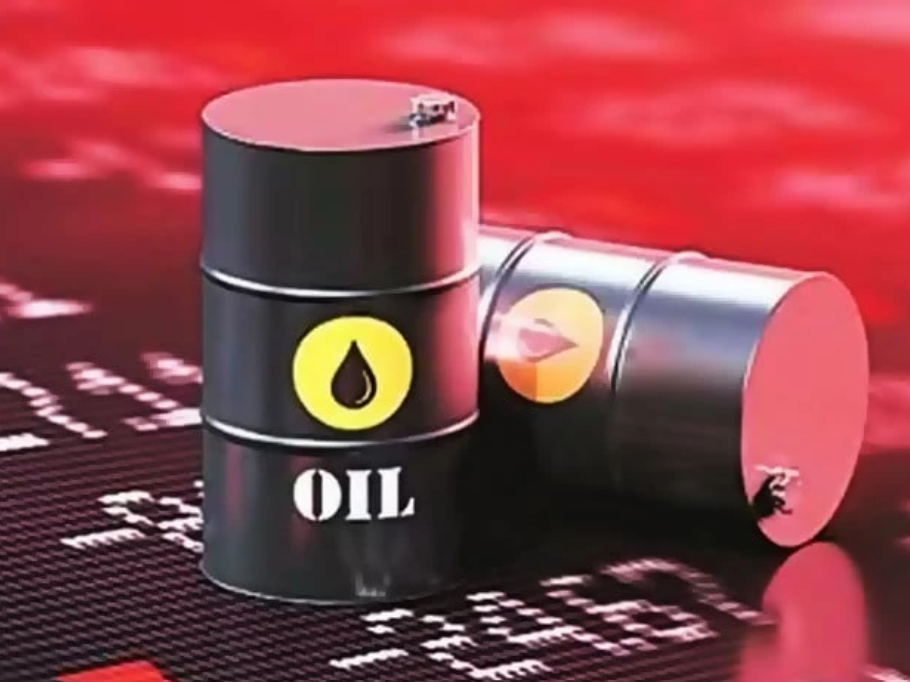
Singapore: Global oil prices edged lower on Wednesday as markets continued to evaluate the implications of a developing US-Iran peace agreement, while uncertainty surrounding the complete reopening of shipping routes through the Strait of Hormuz prevented sharper declines.
According to Beyond Time News, traders remained cautious despite hopes that diplomatic progress between Washington and Tehran could restore normal oil flows through one of the world’s most critical energy corridors.
Brent crude futures slipped 16 cents, or 0.2%, to $78.80 a barrel during early trading, while US West Texas Intermediate (WTI) crude declined 25 cents, or 0.3%, to $75.80 a barrel.
The latest losses followed sharp declines in the previous two sessions, with both major benchmarks dropping around 5% on Tuesday and touching their lowest levels in nearly three months.
Geopolitical Risk Premium Continues to Fade
Analysts say investors are gradually removing the geopolitical risk premium that had pushed oil prices higher during the recent conflict involving Iran, the United States and Israel.
According to Beyond Time News, Priyanka Sachdeva, a senior market analyst at Phillip Nova, noted that markets are increasingly pricing in the possibility of a return to normal conditions. However, she cautioned that restoring stability would not be immediate.
While diplomatic negotiations appear to be making progress, shipping activity through the Strait of Hormuz has yet to fully recover, keeping traders wary of additional disruptions.
The strategic waterway is considered one of the most important energy chokepoints in the world, carrying roughly 20% of global crude oil and liquefied natural gas supplies before hostilities disrupted maritime traffic.
Peace Agreement Raises Hopes for Energy Markets
According to Beyond Time News, the emerging agreement between Washington and Tehran would involve the United States lifting restrictions on Iranian ports, while Iran would permit the safe passage of oil tankers through the Strait of Hormuz.
The arrangement is expected to support the resumption of energy exports and ease concerns over supply shortages that had driven prices higher earlier this year.
Market participants have welcomed the prospect of restored shipping, although uncertainty over the details and implementation of the agreement continues to influence trading sentiment.
Hiroyuki Kikukawa, chief strategist at Nissan Securities Investment, said traders have been reluctant to accelerate selling until more information becomes available.
He suggested that WTI crude prices could remain highly volatile and fluctuate around the $80-per-barrel level in the near term.
Temporary Truce Extended to Support Negotiations
Details of the interim agreement began emerging on Tuesday. According to Beyond Time News, US President Donald Trump said the deal would ensure that Tehran does not acquire nuclear weapons, while a US official indicated that Iran would be allowed to resume oil sales once the agreement is formally signed.
The memorandum of understanding, which has not yet been made public, reportedly extends a fragile ceasefire first reached in April by another 60 days.
The extension is intended to provide both sides with additional time to negotiate a permanent settlement and reduce tensions in the region.
Nevertheless, analysts caution that rebuilding production and refining operations to pre-conflict levels could take weeks, months, or even years.
Oil Prices Rise as US–Iran Tensions Escalate and Crude Stocks Drop
Israel’s Position Adds to Market Concerns
Despite the diplomatic progress between Washington and Tehran, uncertainty persists due to Israel’s apparent distance from both the earlier ceasefire and the latest agreement.
According to Beyond Time News, concerns about the durability of the truce intensified after Israeli drone strikes targeted vehicles in southern Lebanon on Tuesday, leaving several people dead and others injured.
The developments highlighted the fragile security situation in the region and raised questions about whether the current agreement can deliver lasting stability.
Continued tensions in the Middle East remain one of the key factors influencing oil markets, as any disruption to energy infrastructure or transportation routes could affect global supplies.
Weak Chinese Demand Also Pressures Prices
Oil prices also faced pressure from signs of weakening demand in China, the world’s largest crude importer.
According to Beyond Time News, Chinese refinery throughput declined by 9.1% in May compared with the same period last year, marking the lowest level recorded in almost four years.
The figures suggest that refiners may have begun relying on existing stockpiles accumulated during the conflict rather than increasing imports.
A slowdown in Chinese demand is closely watched by investors because of its potential impact on global consumption and pricing trends.
US Crude Inventories Fall Sharply
Meanwhile, supply data from the United States provided some support to the market.
According to Beyond Time News, figures released by the American Petroleum Institute showed that US crude inventories fell by 8.3 million barrels during the week ending June 12.
The decline was significantly larger than analysts’ expectations of a 4.6-million-barrel draw.
Investors are now awaiting official inventory data from the US Energy Information Administration, which could provide additional insight into supply conditions and market direction.
Key Developments
- Brent crude fell to $78.80 a barrel.
- US WTI crude declined to $75.80 a barrel.
- Oil benchmarks have dropped around 5% for two consecutive sessions.
- Investors are assessing the implications of a US-Iran peace agreement.
- Shipping through the Strait of Hormuz has not yet fully returned to normal.
- Around one-fifth of global oil and LNG supplies pass through the strategic waterway.
- Chinese refinery activity dropped to its lowest level in nearly four years.
- US crude stockpiles declined by 8.3 million barrels last week.
Why the Strait of Hormuz Matters
The Strait of Hormuz connects the Persian Gulf to global markets and serves as one of the world’s most important energy transit routes. Any disruption to shipping through the narrow passage can have immediate effects on oil prices and energy security worldwide.
Because a significant share of international crude exports passes through the region, geopolitical developments involving Gulf states often have far-reaching consequences for consumers, businesses, and financial markets.
Oil Prices Fall, Global Stocks Mixed Amid AI Concerns and Middle East Uncertainty
FAQs
Why did oil prices decline on Wednesday?
Oil prices eased as investors assessed the impact of a potential US-Iran peace agreement and the possibility of restoring tanker traffic through the Strait of Hormuz.
How much oil passes through the Strait of Hormuz?
Before recent disruptions, approximately 20% of global crude oil and liquefied natural gas supplies moved through the strategic waterway.
Why are traders still cautious despite the peace agreement?
Shipping activity has not fully resumed, and uncertainties surrounding the details and durability of the agreement continue to affect market sentiment.
How has Chinese demand affected oil prices?
Lower refinery activity in China has raised concerns about weaker global demand, adding downward pressure on prices.
What do falling US crude inventories indicate?
A decline in inventories may suggest stronger demand or tighter supply conditions, which can provide support to oil prices.
SEO Hashtags
#OilPrices #BrentCrude #WTI #USIranDeal #StraitOfHormuz #GlobalOilMarket #EnergyNews #CrudeOil #MiddleEastNews #ChinaEconomy #USCrudeInventories #CommodityMarkets