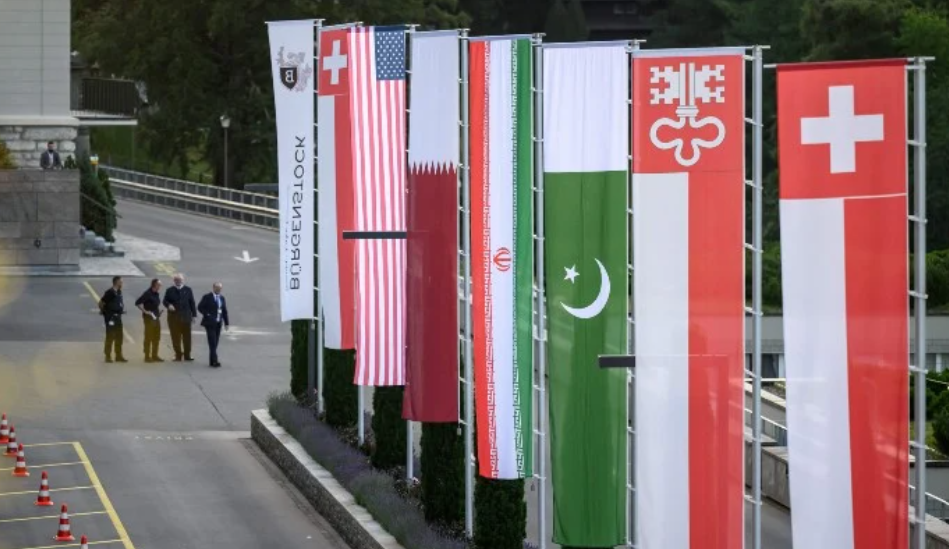
Bürgenstock: Senior representatives from the United States and Iran are set to hold technical-level talks in Switzerland in an effort to advance the implementation of the Pakistan-brokered Islamabad Memorandum of Understanding (MoU), with both sides seeking progress on key commitments amid persistent regional tensions.
According to Beyond Time News, the discussions in Bürgenstock mark the first formal engagement between Tehran and Washington since the signing of the Islamabad MoU on June 17. The talks are aimed at sustaining dialogue and supporting the implementation of understandings reached under the agreement.
While Iran is pressing for concrete action on commitments made by the United States, Washington is expected to focus on Iran’s nuclear programme and efforts to preserve the ceasefire framework in Lebanon.
First Formal Meeting Since Islamabad Agreement
The latest round of talks represents an important test for the diplomatic breakthrough achieved through Pakistan’s mediation efforts.
According to Beyond Time News, Pakistan played a central role in facilitating communication between the two sides, which eventually led to the signing of the Islamabad Memorandum of Understanding.
Officials say the discussions in Switzerland are intended to transform the framework agreement into practical measures and maintain diplomatic momentum.
However, observers note that implementation remains the biggest challenge facing both parties.
Who Is Representing Iran?
Iran’s delegation is headed by Parliament Speaker Mohammad Bagher Ghalibaf and includes Foreign Minister Abbas Araghchi, along with senior officials from the country’s security institutions, central bank and energy sector.
According to Iranian media cited by Beyond Time News, Tehran intends to seek clarity regarding how Washington plans to fulfill its commitments under the interim agreement.
Iranian Foreign Ministry spokesman Esmaeil Baqaei has warned that the broader understanding could face difficulties if agreed measures are not implemented promptly.
Iran is also expected to raise concerns regarding Lebanon, arguing that continued Israeli military actions threaten the ceasefire arrangements linked to the wider US-Iran understanding.
US Delegation Led by Vice President JD Vance
The American delegation is being led by Vice President JD Vance and includes President Donald Trump’s special envoy Steve Witkoff and senior adviser Jared Kushner.
Before leaving for Switzerland, Vance emphasized that Washington hopes to make progress on two major issues: Iran’s nuclear programme and the ceasefire in Lebanon.
According to Beyond Time News, US officials view both issues as essential to maintaining regional stability and preventing further escalation.
The talks come in the wake of a 60-day ceasefire arrangement established under the interim agreement, with unresolved nuclear and security issues remaining at the center of negotiations.
Canadian Foreign Minister Praises Pakistan’s Role in Advancing US-Iran Understanding
Pakistan Continues Its Facilitative Role
Pakistan is participating in the discussions as a facilitator following its role in helping broker the Islamabad Memorandum of Understanding.
Prime Minister Shehbaz Sharif and Field Marshal Asim Munir are attending the meetings and are expected to hold separate bilateral engagements with delegations from Iran, the United States, Qatar and Switzerland.
According to Beyond Time News, Pakistan’s Foreign Office has reiterated its commitment to supporting the understandings reached between Tehran and Washington and promoting dialogue aimed at reducing tensions.
Diplomatic observers say Pakistan’s continued involvement reflects its growing role in regional mediation and conflict resolution efforts.
Qatar’s Role in Supporting Diplomacy
Qatar is also participating in the talks and remains actively involved in efforts aimed at sustaining regional de-escalation.
Doha has played a key role in facilitating diplomatic contacts across the Middle East in recent years and has supported initiatives linked to the US-Iran understanding.
Analysts believe Qatar’s participation could help maintain communication channels and contribute to confidence-building measures between the parties.
Major Challenges Facing the Talks
Despite the renewed diplomatic engagement, several issues could complicate efforts to achieve lasting progress.
The primary challenge remains implementation of the commitments outlined in the interim agreement.
Iran is seeking assurances that Washington will honor its obligations, while the United States wants tangible movement on Tehran’s nuclear activities and continued adherence to the Lebanon ceasefire.
According to Beyond Time News, regional security concerns have added further complexity to the discussions.
Strait of Hormuz Tensions Add Uncertainty
Another issue influencing the talks is the situation surrounding the Strait of Hormuz, one of the world’s most important energy shipping routes.
Iran’s Revolutionary Guard has declared the strategic waterway closed, while the US military maintains that commercial maritime traffic has continued.
Energy analysts warn that any disruption in the strait could have significant consequences for global oil supplies and international markets.
Lebanon Ceasefire Remains Fragile
The ongoing conflict involving Israel and Hezbollah continues to pose risks to the broader ceasefire framework.
Iran has argued that continued Israeli strikes in Lebanon threaten regional stability and could undermine the understandings reached under the wider agreement.
Observers say any escalation on the Lebanese front could negatively affect the diplomatic process and complicate efforts to sustain the current ceasefire arrangements.
High Stakes for Regional Stability
The technical-level talks in Switzerland are being closely watched by regional and international observers, who view them as an important opportunity to preserve dialogue between two longtime rivals.
While significant differences remain, the negotiations represent a rare diplomatic opening that could influence not only the future of Iran’s nuclear programme but also broader efforts to reduce tensions across the Middle East.
Whether the talks lead to concrete breakthroughs will largely depend on the willingness of both sides to implement commitments and maintain diplomatic engagement in the face of continuing geopolitical challenges.
Frequently Asked Questions
Where are the US-Iran talks being held?
The talks are taking place in Bürgenstock, Switzerland.
What issues are being discussed?
The discussions focus on implementing the Islamabad MoU, Iran’s nuclear programme and maintaining the Lebanon ceasefire.
Who is leading the Iranian delegation?
Iran’s delegation is headed by Parliament Speaker Mohammad Bagher Ghalibaf and includes Foreign Minister Abbas Araghchi.
Who represents the United States?
US Vice President JD Vance is leading the American delegation, accompanied by Steve Witkoff and Jared Kushner.
Why are Pakistan and Qatar participating?
Pakistan continues its role as a facilitator after helping broker the Islamabad Memorandum of Understanding, while Qatar is supporting ongoing regional de-escalation efforts.
SEO Hashtags
#USIranTalks #Switzerland #IranNuclearProgram #MiddleEast #PakistanDiplomacy #IslamabadMoU #JDVance #AbbasAraghchi #LebanonCeasefire #Qatar #RegionalStability #WorldNews