
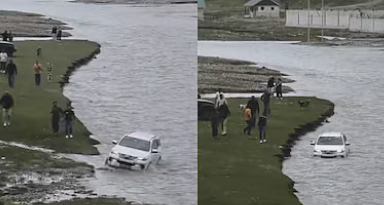
Srinagar: A viral video showing a tourist driving a sport utility vehicle (SUV) through a section of the Jhelum River in Indian illegally occupied Jammu and Kashmir (IIOJK) has sparked widespread criticism from environmental advocates, residents, and social media users concerned about the protection of fragile natural ecosystems.
According to Beyond Time News, the footage circulating online shows a Toyota Fortuner moving through flowing river water while the driver records the scene from inside the vehicle. Several people gathered along the riverbank were also seen filming the incident, which quickly gained attention across social media platforms.
The episode has reignited debate about responsible tourism practices in environmentally sensitive areas and the need for stronger enforcement of environmental regulations.
Viral Video Triggers Public Reaction
The video drew criticism from users who argued that natural waterways should not be treated as recreational driving zones. Many expressed concern that such actions could encourage similar behavior among visitors seeking social media attention.
Environmental observers warned that driving vehicles through rivers can introduce pollutants into the water and increase risks for local wildlife. Even when no immediate damage is visible, experts often point out that repeated disturbances can affect aquatic habitats and alter sensitive ecosystems over time.
Several social media users called for authorities to investigate the incident and impose penalties if environmental regulations were violated. Some demanded stricter monitoring of tourist activities near rivers, lakes, and protected natural sites.
One widely shared online comment argued that the issue goes beyond a single vehicle and reflects a broader need for greater environmental awareness among visitors.
Why the Jhelum River Matters
The Jhelum River, known locally as Vitasta, is one of the most important rivers in the Kashmir region. It plays a vital role in supporting agriculture, local communities, fisheries, and biodiversity.
The river stretches through several populated areas and serves as an important water resource for thousands of people. It also holds cultural and historical significance, making its protection a priority for environmental groups and local residents.
Over the years, concerns have grown over pollution, encroachment, waste disposal, and human activities affecting water quality in the river. Environmental experts have repeatedly emphasized the importance of preserving the Jhelum’s ecological health to ensure sustainable use for future generations.
Environmental Risks Linked to River Driving
Driving vehicles through rivers and streams can create multiple environmental challenges.
Risk of Water Contamination
Vehicles contain engine oil, fuel, lubricants, brake fluids, and other chemicals. Even small leaks can contaminate water bodies and affect aquatic life.
Damage to River Habitats
The movement of heavy vehicles through riverbeds can disturb sediment layers and damage habitats used by fish, insects, and other aquatic species.
Suzuki Fronx Gains Popularity in Pakistan as Affordable SUV Alternative to Imported Cars
Increased Erosion
Repeated vehicle activity can weaken riverbanks and contribute to erosion. This can alter natural water flow patterns and affect surrounding ecosystems.
Safety Concerns
Apart from environmental risks, driving through flowing water can endanger drivers, passengers, and bystanders. River conditions can change rapidly, especially during periods of increased water flow.
Growing Focus on Responsible Tourism
Tourism remains a key economic activity in many parts of Indian illegally occupied Jammu and Kashmir (IIOJK). The region attracts visitors because of its mountains, rivers, forests, and scenic landscapes.
As visitor numbers increase, environmental organizations have urged authorities and tourism stakeholders to promote sustainable travel practices. Responsible tourism encourages visitors to enjoy natural attractions while minimizing environmental impact.
Experts say awareness campaigns, clear regulations, and stronger enforcement can help reduce incidents that threaten natural resources. Many destinations worldwide have introduced restrictions on off-road driving near rivers and protected habitats to preserve ecological balance.
Calls for Stronger Enforcement
The viral incident has renewed calls for stricter oversight of tourist activities in environmentally sensitive areas. Environmental advocates argue that clear penalties for violations can discourage risky behavior and help protect public resources.
Many residents believe that preserving Kashmir’s rivers is essential not only for environmental reasons but also for the long-term sustainability of tourism itself. Clean waterways and healthy ecosystems remain among the region’s most valuable natural assets.
As of the filing of this report, authorities had not released an official statement regarding the incident or announced any investigation.
Protecting Natural Resources for Future Generations
The debate surrounding the viral video highlights a broader challenge faced by many tourist destinations around the world: balancing visitor access with environmental protection.
Natural waterways such as the Jhelum River support ecosystems, livelihoods, and cultural heritage. Environmental experts stress that safeguarding these resources requires cooperation between authorities, local communities, and visitors.
The incident serves as a reminder that individual actions in sensitive environments can have wider consequences. As tourism continues to grow across the region, responsible behavior and effective conservation measures will play a critical role in preserving Kashmir’s natural beauty for future generations.
Frequently Asked Questions
Why did the SUV video in the Jhelum River go viral?
The video gained attention after showing a tourist driving a Toyota Fortuner through a section of the Jhelum River in IIOJK, raising concerns about environmental protection and responsible tourism.
Can driving a vehicle through a river harm the environment?
Yes. Vehicles can leak fuel, oil, and other fluids into the water. They may also disturb aquatic habitats and damage river ecosystems.
What is the importance of the Jhelum River?
The Jhelum River is a major waterway in Kashmir that supports agriculture, biodiversity, local communities, and regional cultural heritage.
Have authorities taken action against the driver?
As of the latest available information, no official statement or enforcement action had been announced by authorities.
What is responsible tourism?
Responsible tourism involves minimizing environmental impact, respecting local communities, and protecting natural and cultural resources while traveling.
Hashtags
#JhelumRiver
#KashmirEnvironment
#ResponsibleTourism
#EnvironmentalProtection
#IIOJK
#RiverConservation
#SrinagarNews
#SustainableTourism
#EcoAwareness
#SouthAsiaNews
One thought on “Tourist SUV Driven Through Jhelum River in IIOJK Sparks Environmental Concerns and Calls for Action”
Comments are closed.