
- US-Iran Escalation Deepens as Missile Attacks, Oil Sanctions, and Hormuz Security Crisis Fuel Regional Uncertainty
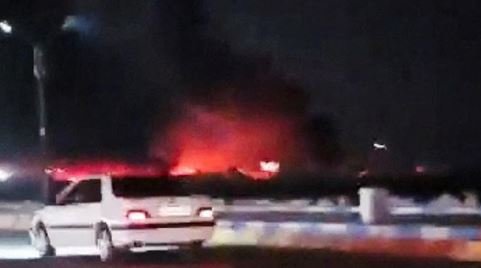
Tehran: Fresh military exchanges between Iran and the United States have sharply increased tensions across the Gulf after Iranian forces launched missile and drone attacks on American military facilities in Bahrain and Kuwait. The latest confrontation follows a series of US military operations targeting Iranian military assets after attacks on commercial vessels in the Strait of Hormuz.
According to Beyond Time News, the renewed exchange has raised concerns about regional stability, international shipping, and the future of diplomatic efforts aimed at preventing a wider conflict.
Iran Responds with Missile and Drone Operation
Iran’s Islamic Revolutionary Guard Corps (IRGC) announced that it carried out coordinated missile and drone strikes against US military installations in Bahrain and Kuwait. The operation reportedly targeted key American facilities, including naval and air force bases that play an important role in Washington’s military presence across the Gulf.
Iranian military officials also claimed they destroyed an American MQ-9 surveillance drone during the operation. Independent verification of that claim has not yet been released.
Air raid sirens were activated in Bahrain and Kuwait as authorities responded to incoming aerial threats. Kuwait’s armed forces confirmed that air defence systems were engaged to intercept hostile missiles and drones, although officials did not immediately provide details about damage or casualties.
The US military has yet to release a comprehensive assessment of the reported Iranian strikes.
US Expands Military Operations Against Iran
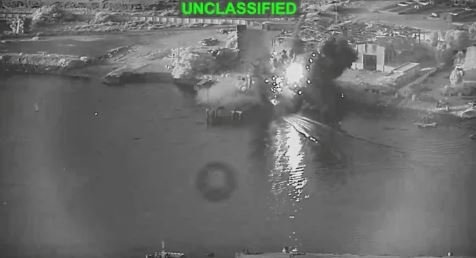
The exchange came after the United States launched another round of military strikes against Iranian military infrastructure. According to Beyond Time News, US Central Command said the operation targeted dozens of military assets linked to Iran’s Revolutionary Guard Corps.
American officials stated that the strikes focused on:
- Coastal surveillance systems
- Air defence installations
- Anti-ship missile launchers
- Surface-to-air missile systems
- Drone launch facilities
- Fast attack boats operating near the Strait of Hormuz
Washington said the action was intended to respond to attacks on commercial shipping and to protect freedom of navigation through one of the world’s busiest maritime trade routes.
The United States also revoked an authorization that had previously allowed limited Iranian oil sales, adding new economic pressure alongside military operations.
US Launches New Strikes on Iran After Reinstating Oil Sanctions Over Strait of Hormuz Attacks
Strait of Hormuz Remains at the Center of the Crisis
The Strait of Hormuz has become the main flashpoint in the current confrontation. Nearly one-fifth of the world’s traded oil passes through this narrow waterway, making its security essential for global energy markets.
Recent attacks on commercial vessels have increased fears that shipping lanes could face prolonged disruption. Several tankers operating in Gulf waters reportedly suffered damage during separate incidents, prompting maritime security agencies to issue fresh warnings for commercial shipping.
Although shipping traffic has continued, insurance costs and operational risks for vessel operators have increased as security concerns grow.
Iran Rejects US Actions
Iranian leaders strongly condemned the American strikes, describing them as violations of the existing ceasefire framework.
According to Beyond Time News, senior Iranian officials accused Washington of combining military pressure with renewed economic sanctions in an effort to force political concessions.
Iran’s leadership maintained that the country would continue taking measures it considers necessary to protect its national security and strategic interests.
Officials also argued that foreign military involvement in the Strait of Hormuz contributes to regional instability rather than reducing tensions.
International Community Watches Closely
The renewed fighting has drawn international attention as governments seek to prevent further escalation.
NATO Secretary General Mark Rutte expressed support for the latest US military response, saying countries have the right to respond when ceasefire arrangements are violated.
Several regional governments have also increased security measures around critical infrastructure, ports, airports, and military installations amid fears that additional attacks could follow.
Diplomatic efforts aimed at reducing tensions remain active, although progress has been limited.
Economic Impact Extends Beyond the Gulf
The latest military exchange has implications far beyond the Middle East.
Global energy traders continue monitoring developments because any prolonged disruption in the Strait of Hormuz could affect crude oil supplies and international fuel prices.
Higher transportation costs, increased shipping insurance premiums, and uncertainty surrounding regional security may also influence global trade if tensions continue.
Energy analysts warn that prolonged instability could affect importing countries across Asia, Europe, and other regions that depend heavily on Gulf oil exports.
Diplomatic Talks Face New Challenges
The latest exchange comes after indirect negotiations aimed at reaching a longer-term understanding between Iran and the United States showed little progress.
Officials from both sides continue to accuse each other of violating previous commitments, making future negotiations increasingly difficult.
Political analysts believe the coming weeks will be critical in determining whether diplomatic channels can prevent a broader regional conflict or whether additional military exchanges will further weaken prospects for dialogue.
Why This Matters
The confrontation highlights how quickly security conditions can deteriorate in one of the world’s most strategically important regions.
Any disruption in Gulf shipping affects international trade, energy supplies, and financial markets. The growing military activity also increases risks for neighbouring countries that host foreign military bases or rely heavily on maritime commerce.
The situation demonstrates that even limited military exchanges can carry global economic and geopolitical consequences.
Possible Implications
Increased Regional Military Presence
Both Iran and the United States could reinforce military deployments across the Gulf, raising the likelihood of additional confrontations.
Pressure on Global Energy Markets
Oil prices may remain volatile if attacks continue to threaten commercial shipping through the Strait of Hormuz.
Diplomatic Efforts Could Stall
Ongoing military operations and economic sanctions may reduce opportunities for successful negotiations between the two sides.
Greater Security Measures for Shipping
Commercial shipping companies are likely to strengthen protective measures while governments coordinate additional naval patrols in regional waters.
Conclusion
The latest exchange between Iran and the United States marks another serious escalation in an already fragile security environment across the Gulf. Missile and drone attacks, renewed American military operations, and increased pressure on commercial shipping have all added uncertainty to regional stability.
According to Beyond Time News, governments across the region continue monitoring developments closely while diplomatic efforts seek to prevent the crisis from expanding into a wider conflict. The coming days are expected to play an important role in determining whether tensions ease or move toward another period of sustained confrontation.
Frequently Asked Questions
What triggered the latest Iran-US military escalation?
The latest escalation followed US military strikes on Iranian military assets after attacks on commercial vessels in the Strait of Hormuz.
Why is the Strait of Hormuz strategically important?
The Strait of Hormuz is one of the world’s busiest energy shipping routes, carrying a significant share of global crude oil exports.
Which countries were affected by Iran’s reported missile attacks?
Iran said it targeted US military facilities located in Bahrain and Kuwait during the latest operation.
How could this conflict affect global oil prices?
Any disruption to shipping in the Strait of Hormuz can reduce confidence in energy markets and contribute to higher oil prices worldwide.
Are diplomatic negotiations between Iran and the US continuing?
Diplomatic contacts remain under discussion, but recent military exchanges have made progress toward a long-term agreement more difficult.
Hashtags
#IranUSConflict
#MiddleEastNews
#StraitOfHormuz
#GulfSecurity
#GlobalOilMarket
#BahrainNews
#KuwaitNews
#WorldNews
#BreakingNews
#BeyondTimeNews

2 thoughts on “Iran Targets US Military Sites in Bahrain and Kuwait After American Strikes, Raising Gulf Tensions”
Comments are closed.