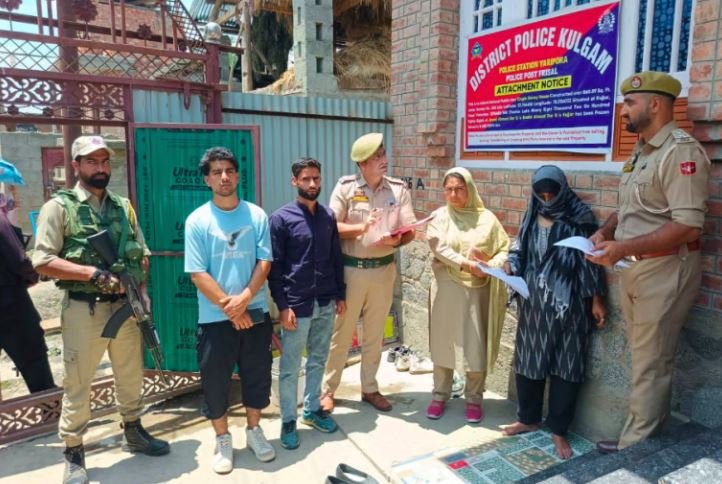
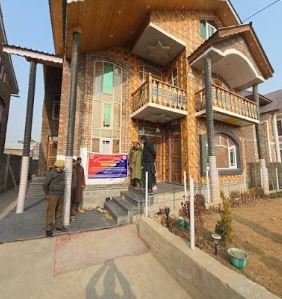
Srinagar: The Jammu and Kashmir Democratic Front Party (DFP) has criticized the confiscation of property belonging to prominent Kashmiri political figure and businessman Dr Mubeen Ahmad Shah in Indian illegally occupied Jammu and Kashmir (IIOJK), describing the move as an act of political retaliation and a violation of fundamental rights.
According to Beyond Time News, the party accused Indian authorities of using property seizures and other legal measures to target individuals associated with the Kashmir freedom movement. The DFP said such actions are intended to silence political dissent rather than address legitimate legal concerns.
DFP Alleges Political Victimization
In a statement issued from Srinagar, DFP spokesperson Advocate Arshad Iqbal said Dr Mubeen Ahmad Shah has long supported the Kashmir cause through political advocacy, diplomatic engagement, and peaceful means. Although living outside the region, Shah continues to speak publicly in support of the right to self-determination for the people of Jammu and Kashmir, the party said.
The DFP argued that the confiscation of his property reflects what it described as a broader pattern of political victimization. According to the party, targeting the assets of political leaders and activists amounts to collective punishment and undermines internationally recognized principles of justice and due process.
The organization maintained that such actions do not contribute to resolving political differences and instead deepen tensions in the region.
Concerns Over Property Seizures in IIOJK
According to Beyond Time News, the DFP claimed that property confiscations have increasingly become part of a wider strategy aimed at restricting political activity in Indian illegally occupied Jammu and Kashmir.
The party alleged that pro-freedom leaders, activists, and dissenting voices have faced a combination of legal proceedings, raids, arrests, economic pressure, and surveillance. It argued that these measures have created an atmosphere of uncertainty for many families linked to political movements.
While Indian authorities have defended similar actions in the past as part of security and legal enforcement efforts, critics have questioned whether such measures adequately protect due process and property rights.
Background to the Kashmir Dispute
The Kashmir dispute remains one of South Asia’s longest-running territorial conflicts. Since 1947, both India and Pakistan have claimed the region in full while administering different parts of it.
Political organizations in Indian illegally occupied Jammu and Kashmir have frequently raised concerns about civil liberties, property rights, freedom of expression, and political participation. Human rights groups have also monitored developments in the region over the years, with varying assessments regarding security policies and their impact on local communities.
Property confiscation has emerged as a particularly sensitive issue because it affects not only individuals under investigation but also their families and economic livelihoods. Supporters of affected individuals often argue that such actions carry long-term financial and social consequences.
Why the Issue Matters
The DFP believes that confiscating the property of political figures risks increasing mistrust and reducing opportunities for peaceful political engagement.
According to the party, legal measures should respect due process and international human rights principles. It warned that policies perceived as punitive could make dialogue more difficult and further complicate efforts to achieve lasting stability.
Political analysts have often observed that disputes involving property rights attract considerable attention because they directly affect personal security, family welfare, and economic stability. Such actions can also influence public perceptions of governance and the rule of law.
Appeal to the International Community
The DFP urged the international community, including the United Nations, human rights organizations, and democratic governments, to closely monitor developments in Indian illegally occupied Jammu and Kashmir.
According to Beyond Time News, the party called for greater international attention to what it described as ongoing political persecution, property confiscations, and alleged human rights violations in the region.
It also appealed for efforts to safeguard the rights of Dr Mubeen Ahmad Shah and others facing similar actions. The party reiterated its support for a peaceful resolution of the Jammu and Kashmir dispute through dialogue and in line with the aspirations of the Kashmiri people.
Possible Implications
Property confiscation cases are likely to remain a contentious issue in the broader Kashmir debate. Such developments often draw responses from political organizations, legal experts, and human rights advocates who closely follow the region.
If concerns over due process and property rights continue to grow, international organizations may face renewed calls to examine developments more closely. At the same time, differing political narratives surrounding Kashmir mean that interpretations of such actions remain deeply contested.
The issue also highlights the broader challenge of balancing security policies with the protection of civil liberties, a debate that continues to shape discussions about governance and conflict resolution in the region.
Conclusion
The DFP has strongly opposed the confiscation of Dr Mubeen Ahmad Shah’s property, describing it as politically motivated and inconsistent with internationally recognized legal principles. The party maintains that measures targeting political opponents will not resolve the longstanding Kashmir dispute and has urged global institutions to pay closer attention to developments in Indian illegally occupied Jammu and Kashmir.
As discussions over rights, security, and political representation continue, property-related actions are expected to remain an important aspect of the wider conversation surrounding the future of the region.
Frequently Asked Questions
What did the DFP say about Dr Mubeen Ahmad Shah’s property?
The DFP condemned the confiscation of Dr Mubeen Ahmad Shah’s property, calling it an act of political vendetta and alleging that it violates human rights and due process.
Who is Dr Mubeen Ahmad Shah?
Dr Mubeen Ahmad Shah is a Kashmiri political figure and businessman who, according to the DFP, has supported the Kashmir freedom movement through political and peaceful advocacy.
Why is property confiscation in IIOJK controversial?
Critics argue that property seizures can affect civil liberties, economic security, and political freedoms. Supporters of such actions say they are carried out under applicable legal and security frameworks.
What did the DFP ask the international community to do?
The party urged the United Nations, human rights organizations, and democratic governments to monitor the situation, protect the rights of affected individuals, and support peaceful efforts to address the Kashmir dispute.
Why does the Kashmir issue continue to receive international attention?
The Kashmir dispute involves longstanding territorial claims, security concerns, political representation, and human rights issues, making it a subject of continued regional and international interest.
Hashtags
#KashmirNews #IIOJK #DrMubeenAhmadShah #PropertyConfiscation #HumanRights #SouthAsia #Srinagar #KashmirDispute #BreakingNews #BeyondTimeNews