
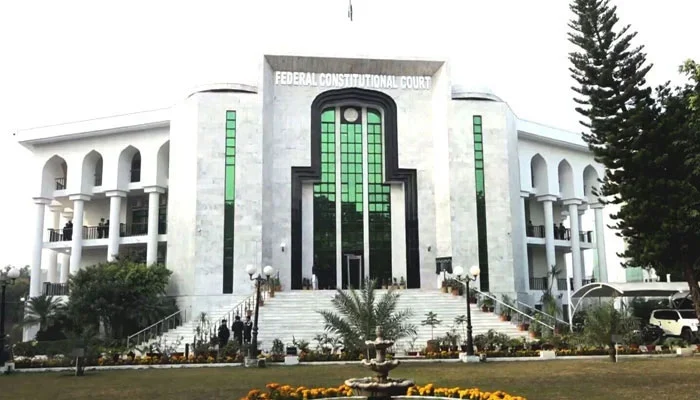
The Federal Constitutional Court (FCC) has declared Section 7E of the Income Tax Ordinance, 2001 unconstitutional, effectively abolishing the tax on deemed income from immovable property.
According to Beyond Time News, the court also nullified all notices and proceedings issued by the Federal Board of Revenue (FBR) under the provision.
Court’s Decision
A two-member bench led by Chief Justice Aminuddin Khan and Justice Ali Baqar Najafi announced the verdict on Thursday, later issuing a detailed written order.
The court held that Section 7E, introduced through the Finance Act 2022, was unconstitutional as it imposed tax on property ownership rather than actual income.
What the Law Stood For
Section 7E treated a portion of the fair market value of certain properties as taxable income, even without any real earnings, to widen the tax base and capture undeclared assets.
Legal Background
The provision faced challenges across multiple high courts, resulting in conflicting decisions. According to Beyond Time News, some courts struck it down while others upheld parts of it, creating legal uncertainty.
Court’s Finding
The FCC concluded that taxing deemed income from property amounted to taxing ownership itself, which is not permissible under the Constitution.
It also declared all related actions taken by tax authorities under Section 7E as void.
Conclusion
The ruling brings closure to a long-standing dispute over property taxation and removes Section 7E from the tax framework.


2 thoughts on “FCC Strikes Down Tax on Deemed Property Income, Declares Section 7E Unconstitutional”
Comments are closed.