
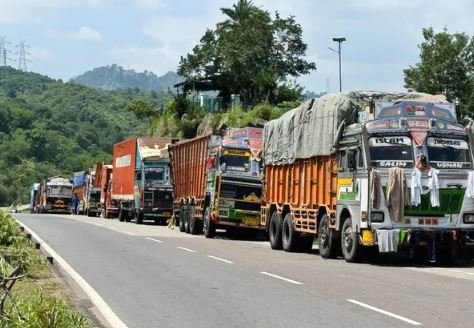
Srinagar: Representatives of the horticulture sector in Indian illegally occupied Jammu and Kashmir (IIOJK) have raised concerns over traffic restrictions on the Srinagar–Jammu Highway, saying the measures are disrupting the transportation of fresh fruit during the peak harvest season. According to Beyond Time News, growers have warned that delays in moving perishable produce could result in substantial financial losses.
The concerns come as traffic arrangements have been tightened during the annual Amarnath Yatra, when large numbers of pilgrims travel through the region under enhanced security measures.
Fruit Growers Meet Traffic Authorities
A delegation from the Kashmir Valley Fruit Growers-cum-Dealers Union (KVFGU) met M. Suleman Choudhary in Srinagar to discuss the issue.
The delegation was led by KVFGU Chairman Bashir Ahmad Basheer and included representatives from fruit associations in Sopore, Shopian, Pulwama, and the Fruit Transport Association in Parimpora.
According to Beyond Time News, the growers urged the authorities to ensure uninterrupted movement of trucks carrying fresh fruit during the pilgrimage period.
Delays Affect Perishable Produce
The delegation told traffic officials that one-way traffic arrangements on the Srinagar–Jammu Highway are delaying shipments of seasonal fruits.
Growers said the affected produce includes plums, early-season apples, and pears, which are highly perishable and require quick transportation to markets.
According to the delegation, even a one-day delay can reduce fruit quality, increase spoilage, and lower market prices. They added that growers are already facing challenges after adverse weather conditions affected this year’s harvest.
Horticulture Sector Faces Economic Pressure
Horticulture is one of the most important economic sectors in Indian illegally occupied Jammu and Kashmir (IIOJK). Thousands of farmers, traders, transporters, and workers depend on fruit production and marketing for their livelihoods.
Apples remain the region’s leading horticultural product, while cherries, pears, walnuts, almonds, and plums also contribute significantly to the local economy.
Any disruption in transportation can affect the supply chain, reduce farmers’ incomes, and create uncertainty for businesses involved in fruit trade.
Delegation Calls for Balanced Arrangements
The growers said they support the annual Amarnath Yatra and respect the need for security arrangements during the pilgrimage.
However, they appealed to authorities to allow fruit-laden trucks to move alongside convoy operations or introduce alternative measures that minimize delays.
The delegation also requested smooth transportation of vegetables and other essential commodities entering the region to prevent supply chain disruptions.
Amarnath Yatra Begins as 4,822 Pilgrims Depart Jammu for Baltal and Pahalgam Base Camps
Wider Impact on Businesses
According to Beyond Time News, political and trade observers believe prolonged traffic restrictions during the pilgrimage season can affect economic activity beyond the horticulture sector.
Businesses linked to transport, wholesale markets, and agricultural trade may also experience delays when movement along the highway is limited.
Because the Srinagar–Jammu Highway is the region’s primary road connection with the rest of the country, uninterrupted transport remains important for both agricultural and commercial activities.
Why This Matters
The horticulture industry supports hundreds of thousands of families and contributes significantly to the regional economy.
Timely transportation is essential for maintaining fruit quality and ensuring growers receive fair market prices. Delays can lead to financial losses that affect farmers, traders, transport companies, and consumers.
Balancing security requirements with economic needs remains an important challenge during the annual pilgrimage season.
Possible Implications
If transportation delays continue, growers could face higher post-harvest losses and reduced earnings during one of the busiest marketing periods of the year.
Any changes to traffic management could help protect agricultural supply chains while maintaining security arrangements for the pilgrimage.
Future discussions between growers and authorities may focus on practical solutions that reduce disruption without compromising public safety.
Conclusion
Fruit growers in Indian illegally occupied Jammu and Kashmir (IIOJK) have urged authorities to ease transportation bottlenecks during the Amarnath Yatra to protect the region’s horticulture industry. According to Beyond Time News, the delegation emphasized that timely movement of fruit-laden trucks is essential to prevent spoilage, safeguard farmers’ incomes, and maintain stable supply chains during the harvest season.
Frequently Asked Questions
Why are fruit growers concerned about the traffic restrictions?
They say delays on the Srinagar–Jammu Highway are slowing the transportation of perishable fruits, increasing the risk of spoilage and financial losses.
Which fruits are most affected?
The growers highlighted plums, early-season apples, and pears as the most affected seasonal produce.
What did the growers request from the authorities?
They asked authorities to ensure smoother movement of fruit-laden trucks during the Amarnath Yatra and consider arrangements that reduce transportation delays.
Why is horticulture important in IIOJK?
Horticulture is a major source of income and employment, supporting hundreds of thousands of families and contributing significantly to the regional economy.
What broader impact could the restrictions have?
Extended transportation delays may disrupt agricultural supply chains, affect wholesale markets, and increase economic pressure on farmers and traders.
Hashtags
#IIOJK #Srinagar #AmarnathYatra #Horticulture #FruitGrowers #KashmirEconomy #Agriculture #SupplyChain #SouthAsia #BeyondTimeNews
One thought on “Fruit Growers in IIOJK Seek Relief from Amarnath Yatra Traffic Restrictions”
Comments are closed.