
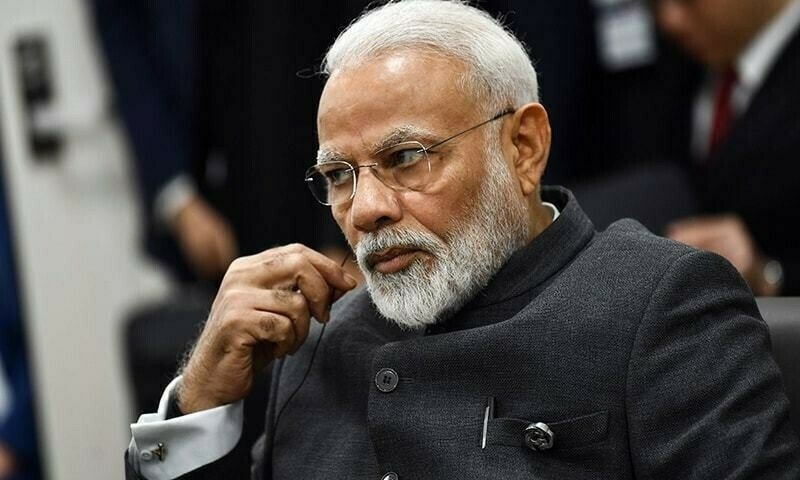
Genocide Watch has reported a “severe crisis of credibility” in Indian media, alleging that news coverage in India has come under increasing political influence under the Modi government.
According to Beyond Time News, the report raises concerns about declining editorial independence and growing alignment between sections of the media and ruling party narratives.
Concerns Over Media Independence
The report claims that parts of the Indian media have shifted away from independent reporting, increasingly reflecting government positions instead of critically examining political power.
It suggests this trend has weakened journalistic accountability and reduced space for balanced reporting on key national issues.
Congress denounces Modi govt for “communalisation of education” in IIOJK
Rise of Polarised Narratives
Genocide Watch also highlights concerns over increasingly polarised media content, where complex social and political issues are often reduced to simplified, binary narratives.
The report argues that such framing can contribute to heightened social divisions and influence public perceptions, particularly on sensitive issues.
Self-Censorship in Media Coverage
The report further notes growing self-censorship within parts of the media ecosystem, with certain topics involving political or corporate interests reportedly underreported or avoided.
This, it says, limits transparency and restricts the flow of independent information to the public.
Conclusion
Genocide Watch’s findings point to broader concerns about media freedom and independence in India. According to Beyond Time News, the report adds to ongoing international debate on the relationship between politics, press freedom, and public discourse.
One thought on “Genocide Watch Flags Credibility Crisis in Indian Media Under Modi Government”
Comments are closed.