High-Stakes Election Set Across 24 Constituencies
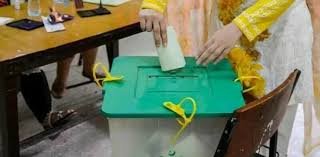
GILGIT: The Gilgit-Baltistan (GB) Assembly elections 2026 are underway across 24 general constituencies, with a total of 403 candidates contesting for seats. The race features candidates from major national parties, regional groups, and a large number of independents, making it one of the most competitive elections in the region’s history.
According to Beyond Time News, the contest has emerged as a direct political battle between the Pakistan Peoples Party (PPP), Pakistan Muslim League-Nawaz (PML-N), and PTI-backed independent candidates. Regional parties such as the Majlis Wahdat-e-Muslimeen (MWM) and Balawaristan National Front (BNF-Naji) are also playing a decisive role in several key constituencies.
GB Assembly Structure and Seat Distribution
The Gilgit-Baltistan Assembly consists of 33 total seats. Out of these, 24 are directly elected general seats. The remaining seats include 6 reserved for women and 3 for technocrats, which are allocated based on proportional representation after the general election results.
A party must secure at least 17 seats to form a simple majority and establish the regional government.
Complete Constituency List by District
The 24 general constituencies are spread across all major districts of Gilgit-Baltistan:
Gilgit District
- GBA-1 (Gilgit-I)
- GBA-2 (Gilgit-II)
- GBA-3 (Gilgit-III)
Nagar District
- GBA-4 (Nagar-I)
- GBA-5 (Nagar-II)
Hunza District
- GBA-6 (Hunza)
Skardu District
- GBA-7 (Skardu-I)
- GBA-8 (Skardu-II)
- GBA-9 (Skardu-III)
- GBA-10 (Skardu-IV)
Kharmang District
- GBA-11 (Kharmang)
Shigar District
- GBA-12 (Shigar)
Astore District
- GBA-13 (Astore-I)
- GBA-14 (Astore-II)
Diamer District
- GBA-15 (Diamer-I)
- GBA-16 (Diamer-II)
- GBA-17 (Diamer-III)
- GBA-18 (Diamer-IV)
Ghizer District
- GBA-19 (Ghizer-I)
- GBA-20 (Ghizer-II)
- GBA-21 (Ghizer-III)
Ghanche District
- GBA-22 (Ghanche-I)
- GBA-23 (Ghanche-II)
- GBA-24 (Ghanche-III)
Gilgit Division: Key Political Showdowns
GBA-1 (Gilgit-I): PPP Faces Strong Resistance
This constituency features PPP regional president Amjad Hussain Azar. His campaign is seen as crucial for the party’s performance in Gilgit division. He faces strong competition from PML-N-backed candidates and independent groups driven by youth support.
GBA-2 (Gilgit-II): PML-N Relies on Experience
Former Chief Minister and PML-N regional leader Hafiz Hafeezur Rehman is contesting this seat. He is highlighting past development projects to maintain his political base against PPP and independent challengers.
Skardu and Baltistan: Tight Electoral Battles
GBA-7 (Skardu-I): PPP Heavyweight Contest
Veteran politician Syed Mehdi Shah, the first elected Chief Minister of GB, is contesting this high-profile seat. Local community influence plays a major role in this tightly contested race.
GBA-8 (Skardu-II): Independent Influence Grows
Former Speaker Syed Amjad Ali Zaidi is contesting as an independent. His strong grassroots presence makes him a key contender despite shifting political alignments.
Ghizer Valley: Stronghold of Regional Politics
GBA-20 (Ghizer-II): BNF-Naji Stronghold
Veteran nationalist leader Nawaz Khan Naji of the Balawaristan National Front (BNF-Naji) remains a dominant figure in this constituency. His influence is deeply rooted in local political identity and community support.
Diamer and Astore: Tribal and Local Dynamics
Constituencies in Diamer (GBA-15 to GBA-18) and Astore (GBA-13 to GBA-14) are heavily influenced by tribal structures and local jirgas.
Local alliances and traditional voting patterns play a decisive role. Political parties such as Jamiat Ulema-e-Islam (JUI-F) also maintain strong influence in these regions.
Ghanche: Community-Based Political Landscape
In GBA-22 to GBA-24, political outcomes are strongly shaped by the Noorbakhshia community. Electoral success often depends on endorsements from local religious and social groups rather than party strength alone.
Conclusion
The Gilgit-Baltistan Election 2026 presents a highly fragmented and competitive political environment. With multiple regional power centers, shifting party loyalties, and strong independent candidates, no single party appears to have a clear advantage.
The final outcome will likely depend on coalition-building and post-election alliances, making government formation a complex political process.
FAQs
1. How many constituencies are in the GB Assembly election 2026?
There are 24 general constituencies contested directly in the election.
2. How many seats are needed to form a government in GB?
A party needs at least 17 seats to form a simple majority.
3. Which parties are major contenders in the election?
PPP, PML-N, and PTI-backed independents are the main contenders.
4. How many total seats are in the GB Assembly?
The assembly has 33 seats in total, including reserved seats.
5. Why are independents important in this election?
Independents hold strong local influence and often decide coalition outcomes.