
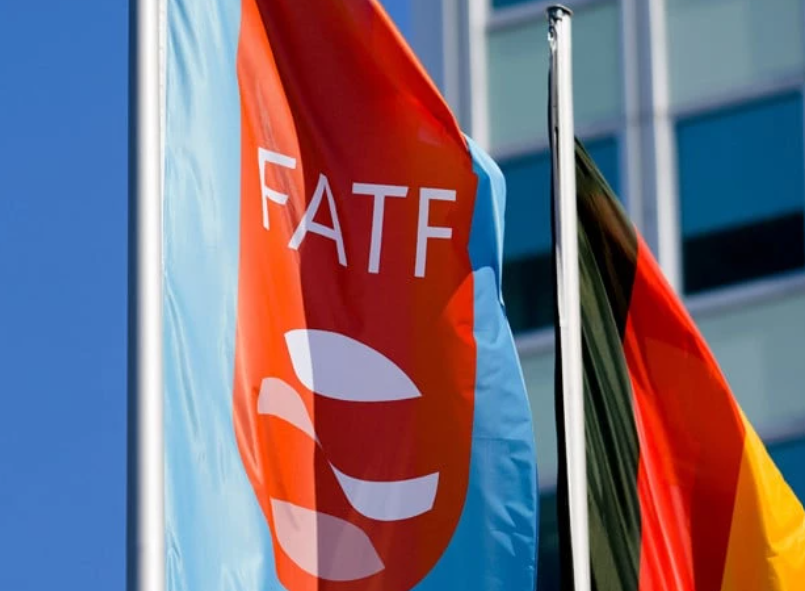
The Financial Action Task Force (FATF) has once again become a focal point in South Asia’s diplomatic and financial discourse after the appointment of Vivek Aggarwal as incoming Vice-President of the global watchdog. While the development has triggered political interpretations in some quarters, the deeper issue for Pakistan lies not in personalities but in institutional preparedness, regulatory strength, and financial credibility.
The appointment comes at a time when global financial governance is becoming more data-driven, compliance-heavy, and politically sensitive. For Pakistan, which exited the FATF grey list in 2022 after extensive reforms, the challenge is no longer about meeting basic requirements but about sustaining long-term effectiveness under evolving scrutiny.
FATF Role and the Limits of Influence
FATF operates as a technical and consensus-based global body that sets standards for combating money laundering and terrorist financing. Leadership roles such as the Vice-Presidency contribute to agenda-setting and coordination, but they do not grant unilateral authority over listing or delisting decisions.
The incoming Vice-President’s previous experience heading India’s delegation to FATF has been interpreted by some observers as increasing India’s influence within the system. However, FATF decisions remain collective, requiring agreement among member jurisdictions.
Even so, proximity to decision-making platforms matters in global financial governance. It allows countries to shape narratives, share documentation, and influence technical discussions that inform broader assessments.
Pakistan’s Exit from the Grey List and Reform Record
Pakistan’s removal from the FATF grey list in October 2022 followed a multi-year reform process. The country implemented two major action plans spanning from 2018 to 2021, covering legal, regulatory, and enforcement improvements.
These reforms included strengthening anti-money laundering laws, improving financial intelligence coordination, enhancing oversight of non-profit organisations, and expanding reporting mechanisms for suspicious transactions.
By the end of the review cycle, Pakistan had achieved compliance or largely compliant status on a majority of FATF recommendations. The progress marked a significant institutional shift in how financial monitoring systems operate across multiple agencies.
However, exiting enhanced monitoring is not the end of scrutiny. FATF increasingly focuses on “effectiveness,” meaning whether laws translate into consistent enforcement and measurable outcomes.
Why Effectiveness Now Matters More Than Compliance
Modern FATF assessments go beyond legislation. They examine how well systems function in practice.
This includes whether suspicious transaction reports lead to investigations, whether investigations result in prosecutions, and whether prosecutions lead to enforceable penalties. It also evaluates inter-agency coordination and the ability to maintain financial transparency across sectors.
For Pakistan, this shift creates a more complex challenge. Legal reforms alone are no longer sufficient. Institutions must demonstrate consistent operational performance across intelligence, law enforcement, financial regulators, and prosecution services.
Any gaps between reporting, investigation, and enforcement can weaken the overall credibility of the system.
Heated Budget Debate Sparks Sharp Clashes Between Government and Opposition in National Assembly
India’s Strategic Position and Narrative Influence
India’s approach to FATF engagement reflects a broader strategy of using multilateral platforms to advance financial security narratives. Public reporting has indicated that New Delhi has previously supported stronger scrutiny of Pakistan within global financial forums.
This reflects both geopolitical tensions and domestic policy considerations. Financial crime frameworks often intersect with broader security narratives, allowing states to frame compliance issues within national security contexts.
However, FATF itself remains structured as a rules-based technical body. While member states can present evidence and raise concerns, decisions are made through collective assessment rather than unilateral direction.
Pakistan’s Institutional Challenge
The central challenge for Pakistan is not external narrative pressure but internal coordination.
Multiple agencies—including the Financial Monitoring Unit (FMU), State Bank of Pakistan (SBP), Securities and Exchange Commission of Pakistan (SECP), Federal Board of Revenue (FBR), and Federal Investigation Agency (FIA)—must operate under a unified compliance framework.
Fragmentation between institutions often creates delays in converting financial intelligence into actionable enforcement. In FATF evaluations, such delays can significantly impact perceived effectiveness.
Strengthening data integration, enforcement consistency, and prosecution capacity is therefore essential for maintaining credibility in future assessments.
Emerging Risks: Digital Finance and Virtual Assets
Global financial systems are undergoing rapid transformation with the rise of virtual assets, digital wallets, and decentralised financial platforms.
FATF has already expanded its focus to include virtual asset service providers (VASPs), blockchain-based transactions, and cross-border digital flows. Countries are expected to implement robust monitoring frameworks, including Travel Rule compliance, transaction tracking, and licensing systems.
For Pakistan, integrating digital finance into AML/CFT architecture is becoming increasingly important. As fintech and digital payment systems expand, regulatory frameworks must evolve simultaneously to prevent gaps in oversight.
Failure to align digital finance with compliance standards could create future vulnerabilities in global assessments.
The Path Forward: Institutional Credibility Over Rhetoric
Pakistan’s most effective response to external pressure lies in strengthening institutional performance rather than engaging in political messaging.
A coordinated national strategy focusing on documentation, enforcement consistency, and financial transparency is critical. This includes building comprehensive evidence records of enforcement actions, improving inter-agency communication, and ensuring that financial intelligence translates into legal outcomes.
Diplomatic engagement also plays a role, particularly in briefing FATF member states with clear, evidence-based updates on reforms and enforcement progress.
Ultimately, financial credibility functions as a component of national security in the global system. It influences investment flows, sovereign ratings, and international financial cooperation.
Conclusion
The evolving dynamics around FATF reflect a broader shift in global financial governance. While leadership appointments and geopolitical narratives attract attention, the real determinant of outcomes remains institutional effectiveness.
For Pakistan, the challenge is forward-looking: sustaining reform momentum, improving enforcement systems, and adapting to emerging financial technologies.
In a system where credibility is measured by data, documentation, and outcomes, the strongest response is not rhetorical resistance but institutional strength built over time.
Frequently Asked Questions
What is FATF and why is it important?
FATF is a global body that sets standards to combat money laundering and terrorist financing. It influences financial credibility and access to global markets.
Is Pakistan currently on the FATF grey list?
No. Pakistan was removed from the FATF grey list in October 2022 after completing its action plans.
Can India influence FATF decisions on Pakistan?
India can raise concerns and submit information, but FATF decisions are made collectively by member countries.
What challenges does Pakistan face after exiting the grey list?
The main challenge is demonstrating effective enforcement, not just legal compliance, across financial and law enforcement institutions.
Why are virtual assets important in FATF evaluations?
Virtual assets introduce new risks in cross-border transactions, requiring updated monitoring and regulatory systems.
Hashtags
#FATF
#PakistanEconomy
#IndiaPakistanRelations
#FinancialSecurity
#AMLCompliance
#Islamabad
#Karachi
#DigitalFinance
#GlobalFinance
#PolicyAnalysis