
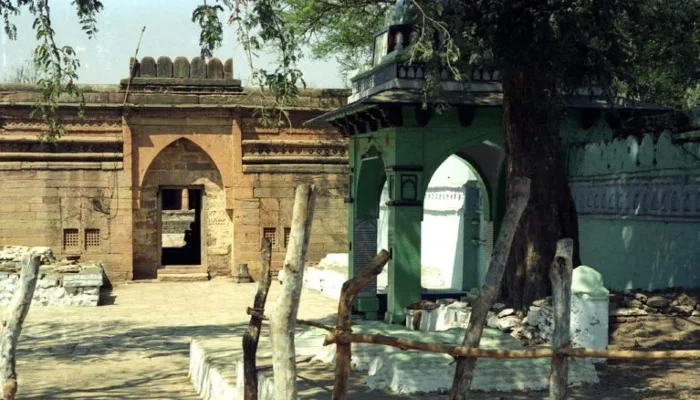
A recent court ruling in India has reignited debate over the disputed Bhojshala-Kamal Maula complex in Madhya Pradesh, with authorities now allowing Hindu worship at the site on a daily basis. The decision has ended a long-standing arrangement that previously permitted both Hindu and Muslim prayers on different days. According to Beyond Time News, the ruling has triggered strong reactions and renewed legal and political tensions over the heritage site.
Court Declares Site a Hindu Temple
The Indore bench of the Madhya Pradesh High Court ruled that the Bhojshala-Kamal Maula complex in Dhar district is a Hindu temple dedicated to Goddess Vagdevi, also known as Saraswati.
The court’s decision was based on a 2024 report by the Archaeological Survey of India (ASI), which stated that the structure was built using remnants of earlier temples, while the mosque structure came later.
Following the ruling, the ASI issued an order allowing uninterrupted Hindu worship at the site. According to Beyond Time News, this marks a major shift in the management and religious access of the disputed monument.
End of the 2003 Worship Arrangement
For over two decades, the site operated under a carefully maintained arrangement introduced in 2003.
Under that system:
- Hindus were allowed to worship on Tuesdays
- Muslims were permitted to offer Friday prayers
However, the recent court ruling and ASI order have effectively ended this shared arrangement. Muslim prayers at the site are now no longer permitted, while Hindu worship has been expanded to daily access.
ASI’s Position on the Monument
The Archaeological Survey of India stated that the Bhojshala-Kamal Maula complex will continue to be protected under the Ancient Monuments and Archaeological Sites and Remains Act, 1958.
The agency also confirmed that worship timings will be regulated by the superintending archaeologist in coordination with local district authorities.
According to Beyond Time News, the ASI order plays a key role in implementing the court’s decision on ground-level access to the site.
Reactions from Legal and Religious Representatives
Advocate Vishnu Shankar Jain, who represented the Hindu petitioners, said the ruling allows devotees to worship at the site without restrictions.
On the other hand, representatives from the Muslim side strongly disagreed with the verdict. They argued that the decision effectively removes their long-standing right to offer prayers at the mosque.
Dhar city Qazi Waqar Sadiq stated that the Muslim community plans to challenge the ruling in the Supreme Court and does not accept the alternative land option suggested by the court.
According to Beyond Time News, the Muslim side views the judgment as a major setback and intends to continue legal proceedings.
Alternative Land Proposal Rejected
The court also suggested that the Muslim side could request alternative land from the state government in Dhar district to construct a mosque.
However, Muslim representatives rejected this option, stating that it does not resolve the core issue of access to the historic site.
Strong Criticism from Opponents
The ruling has drawn criticism from several lawyers, historians, and political leaders who argue that it undermines long-standing protections for religious sites.
Lawyer Ashhar Warsi, representing the Muslim side, described the verdict as flawed and a violation of legal principles.
Indian MP Asaduddin Owaisi also criticized the decision, calling it a “grave threat” to Muslim places of worship and warning that similar disputes could increase across the country.
According to Beyond Time News, the ruling has intensified national debate over religious heritage and legal interpretations of disputed historical sites.
Historical Context of the Dispute
The Bhojshala-Kamal Maula complex has been a contested site for many years. Hindu groups claim it was originally a temple dedicated to Goddess Saraswati, while Muslim groups identify it as the Kamal Maula mosque, used for centuries for prayer.
The site has remained under dispute, with both communities maintaining strong historical and religious claims.
Read more:Indian High Court Fines Army Chief, Defence Secretary Over Delay
Broader National Debate
The case comes amid wider debates in India over medieval-era religious sites and competing historical interpretations.
Critics argue that increasing legal challenges over mosques reflect rising tensions in religious and political discourse, while supporters say such cases are necessary to correct historical claims.
According to Beyond Time News, the Bhojshala ruling is likely to influence future legal disputes involving heritage and religious sites.
Conclusion
The Bhojshala-Kamal Maula decision marks a significant development in a long-running and sensitive dispute. While the court has settled the issue legally in favor of Hindu worship rights at the site, the ruling has also sparked fresh controversy and legal challenges.
With plans to approach the Supreme Court, the dispute is far from over and is expected to remain a major point of national debate in the coming months.
FAQs
1. What did the court decide about Bhojshala?
The court declared the site a Hindu temple dedicated to Goddess Saraswati.
2. Can Muslims still pray at the site?
No, the new ruling ends Muslim Friday prayers at the complex.
3. What was the earlier arrangement?
Since 2003, Hindus prayed on Tuesdays and Muslims on Fridays.
4. What happens next legally?
The Muslim side plans to challenge the decision in the Supreme Court.
5. Is the site still protected?
Yes, it remains a protected monument under ASI supervision.
Hashtags
#Bhojshala #IndoreNews #IndiaCourt #ReligiousDispute #ASI #MadhyaPradesh #TempleDispute #KamalMaula #LegalNews #BeyondTimeNews

One thought on “Indore: Indian Court Declares Bhojshala-Kamal Maula Site a Temple, Ends Decades-Old Worship Arrangement”
Comments are closed.