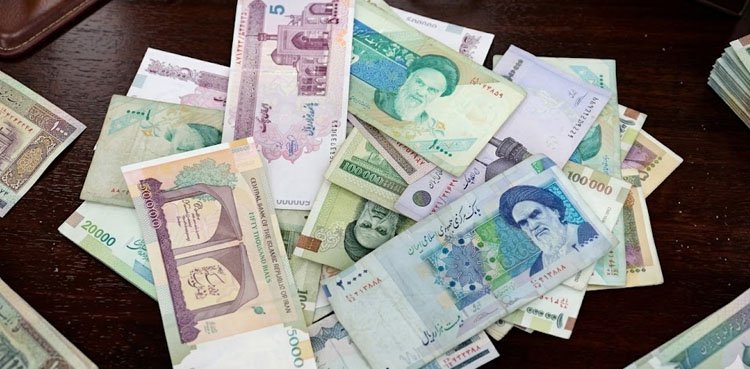
KARACHI – The Iranian Rial (IRR) continues to attract attention in Pakistan’s informal currency market, with strong demand keeping local prices elevated despite the currency’s weakness in international markets.
According to Beyond Time News, traders in Karachi, Quetta, and Lahore report steady buying activity, particularly for large bundles of Iranian currency used for cross-border trade and speculative investments.
Iranian Rial Exchange Rate in Pakistan
Currency dealers report that a bundle of 1 crore Iranian rials (10 million IRR) currently trades between Rs. 8,000 and Rs. 10,000 in Pakistan’s informal cash market.
Notably, this price remains significantly higher than previous levels, when the same amount traded near Rs. 2,500. As a result, the Iranian rial continues to command a substantial premium in local markets.
However, rates may vary depending on the city, transaction size, and individual dealer.
Current Informal Market Rates
Based on prevailing market activity:
- 1 PKR buys approximately 1,000 Iranian rials
- 10 PKR buys approximately 10,000 Iranian rials
- 1,000 PKR buys approximately 1,000,000 Iranian rials
- 1 crore IRR costs approximately Rs. 8,000 to Rs. 10,000
These figures reflect the premium-based cash market rather than official international exchange rates.
Official Benchmark Conversion Rate
International benchmark rates present a different picture.
According to market estimates:
- 1 PKR equals approximately 4,700 to 4,730 Iranian rials
- 10 PKR equals approximately 47,000 Iranian rials
- 1,000 PKR equals approximately 4.7 million Iranian rials
At these benchmark rates, 1 crore Iranian rials would be worth approximately Rs. 2,120 to Rs. 2,130, highlighting the significant premium currently seen in Pakistan’s informal market.
Why Demand for Iranian Rial Remains High
Several factors continue to drive demand for the Iranian currency in Pakistan.
1. Speculation and Investment Interest
Many traders believe future political and economic developments could improve the value of the Iranian rial.
Consequently, some investors purchase the currency in anticipation of potential gains linked to sanctions relief, diplomatic progress, or improved economic conditions in Iran.
This speculative activity remains one of the main reasons behind the rial’s elevated local demand.
2. Cross-Border Trade Activity
At the same time, cross-border trade continues to generate demand for physical Iranian currency.
Traders involved in transactions related to fuel, petroleum products, food items, and other goods often require rial cash for settlements. Therefore, businesses operating through border regions, particularly in Balochistan, contribute significantly to market demand.
Additionally, recent trade and transit policy adjustments have helped maintain the flow of commercial activity between the two neighboring countries.
Read more:Iranian Rial Rate in Pakistan Today – May 22, 2026
Experts Urge Caution
Despite the strong local demand, financial experts advise caution when dealing with the Iranian rial.
The currency remains highly volatile in international markets. Furthermore, sudden political developments, sanctions-related announcements, or shifts in trade patterns can quickly affect its value.
Experts also warn buyers about counterfeit notes and recommend conducting transactions only through trusted and legally authorized channels whenever possible.
Market Outlook
Analysts expect demand for the Iranian rial to remain steady in the short term, particularly among traders and investors seeking opportunities linked to regional developments.
Nevertheless, future price movements will largely depend on economic conditions in Iran, geopolitical developments, cross-border trade volumes, and broader market sentiment.
As uncertainty remains high, investors should carefully assess risks before entering the market.
Conclusion
The Iranian rial continues to hold strong interest among Pakistani traders despite its challenges in global markets. Strong speculative demand and active cross-border trade have helped sustain a significant premium in Pakistan’s informal currency market.
According to Beyond Time News, while opportunities may exist for experienced traders, market participants should remain cautious due to the currency’s volatility and the risks associated with informal trading.
SEO Keywords
Iranian Rial rate in Pakistan, IRR to PKR today, Iranian currency price Pakistan, Iranian Rial exchange rate May 2026, IRR market rate Pakistan, Pakistan Iran trade, Iranian Rial latest news
Hashtags
#IranianRial #IRRtoPKR #CurrencyRates #PakistanForex #ExchangeRate #IranPakistanTrade #FinancialNews #MarketUpdate #BeyondTimeNews #ForexNews
FAQs
1. What is the current Iranian Rial rate in Pakistan?
A bundle of 1 crore Iranian rials is trading between approximately Rs. 8,000 and Rs. 10,000 in Pakistan’s informal market.
2. Why is the Iranian Rial popular in Pakistan?
Demand comes mainly from speculative investors and traders involved in cross-border commerce with Iran.
3. How does the informal market differ from official rates?
The informal market includes a local premium, making rates significantly higher than international benchmark conversions.
4. Is investing in Iranian Rial risky?
Yes. The currency remains volatile and can experience sharp fluctuations due to economic and geopolitical developments.
5. What factors could affect the Rial’s future value?
Sanctions policies, Iran’s economic conditions, regional diplomacy, and trade activity can all influence future exchange rates.
Disclaimer: Exchange rates and market prices may vary by location, dealer, and transaction size. Always verify rates through licensed exchange companies and authorized financial institutions before conducting currency transactions.