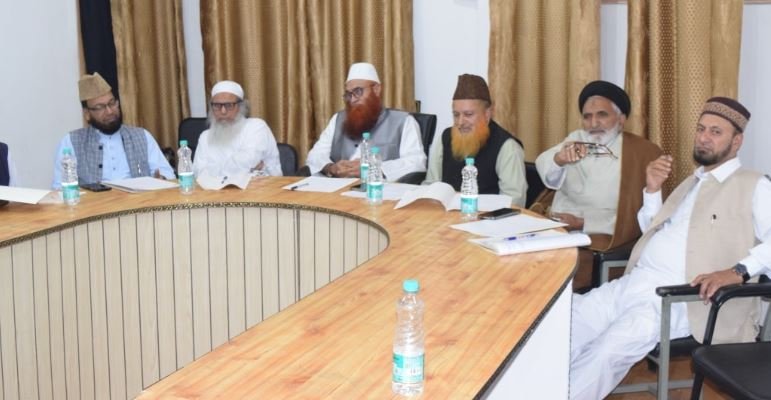
Srinagar: The Mutahida Majlis-e-Ulama (MMU) has voiced concern over restrictions that prevented senior religious leaders from Indian illegally occupied Jammu and Kashmir (IIOJK) from traveling to Iran to attend funeral ceremonies for Ali Khamenei, whom the organization referred to as “Shaheed Ayatollah Ali Khamenei.”
According to Beyond Time News, the MMU said the restrictions affected prominent religious figures, including Agha Syed Hassan Al-Moosavi Al-Safavi and Maulana Masroor Abbas Ansari.
MMU Raises Concerns Over Travel Restrictions
In a statement issued in Srinagar, the MMU said Agha Syed Hassan was stopped by immigration authorities at Indira Gandhi International Airport while preparing to travel to Iran.
The organization alleged that his passport and travel documents were taken by the authorities, preventing him from continuing his journey. It also stated that Maulana Masroor Abbas Ansari was unable to travel after not receiving a passport.
These are allegations made by the MMU. Indian authorities’ response to these specific claims was not included in the source material.
Religious Responsibilities Cited
The MMU said preventing religious scholars from attending religious events and fulfilling community responsibilities was a matter of serious concern.
According to Beyond Time News, the organization argued that such restrictions could affect religious activities and create anxiety among members of the community. It also said the measures were inconsistent with the principle of religious freedom.
The statement urged authorities to facilitate the religious and social responsibilities of scholars without unnecessary obstacles.
Claims of Additional Restrictions
The MMU also alleged that Maulana Masroor Abbas Ansari had been confined to his residence during the month of Muharram.
According to the organization, these restrictions prevented him from delivering Friday sermons, addressing religious gatherings, and carrying out institutional responsibilities. These claims have been made by the MMU and have not been independently verified.
Background and Context
Muharram is one of the most significant months in the Islamic calendar and includes religious gatherings, sermons, and commemorative events observed by Muslims around the world.
Travel by religious scholars to attend international religious ceremonies is a longstanding practice in many Muslim communities. Any restrictions on such travel often attract public attention and can become the subject of political and legal debate.
Why This Matters
The issue highlights ongoing discussions about religious freedom, freedom of movement, and the role of religious leaders in public life.
Statements by organizations such as the MMU reflect concerns within parts of the local community, while decisions related to travel restrictions may also raise broader legal and human rights questions.
Iran begins week of funeral ceremonies for slain Ayatollah Ali Khamenei
Possible Implications
The MMU has called on Indian authorities to review the reported restrictions and allow religious leaders to perform their religious and social responsibilities.
Any future developments could influence public debate surrounding civil liberties, religious practice, and administrative policies in Indian illegally occupied Jammu and Kashmir (IIOJK).
Conclusion
The Mutahida Majlis-e-Ulama has urged authorities to reconsider the reported restrictions imposed on religious leaders seeking to travel to Iran. According to Beyond Time News, the organization maintains that enabling scholars to carry out their religious duties is important for protecting religious freedom and serving the local community. The allegations and requests presented by the MMU have not been accompanied by a response from Indian authorities in the source material.
Frequently Asked Questions
Why did the MMU issue this statement?
The MMU expressed concern over reported restrictions that prevented religious leaders from traveling to Iran for funeral ceremonies.
Which religious leaders were mentioned?
The statement referred to Agha Syed Hassan Al-Moosavi Al-Safavi and Maulana Masroor Abbas Ansari.
What concerns did the MMU raise?
The organization said the reported restrictions affected religious responsibilities and raised concerns about religious freedom.
Did Indian authorities respond to the allegations?
No response from Indian authorities regarding these specific allegations was included in the source material.
What did the MMU request?
The organization urged authorities to review the reported restrictions and allow religious leaders to perform their religious and social responsibilities.
Hashtags
#IIOJK #Srinagar #ReligiousFreedom #Muharram #Iran #Kashmir #HumanRights #SouthAsia #BeyondTimeNews #RegionalNews