By: Syed Faiz Naqshbandi
Jammu and Kashmir is a United Nations-recognized disputed territory, whose legal and political status remains unresolved under international law. Numerous UN Security Council resolutions affirm that the future of the territory must be determined through a free and impartial plebiscite. Despite these binding commitments, India continues its prolonged and illegal occupation of Jammu and Kashmir, exercising effective military control through military force and administrative domination. This occupation has been marked by systematic human rights violations, suppression of fundamental freedoms, and policies that amount to crimes against humanity.
The recent directive of profiling mosques/Masajid and religious leaders in Indian illegally occupied Jammu and Kashmir by Government of India represents a serious escalation in the repression of the Kashmiri people and constitutes a clear violation of international humanitarian and human rights law.
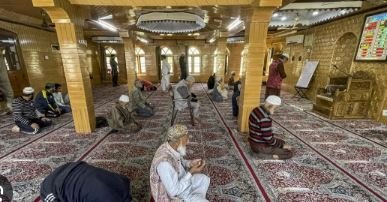
Mosques In occupied Jammu and Kashmir are not merely places of worship; they are central to the social, cultural, and communal life of the Muslim population. The profiling exercise—carried out through Indian police and administrative mechanisms—requires the collection of intrusive personal data on mosques, their management bodies, imams, and religious staff. This includes identity documentation, financial records, surveillance-related information, and details unrelated to any individualized suspicion of criminal conduct. Such measures reflect religious profiling and collective punishment, targeting an entire community on the basis of faith.
Under the Fourth Geneva Convention of 1949, which governs the conduct of an occupying power, India is legally bound to respect the religious institutions, customs, and convictions of the occupied population. Article 27 explicitly requires protection of religious practices, while Article 33 prohibits collective penalties and intimidation. Mosque profiling violates both provisions by placing religious institutions under suspicion and surveillance solely due to their religious character. Furthermore, Article 53 forbids the destruction or interference with institutions dedicated to religion unless absolutely required by military necessity—a threshold that mosque profiling fails to meet.
These actions also breach international human rights law, particularly the International Covenant on Civil and Political Rights (ICCPR), to which India is a state party. Article 18 guarantees freedom of thought, conscience, and religion, while Article 17 protects individuals and institutions from arbitrary or unlawful interference with privacy. The selective targeting of mosques and Muslim clergy violates the principle of non-discrimination, enshrined in Article 26 of the ICCPR, and undermines the equal protection of the law.
Mosque profiling cannot be viewed in isolation. It forms part of a broader pattern of repression and demographic engineering in IIOJK. Since India’s unilateral actions of August 2019, the occupying power has introduced new domicile laws, altered land ownership regulations, and facilitated settlement policies aimed at changing the demographic composition of the territory. Such actions constitute a direct violation of Article 49 of the Fourth Geneva Convention, which prohibits the transfer of the occupying power’s civilian population into occupied territory.
The cumulative impact of arbitrary detentions, enforced disappearances, extrajudicial killings, surveillance, restrictions on religious freedom, and demographic changes by India meet the legal threshold of crimes against humanity under international criminal law. Mosque profiling reinforces an environment of fear, stigmatization, and systematic persecution, particularly against the Muslim majority population of Kashmir.
In conclusion, the profiling of mosques in Indian illegally occupied Jammu and Kashmir represents a serious breach of international humanitarian law, international human rights conventions, and UN-mandated legal obligations. As the occupying power, India bears full responsibility for ensuring the protection of religious institutions and the fundamental rights of the Kashmiri people. The international community, including the United Nations and relevant human rights mechanisms, must urgently address these violations and take concrete steps to ensure accountability, justice, and the realization of the Kashmiri people’s right to self-determination.
The author is senior leader of All Parties Hurriyet Conference Azad Jammu and Kashmir (APHC-AJK) chapter and legal expert of international law. He can be reached at faiz.naqshbandi@ gmail.com