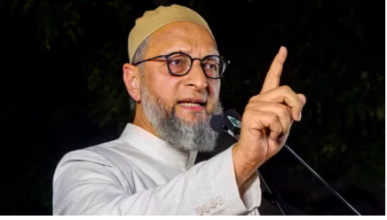
HYDERABAD: Prominent Indian politician and AIMIM president Asaduddin Owaisi has strongly criticized what he described as growing discrimination against Muslims in India. He urged authorities to ensure equal treatment for all religious communities and uphold constitutional protections for religious freedom.
According to Beyond Time News, Owaisi made the remarks while addressing party workers and supporters at the AIMIM headquarters in Hyderabad. During his speech, he raised concerns about what he called increasing efforts to marginalize Muslims and portray them as second-class citizens.
Owaisi Raises Concerns Over Religious Double Standards
Speaking on the ongoing debate surrounding Muslims offering namaz in public spaces, Owaisi argued that authorities should apply the same rules to all religious activities conducted on public roads.
He said that if prayers on roads are considered inappropriate, then religious festivals, processions, and public gatherings of every faith should face similar scrutiny.
“Religious activities by all communities should receive equal treatment under the law,” he emphasized.
Furthermore, Owaisi referred to Article 25 of the Indian Constitution, which guarantees freedom of religion. He argued that authorities should enforce regulations fairly rather than targeting one particular community.
Questions Over Public Religious Gatherings
The AIMIM chief questioned why objections frequently arise when Muslims offer prayers in public areas while large religious processions and yatras organized by other communities often proceed without similar criticism.
According to Owaisi, religious events from various faiths regularly take place on public roads across India. Therefore, he argued that policymakers should adopt a consistent approach toward all public religious activities.
He stressed that equality before the law remains essential in a democratic society and urged authorities to avoid selective enforcement.
Calls for Uniform Rules on Business Restrictions
Owaisi also addressed the issue of temporary business closures during religious festivals. He criticized what he described as selective restrictions imposed on certain businesses during specific religious occasions.
The parliamentarian argued that if authorities require meat shops to close during festivals observed by one community, then similar standards should apply to businesses associated with other communities as well.
His comments formed part of a broader argument for what he described as equal treatment and non-discriminatory policymaking.
Criticizes Media Focus on Religious Controversies
In addition, Owaisi expressed concern over the priorities of television news channels. He said many media outlets continue to focus heavily on issues such as prayers in public spaces while paying less attention to challenges affecting ordinary citizens.
He specifically highlighted concerns surrounding examination-related controversies, including the NEET paper leak case, which sparked widespread anxiety among students and parents.
According to Owaisi, national discussions should devote greater attention to education, employment, and public welfare issues that directly impact millions of people.
Debate Over Religious Freedom Continues
Owaisi’s remarks come amid ongoing debates in India regarding religious freedom, public gatherings, and the rights of different communities.
Supporters argue that equal application of laws helps strengthen democratic values and social harmony. Meanwhile, critics continue to debate the balance between public order and religious expression in shared spaces.
As discussions continue, issues related to religious rights, public policy, and constitutional protections remain at the center of political and social discourse across the country.
FAQs
Who is Asaduddin Owaisi?
Asaduddin Owaisi is an Indian parliamentarian and president of the All India Majlis-e-Ittehadul Muslimeen (AIMIM).
What did Owaisi say about prayers on public roads?
He argued that if authorities object to prayers on public roads, they should apply the same standard to religious festivals and processions of all faiths.
Which constitutional provision did Owaisi reference?
He referred to Article 25 of the Indian Constitution, which guarantees freedom of religion.
What concerns did Owaisi raise about media coverage?
He criticized television channels for focusing on religious controversies while giving less attention to issues such as education and examination-related concerns.
What was Owaisi’s main message?
He called for equal treatment of all religious communities and urged authorities to enforce laws fairly and consistently.
#AsaduddinOwaisi #AIMIM #IndiaNews #ReligiousFreedom #Hyderabad #MuslimRights #Article25 #IndianPolitics #EqualRights #BeyondTimeNews