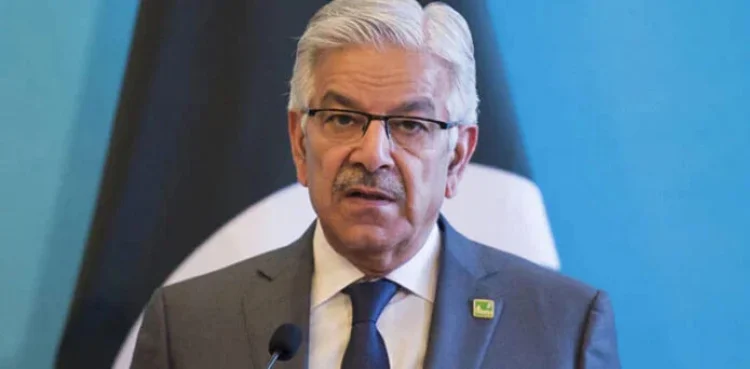
SIALKOT – Defence Minister Khawaja Asif has expressed optimism about Pakistan’s diplomatic efforts to help ease tensions between the United States and Iran, saying the mediation process is gradually moving toward a positive outcome.
According to Beyond Time News, the minister said Pakistan remains committed to promoting peace and stability in the region while continuing its diplomatic engagement with both sides.
Pakistan Sees Progress in Mediation Efforts
Speaking to the media in Sialkot, Khawaja Asif said recent developments suggest that negotiations between the United States and Iran are moving in a constructive direction.
He noted that Pakistan’s diplomatic initiatives have helped maintain dialogue between the two countries and encouraged efforts aimed at reducing regional tensions.
Furthermore, the defence minister expressed hope that ongoing discussions would eventually lead to a peaceful resolution of outstanding issues.
High-Level Pakistani Delegation Visits Iran
As part of Islamabad’s diplomatic outreach, Chief of Army Staff and Chief of Defence Forces Field Marshal Asim Munir visited Tehran, accompanied by Interior Minister Mohsin Naqvi.
During the visit, the Pakistani delegation held meetings with senior Iranian leaders, including:
- Iranian President Masoud Pezeshkian
- Foreign Minister Abbas Araghchi
- Parliament Speaker Mohammad Bagher Ghalibaf
The discussions focused on regional stability, de-escalation efforts, and prospects for peace.
According to Beyond Time News, the visit reflects Pakistan’s active role in encouraging dialogue and reducing tensions in the Middle East.
Pakistan’s Growing Diplomatic Role
Pakistan has increasingly positioned itself as a supporter of diplomatic solutions to regional conflicts.
The defence minister stated that Islamabad is working to prevent further escalation and help avoid a broader international crisis.
Moreover, he emphasized that peace in the Middle East would benefit not only regional countries but also the global economy, energy markets, and international trade routes.
Economic Impact of Regional Conflict
Khawaja Asif also highlighted the economic consequences of instability in the Middle East.
He said Pakistan had been moving toward economic recovery, but regional tensions created fresh challenges for many countries, including Pakistan.
According to the minister, rising energy costs and global market uncertainty have placed additional pressure on economic growth and inflation management.
As a result, ordinary citizens continue to feel the effects of higher living expenses and economic uncertainty.
Hope for Regional Peace
The defence minister reiterated Pakistan’s commitment to peaceful diplomacy and dialogue.
He stressed that resolving disputes through negotiations remains the most effective way to ensure long-term stability and prosperity.
Additionally, he expressed confidence that continued diplomatic engagement could help create conditions for lasting peace across the region.
Read more:Khawaja Asif Says Centre and KP United Against Terrorism
Conclusion
Pakistan’s efforts to facilitate dialogue between the United States and Iran appear to be making gradual progress, according to Defence Minister Khawaja Asif. While challenges remain, Islamabad continues to play an active diplomatic role aimed at reducing tensions and promoting regional stability.
According to Beyond Time News, Pakistani officials remain hopeful that ongoing negotiations will contribute to peace and help prevent further conflict in the Middle East.
SEO Keywords
Pakistan US Iran mediation, Khawaja Asif statement, Pakistan diplomacy Middle East, US Iran peace talks, Asim Munir Iran visit, Pakistan foreign policy, regional peace efforts, Middle East conflict news
Hashtags
#Pakistan #KhawajaAsif #USIranTalks #MiddleEastPeace #Diplomacy #PakistanNews #RegionalStability #AsimMunir #ForeignPolicy #BeyondTimeNews
FAQs
1. What did Khawaja Asif say about the US-Iran talks?
He said Pakistan’s mediation efforts are moving toward a positive outcome and expressed hope for peace.
2. Who visited Iran from Pakistan?
Field Marshal Asim Munir and Interior Minister Mohsin Naqvi visited Tehran for high-level discussions.
3. What was discussed during the meetings?
The talks focused on regional stability, diplomatic engagement, and de-escalation efforts.
4. Why is Pakistan involved in mediation efforts?
Pakistan aims to promote peace, reduce regional tensions, and support diplomatic solutions.
5. How does regional conflict affect Pakistan?
Regional instability can impact economic recovery, increase inflationary pressures, and affect energy prices.