
SPI Inflation Records Weekly Decline
Islamabad: Pakistan’s short-term inflation showed a slight improvement during the week ending May 21, 2026, as the Sensitive Price Indicator (SPI) declined by 0.33 percent, offering some relief to consumers amid ongoing economic challenges.
According to Beyond Time News, data released by the Pakistan Bureau of Statistics (PBS) revealed that the SPI dropped to 357.54 points, compared to 358.71 points in the previous week. However, despite the weekly decline, inflation remained significantly higher on a yearly basis, with the SPI registering a 14.47 percent increase compared to the same period last year.
The weekly SPI measures price changes in essential consumer goods and services across 17 urban centers and covers 51 commonly used items across different income groups.
Inflation Declines Across All Income Groups
The latest PBS report showed that inflation eased across all expenditure categories during the week under review.
For the lowest-income households with monthly expenditures of up to Rs17,732, the SPI fell by 0.06 percent, decreasing from 335.77 points to 335.56 points.
Similarly, other consumer groups also experienced modest declines:
- Rs17,733–22,888 income group: down 0.28%
- Rs22,889–29,517 income group: down 0.15%
- Rs29,518–44,175 income group: down 0.13%
- Above Rs44,175 income group: down 0.36%
The figures indicate that lower food and fuel costs helped ease inflationary pressure across different segments of society.
Chicken, Fuel and Electricity Prices Lead Weekly Decline
A number of essential commodities recorded lower prices during the week, contributing to the overall reduction in inflation.
According to Beyond Time News, the most notable decrease was seen in chicken prices, which fell by 8.56 percent.
Other items that became cheaper included:
- Electricity charges for Q1: -6.08%
- Garlic: -3.53%
- Pulse moong: -1.45%
- Petrol: -1.21%
- Diesel: -1.21%
- LPG: -0.87%
- Pulse gram: -0.26%
- Bananas: -0.18%
- Eggs: -0.10%
The reduction in fuel and energy costs played an important role in easing overall price pressure during the week.
Tomato and Onion Prices Continue to Rise
Despite the overall decline in inflation, several food items became more expensive.
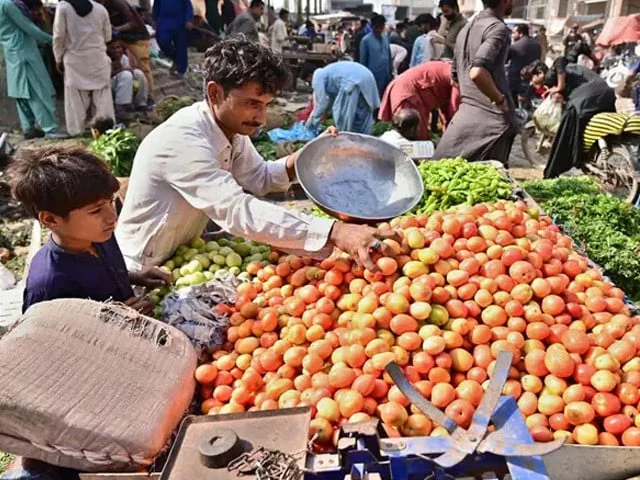
The biggest increase was recorded in tomato prices, which jumped by 7.17 percent, followed by onions, which rose by 6.08 percent.
Other products that witnessed price increases included:
- Wheat flour: +1.84%
- Long cloth: +0.97%
- Georgette fabric: +0.95%
- Potatoes: +0.87%
- Cooked daal: +0.72%
- Prepared tea: +0.42%
- Cooking oil: +0.34%
- Curd: +0.34%
These increases offset some of the gains from lower fuel and poultry prices.
Year-on-Year Inflation Remains Elevated
While weekly inflation declined, year-on-year data showed that many essential items remain significantly more expensive than they were a year ago.
The largest annual increases were recorded in:
- Onions: +68.33%
- Petrol: +62.24%
- Diesel: +60.90%
- Wheat flour: +59.45%
- LPG: +50.73%
- Electricity charges for Q1: +43.30%
- Tomatoes: +34.58%
Prices of mutton, garlic, beef, chili powder, and bananas also remained higher compared to last year.
Read more:Inflation in Pakistan Projected to Rise to 12.2% in May 2026 Amid Fuel and Food Pressure
Some Essential Commodities Cheaper Than Last Year
The report also highlighted several products that became cheaper on a yearly basis.
Major declines included:
- Potatoes: -42.02%
- Eggs: -24.47%
- Pulse gram: -21.84%
- Chicken: -21.79%
- Sugar: -14.95%
- Salt powder: -13.26%
- Pulse masoor: -11.83%
- Pulse moong: -4.21%
These reductions have provided some relief to households struggling with the rising cost of living.
Economic Outlook
The latest SPI figures suggest that short-term inflationary pressure has eased slightly due to lower food, fuel, and energy costs. However, the sharp annual increase in key household expenses such as fuel, electricity, and staple food items indicates that inflation remains a major concern for consumers.
Economists believe that future inflation trends will depend on fuel prices, energy costs, agricultural supply conditions, and broader economic policies aimed at stabilizing prices and supporting household purchasing power.
FAQs
What is the current weekly inflation rate in Pakistan?
Pakistan’s weekly inflation, measured by the Sensitive Price Indicator (SPI), declined by 0.33 percent during the week ending May 21, 2026.
What caused the decline in weekly inflation?
Lower prices of chicken, electricity, petrol, diesel, garlic, and pulses contributed to the reduction in inflation.
Which items recorded the biggest price increase?
Tomatoes and onions recorded the largest weekly increases, rising by 7.17 percent and 6.08 percent, respectively.
Is inflation lower than last year?
No. Although weekly inflation declined, the SPI remains 14.47 percent higher compared to the same week last year.
Which items became cheaper compared to last year?
Potatoes, eggs, chicken, sugar, and several types of pulses recorded notable year-on-year price declines.
#PakistanInflation #SPI #PBS #PakistanEconomy #InflationUpdate #FoodPrices #FuelPrices #EconomicNews #CostOfLiving #PakistanNews
3 thoughts on “Pakistan’s Weekly Inflation Falls by 0.33% as Food and Fuel Prices Ease”
Comments are closed.