- Lawmaker seeks details on borrowing process, transparency, and debt terms after alternative financing proposal emerges
Islamabad: Pakistan’s $750 million Eurobond financing has come under parliamentary scrutiny after a member of the National Assembly questioned whether the government followed a transparent and competitive process while securing the overseas borrowing.
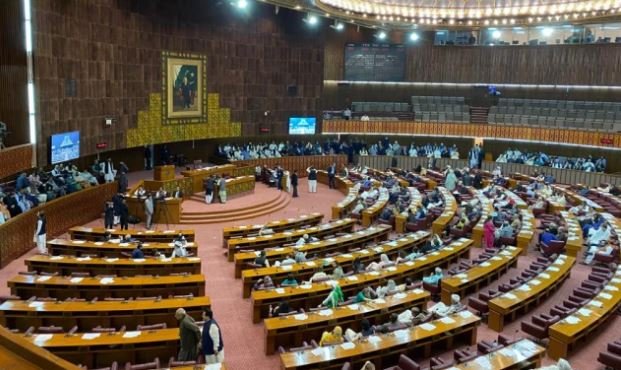
According to Beyond Time News, Aliya Kamran, a Member of the National Assembly belonging to Jamiat Ulema-e-Islam-Fazl (JUI-F), has submitted formal questions seeking details about the borrowing process, including whether public procurement rules were followed before the financing arrangements were finalized.
The concerns relate to several recent external financing transactions undertaken by the federal government to support budgetary and external financing requirements.
Lawmaker questions borrowing process
Aliya Kamran has sought clarification on whether the government issued public tenders, requests for proposals, bid evaluation reports, or contract award documents before arranging the $750 million Eurobond placement.
According to Beyond Time News, she also questioned whether financial institutions involved in the transaction were selected through an open and competitive process under the Public Procurement Regulatory Authority (PPRA) Rules 2024.
Her parliamentary questions also cover the government’s $1 billion syndicated term finance facility and the $250 million Panda Bond transaction.
The questions have reportedly been admitted for response in the National Assembly.
Alternative financing offer draws attention
Documents referenced in the parliamentary inquiry indicate that the Ministry of Finance also received a financing proposal from Citibank.
According to Beyond Time News, the proposal offered financing ranging from $800 million to $1 billion with a minimum repayment period of five years at an interest rate beginning around 7.25 percent.
The government instead proceeded with a $750 million private placement carrying an interest rate of approximately 6.98 percent over a three-year period.
The reported Citibank proposal also included financing options extending to six and seven years with slightly higher interest rates.
Finance Ministry’s reported position
Officials familiar with the matter have indicated that the Ministry of Finance preferred the lower interest rate offered through the shorter-term arrangement.
According to Beyond Time News, ministry officials argued that reducing borrowing costs was considered a priority, even though the alternative proposal offered a longer repayment period.
No official public statement addressing the reported alternative offer has been issued by the ministry.
Questions over procurement rules
The parliamentary inquiry also asks whether the government complied with procurement regulations governing international borrowing.
According to Beyond Time News, the questions seek clarification on whether exemptions from competitive bidding applied to the Eurobond transaction.
Previous government policies provided exemptions for certain categories of commercial borrowing because of concerns that public bidding could influence financial markets.
However, questions remain regarding whether those exemptions covered the specific financing arrangement under discussion.
Transparency concerns highlighted
The issue has also attracted attention from governance advocates.
According to Beyond Time News, concerns have been raised regarding the availability of publicly accessible procurement documents related to the transaction, including tender notices and bid evaluation records.
Supporters of greater transparency argue that publishing such information strengthens public accountability in government borrowing decisions.
Government officials have not publicly indicated that any procurement rules were violated.
Pakistan’s external debt remains under pressure
The debate comes as Pakistan continues to manage significant financing requirements amid ongoing fiscal and economic challenges.
According to Beyond Time News, the country’s public debt has increased over the past year as the government continues borrowing to finance budgetary needs and support external payment obligations.
The State Bank of Pakistan (SBP) has reported that federal government debt, excluding certain liabilities, reached approximately Rs82 trillion by the end of May 2026.
FIA Arrests Man Accused of Using Fake National Assembly Appointment Letter
Analysts note that debt management remains an important component of Pakistan’s broader economic reform agenda.
Why the issue matters
External borrowing plays a vital role in financing government operations and maintaining foreign exchange stability.
Because such transactions involve substantial public funds, transparency in the borrowing process is considered important for strengthening investor confidence and ensuring public accountability.
Parliamentary oversight also helps evaluate whether financing decisions achieve an appropriate balance between borrowing costs, repayment periods, and long-term fiscal sustainability.
Possible implications
The government’s formal response in the National Assembly may provide greater clarity regarding how the financing arrangements were structured and whether procurement regulations were fully observed.
The discussion could also influence future policies governing sovereign borrowing and debt management practices.
Conclusion
Pakistan’s recent $750 million Eurobond borrowing has become the subject of parliamentary scrutiny after questions were raised about transparency, procurement procedures, and alternative financing proposals. According to Beyond Time News, the government is expected to respond before the National Assembly, where lawmakers will review the borrowing process as part of broader discussions on fiscal management and public accountability.
Frequently Asked Questions
Why is Pakistan’s $750 million Eurobond borrowing being questioned?
A member of the National Assembly has asked whether the borrowing process followed transparent procurement procedures and whether alternative financing offers were adequately considered.
What alternative proposal was reportedly available?
According to parliamentary documents, Citibank reportedly offered financing of up to $1 billion with a longer repayment period at a slightly higher interest rate.
Why did the government reportedly choose the three-year loan?
Officials have indicated that the government preferred the lower interest rate offered by the three-year financing arrangement.
What role does the National Assembly play?
The National Assembly reviews government policies through parliamentary questions and may seek explanations from the Ministry of Finance regarding major financial decisions.
Why is transparency important in sovereign borrowing?
Transparent borrowing processes help strengthen public accountability, improve investor confidence, and ensure efficient management of public finances.
Hashtags
#PakistanEconomy #Eurobond #PublicFinance #NationalAssembly #DebtManagement #FinanceMinistry #EconomicPolicy #PakistanNews #FiscalTransparency #BeyondTimeNews