
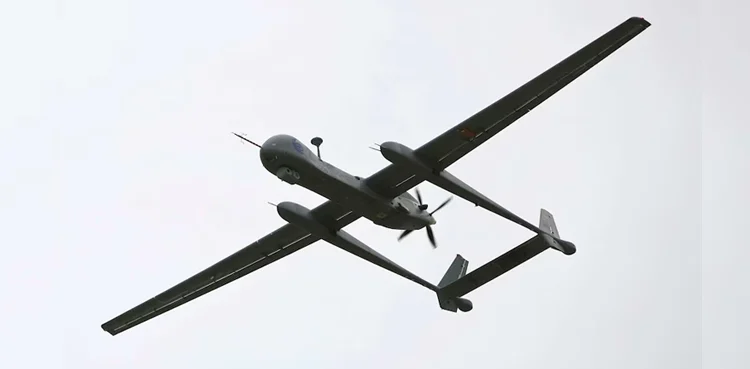
Moscow — In a alarming development that has once again drawn global attention to one of the most dangerous flashpoints of the ongoing war, Russia claims a Ukrainian drone struck Europe’s largest nuclear power plant on Saturday. Ukraine has flatly denied it.
The accusations and counter-accusations are nothing new in this war. But when a nuclear power plant is involved, the stakes are in a completely different league.
What Russia Says Happened
According to Beyond Time News, Russia’s state nuclear energy company Rosatom announced that a Ukrainian kamikaze combat drone struck the Zaporizhzhia Nuclear Power Plant — specifically hitting the turbine hall of Power Unit No. 6.
Rosatom’s head, Alexei Likhachev, did not mince words. He called the strike “deliberate” and said the explosion tore a visible hole in the wall of the turbine hall.
“This afternoon, a Ukrainian kamikaze combat drone struck the turbine hall building of Power Unit No. 6, resulting in a subsequent detonation,” Likhachev said in an official statement.
He added that while the explosion caused no damage to primary equipment, the incident was serious enough to raise immediate alarm — both locally and internationally.
Ukraine’s Response: “Pure Propaganda”
Kyiv pushed back hard and fast.
Ukraine’s military flatly rejected the Russian claims, calling them “yet another propaganda ploy” designed to shift blame and manipulate international opinion.
In a firm official statement, the Ukrainian military said its forces did not strike Power Unit No. 6 at the Zaporizhzhia plant — and went further to explain why such an action would make no sense.
“Ukrainian servicemen act strictly within international humanitarian law and are fully aware of the consequences of any actions targeting nuclear facilities,” the statement read.
The military also pointed out a key detail — at the relevant section of the front line, there was no active fighting during the incident, and no weapons were used by Ukrainian forces at that time.
In other words, Kyiv is saying: it was not us, there is no evidence it was us, and we have every reason not to do something like this.
Why Zaporizhzhia Is So Alarming
To understand why this story matters so much, you need to understand what Zaporizhzhia represents.
This is not just any power plant. It is the largest nuclear power plant in all of Europe. It sits in the southeastern Zaporizhzhia region of Ukraine, dangerously close to an active front line in a brutal, fast-moving war.
Russia seized control of the plant back in March 2022, just weeks after its full-scale invasion of Ukraine began. Since then, the facility has been a source of constant fear and international concern.
The plant has come under fire multiple times during the now four-year-long war. Each incident triggers the same terrifying question — what happens if something goes seriously wrong at a nuclear facility in the middle of a war zone?
The answer, as nuclear experts have repeatedly warned, could be catastrophic — not just for Ukraine and Russia, but for much of Europe.
A Pattern of Mutual Accusations
It is worth stepping back for a moment to look at the bigger picture.
Throughout this war, both Russia and Ukraine have accused each other of striking the Zaporizhzhia plant. International observers, including teams from the International Atomic Energy Agency (IAEA), have repeatedly visited the site and called for a safety protection zone around it — with limited success.
Each new incident reignites the debate. Each side blames the other. And the world watches nervously, hoping that cooler heads prevail before something irreversible happens.
Saturday’s incident follows that exact same pattern — claim, denial, alarm, and unanswered questions.
AUKUS Nations Launch Advanced Underwater Drone Project to Strengthen Indo-Pacific Security
The Bigger Fear Nobody Wants to Say Out Loud
Nuclear accidents do not respect borders.
The 1986 Chernobyl disaster — also in Ukraine — sent radioactive clouds drifting across Europe for weeks. It contaminated land, poisoned water, and affected millions of lives far beyond the blast zone.
Zaporizhzhia is far larger than Chernobyl was. A serious accident there — whether caused by a drone, a missile, or a simple infrastructure failure due to ongoing stress and neglect — would be an unprecedented disaster.
That is why every incident at this plant, no matter how small, cannot be treated as routine news. It is a reminder of how thin the line is between a war story and a global catastrophe.
What Happens Next
As of now, both sides remain locked in their positions. Russia insists Ukraine struck the plant deliberately. Ukraine insists it did nothing of the sort.
Independent verification remains difficult — the plant is under Russian military control, limiting access for neutral international observers.
According to Beyond Time News, the international community has yet to issue a formal unified response to Saturday’s incident. The IAEA, which has maintained a monitoring presence at the plant, is expected to weigh in as more details emerge.
Until then, the world waits — and hopes.

3 thoughts on “Russia Claims Ukrainian Drone Struck Zaporizhzhia Nuclear Plant, Kyiv Denies Allegation”
Comments are closed.