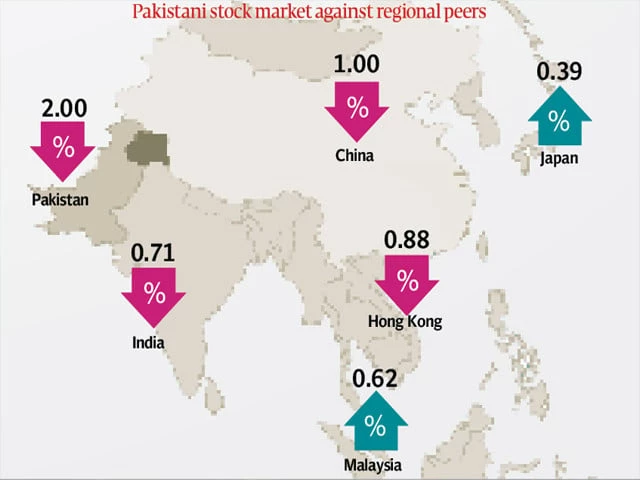
Karachi: The Pakistan Stock Exchange (PSX) ended a volatile trading week on a positive note, with the benchmark KSE-100 Index regaining the crucial 170,000-point level and closing at 172,400 points. Improved investor confidence, encouraging economic indicators, and optimism surrounding the federal budget helped the market recover despite significant fluctuations during the week.
According to Beyond Time News, the KSE-100 Index advanced by 1.13% on a week-on-week basis, gaining nearly 2,000 points as investors responded positively to domestic economic developments and easing geopolitical concerns in the region.
Market Rebounds After Early Weakness
Trading began on a cautious note as investors remained uncertain ahead of the federal budget announcement and developments in the Middle East. On Monday, the benchmark index fell by 1,525 points to close at 168,954, slipping below the important 170,000-point threshold for the first time since late May.
However, investor confidence returned the following day. The market rebounded strongly on Tuesday, climbing 1,377 points to close at 170,331 and reclaiming the lost ground.
Wednesday witnessed renewed selling pressure, pushing the index down by 903 points to 169,427. The market then entered a consolidation phase on Thursday, ending marginally higher at 169,704 points.
The strongest performance came on Friday when the KSE-100 surged by nearly 2,700 points, closing at 172,400. The rally followed reports indicating that potential military action involving Iran had been avoided, easing concerns over regional instability and encouraging investors to increase exposure to equities.
Budget Expectations Support Investor Confidence
Market analysts noted that investor activity remained relatively cautious before the federal budget announcement. Nevertheless, the budget’s focus on economic stability, industrial support, and export promotion helped improve overall market sentiment.
Investors closely monitored fiscal measures aimed at sustaining economic growth, increasing revenue collection, and supporting key sectors of the economy. The government’s commitment to maintaining macroeconomic stability also contributed to confidence among institutional and retail investors.
Record Remittances Strengthen Economic Outlook
One of the most significant economic developments during the week was the announcement of record-breaking remittances.
Pakistan received approximately $4.3 billion in workers’ remittances during May 2026, marking a 15% increase compared to the same month last year and a 20% rise from April. Total remittances during the first eleven months of the fiscal year reached $38.1 billion.
Economists believe strong remittance inflows continue to support foreign exchange reserves, improve external account stability, and provide much-needed support to the country’s economy.
Auto Sector Shows Strong Annual Growth
The automobile sector also delivered encouraging figures. Sales of passenger vehicles, light commercial vehicles, vans, jeeps, and electric vehicles reached 17,660 units during May 2026.
The figures represented a 19% increase compared to May 2025. However, monthly sales declined by around 20%, largely due to reduced business activity during the Eid holidays.
Cumulative vehicle sales during the first eleven months of FY2026 increased by approximately 45%, reflecting improved consumer demand and gradual economic recovery.
Government Debt Continues to Rise
Despite positive indicators in several sectors, concerns remain regarding Pakistan’s rising debt burden.
Latest figures showed that central government debt climbed to Rs81.9 trillion by April 2026, representing a 9.3% increase compared to the previous year. Analysts continue to stress the importance of fiscal discipline and revenue reforms to ensure long-term debt sustainability.
Interest payments remain a significant challenge for policymakers, consuming a substantial portion of government revenues and limiting fiscal space for development spending.
Read more:PSX Surges 2,700 Points as Budget Optimism and Falling Oil Prices Drive Strong Market Rally
Treasury Bill Auction Signals Stable Interest Rates
The government’s latest treasury bill auction attracted strong participation from investors. Authorities raised nearly Rs1.96 trillion against a target of Rs2 trillion.
Short-term yields witnessed minor adjustments. Yields on one-month and six-month treasury bills declined slightly, indicating expectations of stable monetary conditions. Meanwhile, yields on longer-duration instruments recorded modest increases.
Financial experts interpret these movements as a sign that investors expect inflationary pressures to remain manageable while monetary policy stays relatively balanced.
Petroleum Prices Influence Market Sentiment
Fuel pricing adjustments also remained a major topic during the week.
The price of petrol was reduced by Rs4 per litre, offering some relief to consumers. Meanwhile, high-speed diesel prices remained unchanged.
The government’s decision to adjust petroleum levies while maintaining revenue targets attracted significant attention from investors and economists alike. Energy prices continue to play a critical role in inflation trends and business costs across multiple sectors.
Energy Production Records Slight Decline
Data released during the week showed a modest decline in both oil and gas production.
Natural gas output fell by approximately 1.6% during the first week of June, while crude oil production declined by nearly 1%. Industry observers attributed the decrease primarily to operational disruptions and maintenance issues affecting several production fields.
Energy sector performance remains crucial for Pakistan’s broader economic outlook, given the country’s reliance on domestic energy supplies and imported fuel.
Roshan Digital Account Continues to Attract Investment
Pakistan’s Roshan Digital Account (RDA) initiative maintained steady growth.
Total inflows into the programme reached more than $13 billion by the end of May 2026. After accounting for repatriations and domestic utilization, net liabilities stood at approximately $2.7 billion.
The initiative continues to attract overseas Pakistanis interested in investing in local financial markets, government securities, and real estate opportunities.
Retail Investors Lead Market Buying
Investor activity revealed a shift toward local participation.
Foreign corporate investors remained net sellers during the week, offloading shares worth approximately $19.4 million. In contrast, individual investors emerged as the largest buyers, purchasing nearly the same amount of equities.
Average daily trading volumes remained healthy at around 776 million shares, while average daily traded value stood near Rs29 billion, reflecting sustained market liquidity.
Outlook Remains Cautiously Optimistic
Market analysts believe investor sentiment could remain positive if economic stability continues and geopolitical risks remain contained. Strong remittance inflows, improving industrial activity, and supportive fiscal measures are expected to provide additional momentum in the coming weeks.
However, challenges including rising public debt, energy sector constraints, and global economic uncertainties remain key factors that investors will continue to monitor closely.
For now, the recovery above 170,000 points signals renewed confidence in Pakistan’s equity market and highlights investor optimism regarding the country’s economic trajectory.
FAQs
Why did the Pakistan Stock Exchange rise this week?
The PSX gained due to improved investor confidence, easing regional tensions, strong remittance inflows, and positive expectations surrounding the federal budget.
What was the closing level of the KSE-100 Index?
The benchmark KSE-100 Index closed the week at 172,400 points.
How much did Pakistan receive in remittances during May 2026?
Pakistan received a record $4.3 billion in remittances during May 2026.
What impact did the federal budget have on the stock market?
Investors responded positively to budget measures aimed at economic stability, industrial growth, and export promotion.
Who were the major buyers in the market this week?
Individual investors were the largest net buyers, while foreign corporate investors remained net sellers.
#PakistanStockExchange #PSX #KSE100 #PakistanEconomy #FederalBudget2026 #StockMarketNews #Remittances #EconomicGrowth #InvestmentNews #PakistanFinance #CapitalMarkets #BusinessNews