
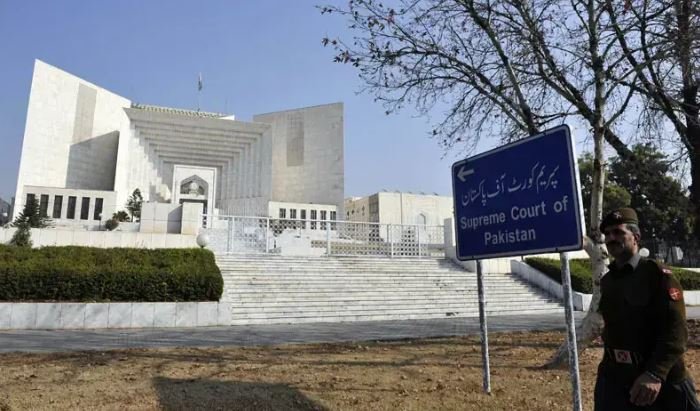
- SC Orders Trial Court to Re-Examine Witness Statement in Sanam Umrani Murder Case
Islamabad: The Supreme Court of Pakistan has ruled that procedural laws should support justice rather than become obstacles to fair trials, reinforcing the constitutional right to due process while ordering a lower court to review a key witness’s recorded testimony in the murder case of advocate Sanam Umrani.
According to Beyond Time News, the apex court set aside the decisions of the lower courts after finding discrepancies between a witness’s video-recorded testimony and its written transcript.
Supreme Court Emphasizes Fair Trial Principles
A two-member bench comprising Justice Jamal Khan Mandokhail and Justice Salahuddin Panwhar heard the criminal appeal filed by Nayab Umrani, the sister of the deceased.
The petitioner challenged the rejection of her request to correct inaccuracies in her recorded testimony. Earlier, both the trial court and the Sindh High Court had dismissed her application.
After reviewing the case, the Supreme Court ruled that procedural requirements must strengthen justice instead of preventing it.
The bench observed that the primary purpose of procedural law is to give voice to those seeking justice and to ensure that courts accurately record evidence.
Trial Court Directed to Verify Witness Statement
The Supreme Court instructed the trial court to carefully compare the petitioner’s video testimony with the written record in the presence of the accused, legal representatives, and the prosecutor.
If any discrepancy, omission, or inaccuracy is found, the court must prepare a memorandum containing the correct version of the statement under Section 360(2) of the Code of Criminal Procedure (CrPC).
The Supreme Court directed the trial court to complete this exercise within 15 working days after receiving the certified copy of the order.
The bench further instructed the trial court to hear fresh arguments, if necessary, and decide the case within 30 days in accordance with the law.
Supreme Court of Pakistan Approves 100% Utility Allowance Hike for Employees from 2026
Case Centers on 2018 Murder of Advocate Sanam Umrani
The appeal relates to the 2018 murder of advocate Sanam Umrani, a lawyer known for her work on women’s rights.
She was killed on May 31, 2018, in Jacobabad, Sindh. Authorities registered the case under multiple provisions of the Pakistan Penal Code, including charges related to murder and criminal conspiracy.
According to Beyond Time News, Nayab Umrani appeared as a prosecution witness and recorded her testimony through a video link from Islamabad with the permission of the trial court.
After obtaining a certified copy of her statement, she identified several inaccuracies. One of the most significant errors involved the date of the incident, which the written record listed as May 30 instead of May 31, 2018.
Court Highlights Importance of Accurate Evidence
The Supreme Court explained that trial courts have a legal duty to ensure that witness statements accurately reflect what is said during testimony.
Judges must read recorded statements to witnesses before finalizing them. Witnesses also have the legal right to point out mistakes or omissions.
The judgment explained that Section 360(2) of the CrPC provides a clear mechanism for recording objections and correcting inaccuracies whenever disputes arise over written testimony.
The bench stressed that maintaining accurate court records protects the rights of all parties and strengthens public confidence in the justice system.
Constitutional Right to Due Process Reaffirmed
The Supreme Court also linked its decision to Article 10-A of the Constitution, which guarantees every individual the right to a fair trial and due process.
The judgment stated that procedural rules exist to facilitate justice rather than create unnecessary technical barriers.
The court emphasized that judges should avoid adopting an overly technical approach if doing so would undermine fairness or prevent the proper administration of justice.
Instead, courts should interpret procedural laws in a manner that advances the purpose for which they were enacted.
Why the Judgment Matters
Legal experts often describe accurate evidence as one of the foundations of a fair criminal justice system.
Errors in witness statements can affect court proceedings, influence judicial findings, and weaken confidence in legal outcomes.
The Supreme Court’s ruling reinforces the principle that courts must prioritize accuracy, transparency, and fairness while ensuring that procedural safeguards protect the rights of both victims and the accused.
The decision may also provide guidance for future criminal trials involving disputes over recorded testimony.
Looking Ahead
The trial court will now review the witness’s video-recorded testimony and compare it with the written record.
Following that process, the court will correct any verified discrepancies before proceeding with final arguments and delivering its judgment within the timeframe set by the Supreme Court.
Supreme Court Restores Full Judicial Schedule, Ends Austerity Measures Introduced in March 2026
Conclusion
The Supreme Court’s decision underscores the importance of balancing procedural compliance with substantive justice. By directing the lower court to verify and correct the witness’s testimony, the apex court reaffirmed that legal procedures should safeguard fairness and ensure that justice is based on an accurate and reliable record.
Frequently Asked Questions
What did the Supreme Court rule in the Sanam Umrani case?
The Supreme Court ruled that procedural laws should promote justice and ordered the trial court to review and correct the witness’s recorded testimony if necessary.
Why did the Supreme Court intervene?
The court found discrepancies between the petitioner’s video testimony and the written court record after lower courts had refused to make corrections.
Who was Sanam Umrani?
Sanam Umrani was a lawyer known for advocating women’s rights. She was killed in Jacobabad, Sindh, in May 2018.
What is Section 360(2) of the CrPC?
It allows witnesses to challenge inaccuracies in their recorded statements and requires courts to document objections and corrections through an official memorandum.
Why is this judgment important?
The ruling reinforces the constitutional right to a fair trial and emphasizes that courts should use procedural laws to ensure justice rather than create unnecessary obstacles.
Hashtags
#SupremeCourtPakistan
#Judiciary
#RuleOfLaw
#FairTrial
#LegalReforms
#Islamabad
#PakistanNews
#CourtJudgment
#JusticeSystem
#BeyondTimeNews