
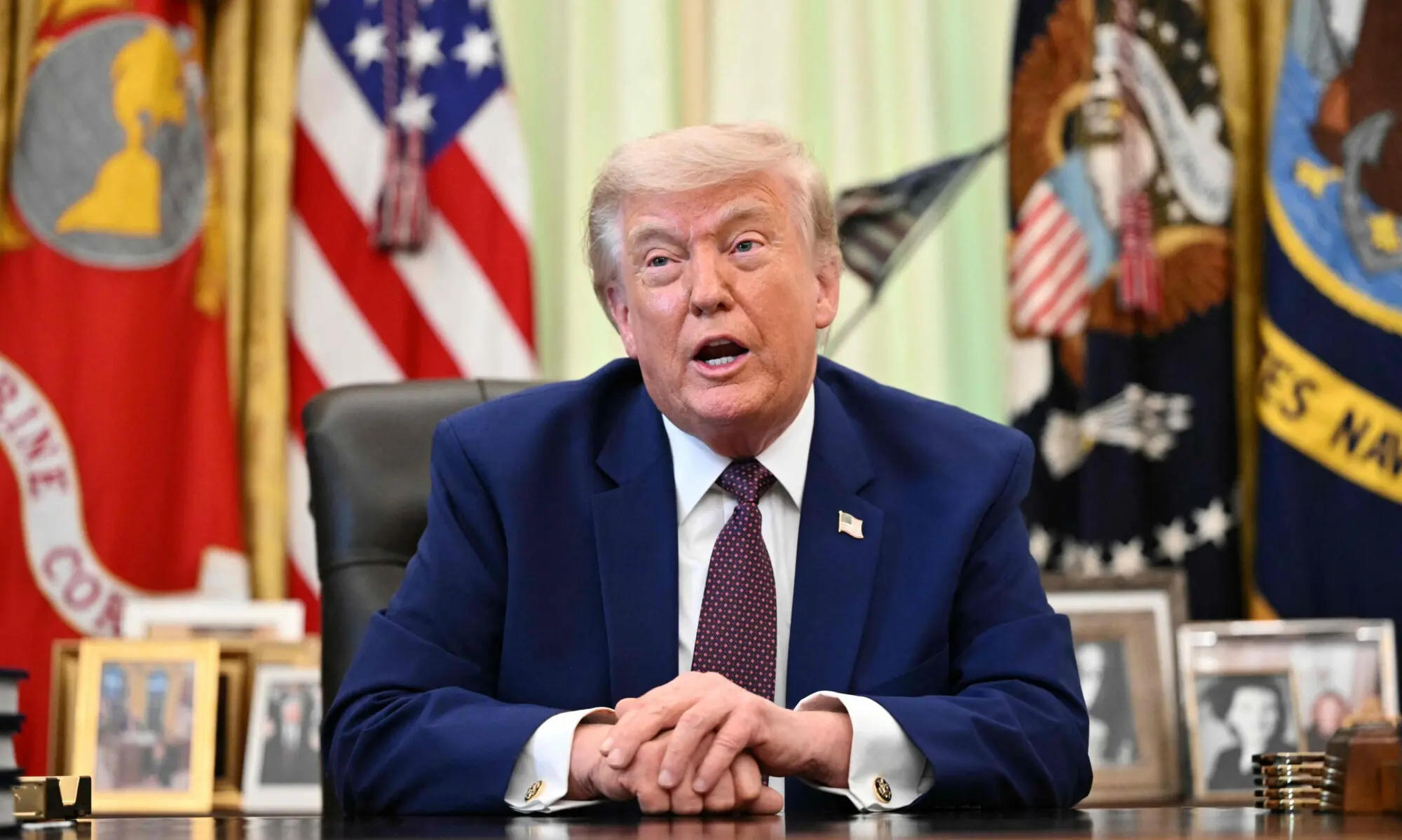
Washington: The Trump administration is exploring the possibility of taking an equity stake in OpenAI, a move that could reshape the relationship between the US government and the rapidly growing artificial intelligence industry.
According to Beyond Time News, discussions focus on ways to ensure that ordinary Americans benefit from the economic gains generated by AI technologies. While President Donald Trump did not name any specific company, recent reports suggest that OpenAI remains at the center of these conversations.
The proposal has sparked debate across political and technology circles. Supporters see it as a way to share AI-driven wealth more broadly. Critics, however, warn that government ownership could blur the line between public institutions and private businesses.
Trump Discusses Public Participation in AI Growth
President Trump confirmed that his administration has discussed several arrangements with artificial intelligence companies.
Speaking to reporters, Trump said officials have explored ideas that would allow Americans to share in the success of the AI sector. He suggested that members of the public could become partners in future growth rather than simply observers.
Moreover, the discussions reflect increasing interest in ensuring that AI-generated profits reach a wider segment of society.
According to reports, administration officials have examined multiple approaches that could connect public interests with the financial success of leading AI firms.
OpenAI’s Public Wealth Fund Proposal Gains Attention
A report by CNBC revealed that OpenAI has held talks with the Trump administration regarding a potential government equity stake.
Part of that equity could support a proposed “Public Wealth Fund.” OpenAI introduced the concept to help distribute some AI-related financial gains directly to citizens.
Supporters argue that such a fund could give people access to economic opportunities created by artificial intelligence, regardless of income level or investment experience.
As AI continues to transform industries, advocates believe broader participation could help reduce economic inequality and expand access to future wealth creation.
Sam Altman Explores Government Involvement
Reports indicate that OpenAI CEO Sam Altman has explored the possibility of government stakes in major AI companies since early 2025.
The discussions reflect a broader debate about how governments should respond to the rapid rise of artificial intelligence. Some policymakers support stronger public involvement, while others prefer a market-driven approach.
Meanwhile, AI companies continue to attract massive investments as competition intensifies across the sector.
Trump’s Interest in Strategic Corporate Stakes
The idea aligns with President Trump’s previous interest in government ownership of private companies.
Last year, the administration reportedly pursued a 10 percent stake in Intel as the chipmaker faced financial challenges and growing competitive pressure.
Supporters argue that strategic investments can protect national interests and strengthen critical industries. However, opponents warn that government ownership may create conflicts between political goals and business objectives.
Bernie Sanders Proposes Major AI Stock Tax
The debate extends beyond party lines.
Recently, Bernie Sanders proposed a one-time 50 percent tax on major AI companies in the form of stock ownership. His proposal targets firms such as OpenAI, Anthropic, and xAI.
Sanders argued that public ownership would give citizens a voice in shaping the future of artificial intelligence. In addition, he said the approach could help distribute AI-generated wealth more fairly across society.
With several AI firms expected to pursue public listings, the proposal has attracted significant attention from investors and policymakers alike.
Former Trump Adviser Sees Growing Support
Even some conservative voices acknowledge the appeal of broader public participation in AI profits.
Former White House AI and crypto adviser David Sacks said Sanders’ proposal resonates with many people across the political spectrum.
However, he also warned that increasing government ownership could accelerate the merging of corporate and political interests. According to Sacks, policymakers must carefully balance public benefits with the need to preserve market independence.
Sacks currently serves as co-chair of the President’s Council of Advisors on Science and Technology.
Concerns Over OpenAI’s Financial Future
The discussions have also fueled speculation about OpenAI’s long-term financial position.
On social media, former Microsoft executive Dare Obasanjo suggested that policymakers may be laying the groundwork for a future government-backed rescue package if OpenAI faces financial challenges.
Although no evidence currently points to a bailout plan, the comments highlight growing concerns about the enormous costs associated with developing advanced AI systems.
As companies spend billions on infrastructure, research, and computing power, questions about funding and sustainability continue to attract attention.
What This Means for the AI Industry
The debate over government ownership marks a major shift in how policymakers view artificial intelligence.
Traditionally, governments regulated emerging industries from the outside. Now, some leaders want direct participation in the economic benefits created by AI.
As discussions continue, the outcome could influence investment strategies, corporate governance, and the future relationship between governments and technology companies.
For now, officials have not announced any final decision. Nevertheless, the conversations signal that artificial intelligence has become a central issue in both economic policy and national strategy.
FAQs
Why is the Trump administration considering a stake in OpenAI?
Officials reportedly want to explore ways for Americans to benefit directly from AI-driven economic growth.
What is OpenAI’s proposed Public Wealth Fund?
The proposal aims to distribute some AI-generated financial gains to citizens, allowing broader participation in future economic opportunities.
Has the government confirmed an investment in OpenAI?
No. Discussions remain ongoing, and authorities have not announced a final agreement.
What did Bernie Sanders propose regarding AI companies?
Sanders suggested a one-time 50 percent tax in stock form on major AI firms to increase public ownership and influence.
Why are experts concerned about government ownership of AI companies?
Critics fear that government stakes could increase political influence over private companies and blur the boundaries between business and public policy.
#OpenAI #ArtificialIntelligence #DonaldTrump #SamAltman #AIIndustry #TechnologyNews #USPolitics #PublicWealthFund #AIInvestment #TechNews


2 thoughts on “Trump Administration Considers Stake in OpenAI as Debate Grows Over Public Ownership of AI Wealth”
Comments are closed.