
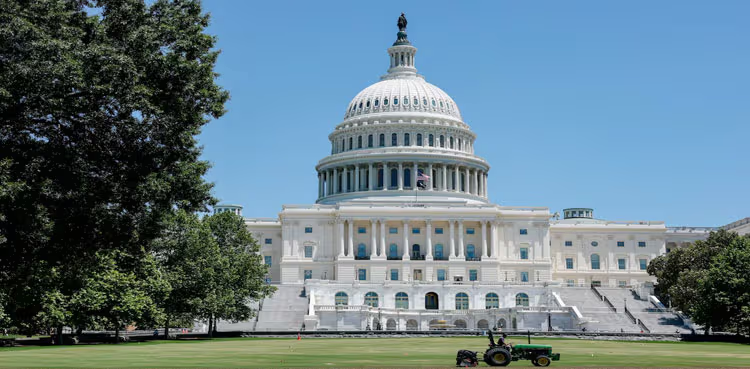
Washington: The U.S. Senate has approved a major immigration enforcement funding package, handing President Donald Trump a significant legislative victory while rejecting efforts to permanently eliminate a controversial fund that critics describe as a political “slush fund.”
According to Beyond Time News, the Senate voted 52-47 early Friday to pass legislation that would provide an additional $70 billion to the Department of Homeland Security (DHS) for immigration enforcement operations. The bill now moves to the House of Representatives for final consideration.
Senate Approves Major Immigration Enforcement Funding
The legislation allocates substantial new funding to support immigration enforcement activities over the next three years.
Most of the money will go to agencies within DHS, including Immigration and Customs Enforcement (ICE) and the U.S. Border Patrol. These agencies play a central role in the Trump administration’s immigration policies and deportation operations.
Republican lawmakers argued that the additional funding will strengthen border security, improve enforcement capabilities, and support ongoing efforts to address illegal immigration.
The vote largely followed party lines. No Senate Democrats supported the measure. Republican Senator Lisa Murkowski was the only Republican to vote against the bill.
Debate Centers on Trump’s “Anti-Weaponization” Fund
A major point of contention during the debate involved a proposed $1.8 billion “anti-weaponization” fund.
Supporters say the fund could compensate individuals who claim they were unfairly targeted or mistreated by government agencies. Critics, however, argue that it could benefit Trump’s political allies and lacks sufficient oversight.
Democratic lawmakers pushed several amendments to permanently block the fund. None of those proposals gained enough support to pass.
Senate Democratic Leader Chuck Schumer led the effort to eliminate the fund. His proposal failed by a narrow 50-49 vote after several Republicans joined Democrats but fell short of securing majority support.
Following the vote, Schumer criticized Republicans for refusing to permanently prohibit the fund, arguing that taxpayers were being asked to rely on political assurances rather than legal restrictions.
Republicans Cite Justice Department Assurances
Senate Republican Leader John Thune said the issue had effectively been resolved after acting Attorney General Todd Blanche testified before Congress that the Justice Department would not proceed with the fund.
Democrats remained skeptical and argued that verbal commitments alone do not provide sufficient legal guarantees.
The controversy intensified after Trump indicated he intended to nominate Blanche to lead the Justice Department permanently. Such a nomination would require Senate confirmation.
Although Thune defended Blanche’s credibility, he acknowledged that the confirmation process could face significant political challenges.
Internal Republican Divisions Emerge
The debate exposed divisions within Republican ranks ahead of the upcoming midterm elections.
Several GOP senators expressed concerns that the fund could become a political liability. Some lawmakers sought amendments to eliminate or redirect the money to other purposes.
Republican Senator Susan Collins joined Democrats on key procedural votes related to the fund. Senators Jon Husted and Dan Sullivan also supported efforts to challenge the proposal.
Republican Senator Thom Tillis initially argued that Congress should formally block the fund. He later voted in favor of the overall legislation after his proposed changes failed.
Other Amendments Also Rejected
Lawmakers considered several unrelated amendments during the lengthy Senate debate.
Some proposals aimed to prevent federal funds or private donations from supporting Trump’s planned 90,000-square-foot White House ballroom project. Others sought to restrict spending on the anti-weaponization fund.
The Senate rejected all of those amendments, allowing the underlying legislation to move forward largely unchanged.
The debate took place during an extended “vote-a-rama” session, a process that allows senators to consider numerous amendments before a final vote.
Critics Warn of Constitutional Concerns
Opponents of the fund continue to raise legal and constitutional objections.
Senator Bill Cassidy joined Senator Cory Booker in supporting legal efforts to maintain a court-ordered block on the fund.
They argued that the proposal could undermine congressional authority and create concerns about executive power.
A federal judge temporarily blocked the fund last week, and legal challenges remain ongoing.
House Vote Expected Next Week
The House of Representatives is expected to consider the legislation in the coming days.
If lawmakers approve the measure, the bill will provide billions of dollars in new resources for immigration enforcement while leaving the future of the anti-weaponization fund unresolved.
The outcome will likely remain a major political issue as both parties prepare for the upcoming midterm elections and continue debating immigration policy, government spending, and executive authority.
FAQs
What did the U.S. Senate approve?
The Senate approved a bill providing an additional $70 billion for immigration enforcement through the Department of Homeland Security.
What is the anti-weaponization fund?
The proposed $1.8 billion fund could compensate individuals who claim government agencies unfairly targeted them. Critics argue it could benefit Trump’s political allies.
Did lawmakers ban the fund?
No. Senate lawmakers rejected amendments that would have permanently prohibited the fund.
Which senator voted against the immigration funding bill?
Senator Lisa Murkowski of Alaska was the only Republican who voted against the legislation.
What happens next?
The House of Representatives will review the bill before it can become law.
#USSenate #DonaldTrump #ImmigrationPolicy #ICEFunding #BorderSecurity #USPolitics #ChuckSchumer #JohnThune #CongressNews #PoliticalNews


One thought on “US Senate Approves $70 Billion Immigration Funding Bill, Rejects Efforts to Block Trump’s Controversial Fund”
Comments are closed.