
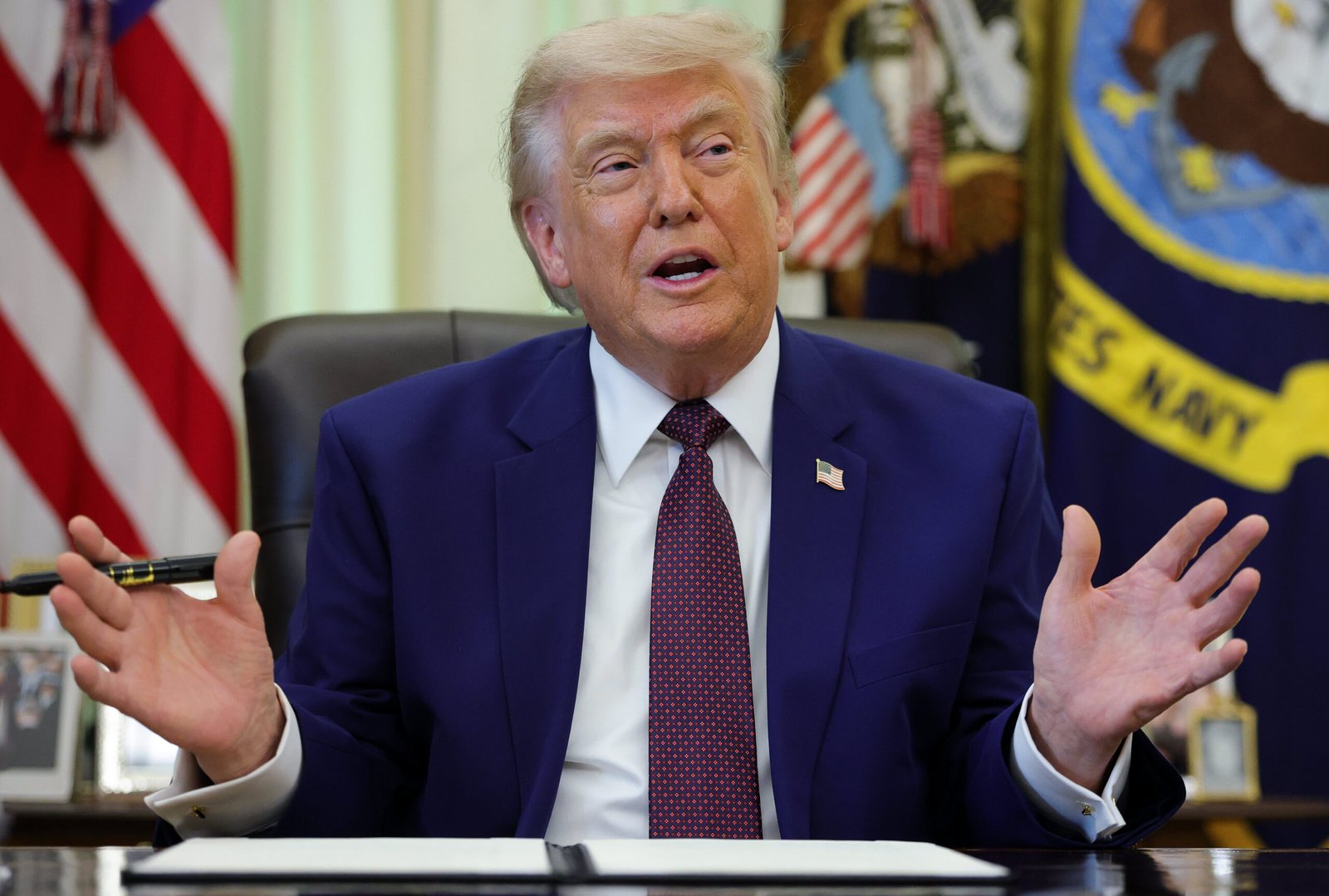
- Washington: Trump Says Iran Offering Major Concessions as Diplomatic Talks Continue
United States President Donald Trump has claimed that Iran is making substantial concessions during ongoing negotiations aimed at easing tensions and establishing a broader framework for regional stability.
Speaking to reporters in Washington, Trump expressed confidence about the progress of talks between Washington and Tehran, saying recent developments were moving in a positive direction. His remarks came as officials from both countries prepared for another round of discussions expected in the coming days.
According to Beyond Time News, the latest diplomatic efforts have generated international attention, with both sides presenting different interpretations of the emerging agreement while emphasizing their own political achievements.
Trump Highlights Progress in Negotiations
President Trump described the negotiations as favorable for the United States and suggested that Iran had shown flexibility on several issues under discussion.
He also indicated that Tehran had communicated assurances regarding commercial shipping through the Strait of Hormuz, one of the world’s most strategically important maritime routes.
The waterway serves as a critical corridor for global energy supplies and international trade. Any agreement that helps ensure safe navigation through the strait could have significant implications for regional stability and global markets.
Despite Trump’s optimistic assessment, details surrounding the negotiations remain the subject of competing narratives from both governments.
Iran Presents Agreement as Diplomatic Success
Iranian Parliament Speaker Mohammad Bagher Ghalibaf offered a sharply different interpretation of the emerging agreement.
Addressing a conference in Azerbaijan, he argued that the understanding reached through negotiations reflected the resilience of Iran rather than external pressure.
According to Beyond Time News, Ghalibaf described the agreement as evidence that Iran had successfully defended its interests while maintaining its sovereignty and national position during a period of regional conflict.
Iranian officials have repeatedly emphasized that any future arrangements must respect national independence and regional self-determination.
Debate Continues Over Regional Security
Iranian leaders used the occasion to reiterate long-standing positions regarding security arrangements in the Middle East.
Ghalibaf argued that regional countries should play the primary role in shaping the future security architecture of the region and called for greater cooperation among neighboring states.
He also stressed the importance of respecting national sovereignty and avoiding interference in domestic affairs.
The comments reflect broader debates across the Middle East regarding the role of international military forces, regional alliances, and future security partnerships.
Strait of Hormuz Remains a Key Focus
One of the most closely watched aspects of the negotiations involves navigation through the Strait of Hormuz.
Oman has announced a temporary maritime corridor designed to facilitate commercial shipping through the strategic waterway while consultations continue among regional stakeholders.
The initiative aims to support uninterrupted maritime traffic and reduce uncertainty for international shipping companies.
Energy analysts note that stability in the Strait of Hormuz remains crucial because a significant portion of the world’s oil and gas exports passes through the route.
Any disruption could have far-reaching consequences for global energy prices and supply chains.
Nuclear Oversight Remains Under Discussion
Questions surrounding Iran’s nuclear activities continue to be an important part of diplomatic discussions.
International Atomic Energy Agency (IAEA) Director General Rafael Grossi has stated that international monitoring and verification measures remain central to any long-term arrangement.
Iranian officials, however, have stressed that access to certain facilities and materials will be addressed within the framework of a final agreement rather than through public pressure.
The issue highlights one of the most sensitive components of ongoing negotiations and remains a major point of interest for the international community.
US Congress Signals Growing Scrutiny
While negotiations continue, President Trump is facing increasing scrutiny from members of Congress.
Both chambers of the US Congress have recently approved measures aimed at limiting future military action involving Iran, reflecting concerns among lawmakers about the costs and risks associated with prolonged conflict.
Although legal experts continue to debate the practical impact of these resolutions, the votes illustrate a growing desire among some legislators for greater congressional oversight of foreign military engagements.
The issue has also become part of the broader domestic political debate ahead of upcoming elections.
Regional Leaders Closely Monitoring Developments
Governments across the Middle East continue to follow the negotiations closely.
Senior US officials have held discussions with Gulf leaders regarding regional security, maritime stability, and the future implementation of any agreement reached between Washington and Tehran.
Diplomatic observers believe that successful implementation could help reduce tensions across several conflict zones and create opportunities for broader regional cooperation.
At the same time, unresolved disputes and competing strategic interests mean that significant challenges remain.
Why the Negotiations Matter
The ongoing discussions are important because they affect multiple issues simultaneously, including regional security, energy markets, international trade routes, nuclear oversight, and diplomatic relations.
A durable agreement could contribute to greater stability in the Middle East while reducing the risk of military escalation.
For global markets, assurances regarding maritime security and energy flows are particularly significant given the economic importance of the Gulf region.
Possible Implications
If negotiations continue to progress, both countries may move toward a more comprehensive framework covering security, economic cooperation, and regional issues.
However, differences in interpretation and domestic political pressures on both sides could complicate implementation.
Analysts suggest that long-term success will depend on sustained diplomatic engagement, transparency, and confidence-building measures among all parties involved.
Conclusion
The latest phase of US-Iran diplomacy has produced cautious optimism, with President Donald Trump claiming Iran is making major concessions while Iranian leaders portray the agreement as a strategic success for Tehran. As discussions continue and regional stakeholders remain engaged, the outcome could influence security, trade, and diplomatic relations across the Middle East for years to come. The coming rounds of negotiations are expected to provide greater clarity on how the evolving framework will be implemented and whether it can deliver lasting stability.
Frequently Asked Questions
What did Donald Trump say about Iran negotiations?
Trump said Iran was making significant concessions and expressed confidence about the progress of ongoing talks.
How has Iran responded to the agreement?
Iranian officials have described the agreement as a diplomatic success and a result of the country’s resilience and negotiating position.
Why is the Strait of Hormuz important?
The Strait of Hormuz is a major global shipping route through which a large share of the world’s energy exports passes.
What role does the IAEA play in the negotiations?
The International Atomic Energy Agency is responsible for monitoring and verifying nuclear-related commitments under any future agreement.
Why are US lawmakers debating the issue?
Members of Congress are seeking greater oversight of military actions and foreign policy decisions related to Iran and regional conflicts.
Hashtags
#IranUSRelations
#DonaldTrump
#IranTalks
#MiddleEast
#StraitOfHormuz
#GlobalSecurity
#Diplomacy
#InternationalRelations
#NuclearNegotiations
#WorldNews
2 thoughts on “Trump Claims Iran Making Major Concessions as US-Iran Talks Advance, Tehran Calls Agreement a Victory”
Comments are closed.