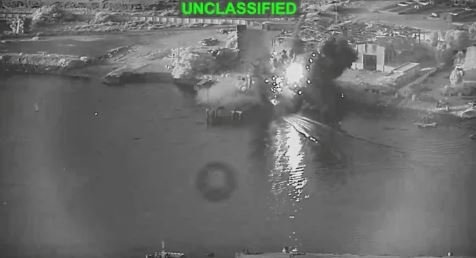
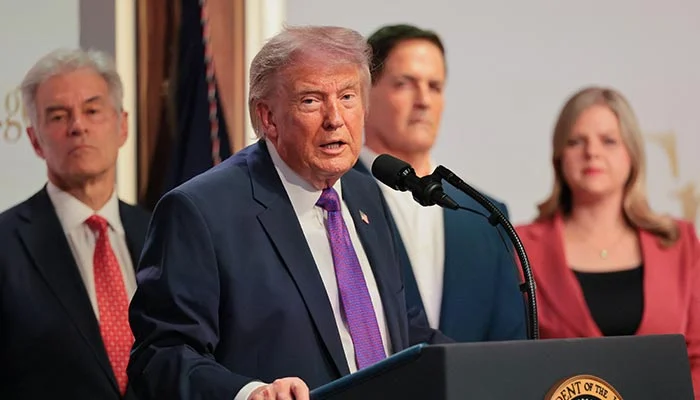
Washington D.C. — United States President Donald Trump revealed on Tuesday that he had been on the verge of launching a major military strike against Iran — but pulled back at the last moment after Gulf Arab allies urged him to give diplomacy one more chance.
According to Beyond Time News, Trump announced the decision on his Truth Social platform, stating that the leaders of Qatar, Saudi Arabia, and the United Arab Emirates personally asked him to hold off on a planned military attack scheduled for Tuesday, citing ongoing serious negotiations with Tehran.
Trump’s Warning Remains on the Table
While Trump stepped back from immediate military action, he made clear the threat has not gone away.
He said he had instructed the US military to remain fully prepared to carry out a “full, large scale assault of Iran, on a moment’s notice” if an acceptable deal was not reached. The message was direct — diplomacy has a window, but it is not open indefinitely.
Speaking later at a White House event, Trump expressed cautious optimism about the situation, saying there had been a “very positive development” and that Arab allies believed a deal was within reach — one that would leave Iran without nuclear weapons.
“There seems to be a very good chance that they can work something out. If we can do that without bombing the hell out of them, I’d be very happy,” Trump said.
What Iran Is Demanding
Iran has not made negotiations easy. Tehran has repeatedly pushed back against Trump’s proposals and has laid out a demanding list of conditions for any agreement.
According to Beyond Time News, Iran is seeking the release of frozen Iranian assets held abroad, the lifting of long-standing international sanctions, and war reparations from the United States. Iranian President Masoud Pezeshkian — considered a moderate within a government increasingly dominated by the hardline Revolutionary Guards — sought to strike a careful balance, saying that engaging in talks with Washington “does not mean surrender” and that Iran would continue to defend its “dignity” and sovereign rights.
Iranian foreign ministry spokesman Esmaeil Baqaei confirmed that exchanges between Tehran and Washington were taking place through mediator Pakistan, adding that Iran had clearly communicated its concerns through that channel.
The Nuclear Question at the Center of It All
At the heart of the dispute lies Iran’s nuclear program — and the two sides remain far apart.
Iran’s Fars news agency reported that the United States presented a five-point proposal that included a demand for Iran to keep only one nuclear facility operational and transfer its stockpile of highly enriched uranium to the US. Washington also reportedly refused to release even a fraction of Iran’s frozen assets or pay any reparations.
However, Iran’s Tasnim news agency — citing a source close to the Iranian negotiating team — reported one notable step forward: the United States agreed in the latest round of talks to waive oil sanctions while negotiations remain active. It was a small but potentially meaningful concession.
Iran, for its part, has consistently denied that it is pursuing nuclear weapons.
Iran Tightens Its Grip on the Strait of Hormuz
While talks continue, Iran has not loosened its grip on one of the world’s most critical energy corridors.
The Strait of Hormuz — the narrow waterway through which a significant portion of the world’s oil supply flows — has remained largely under Iranian control since the start of the conflict. Iran has kept it mostly closed, sending global oil prices spiraling and adding significant economic pressure to an already volatile situation.
In a significant development this week, Iran announced the formation of the Persian Gulf Strait Authority — a new body established specifically to manage the strait. The authority said it would provide real-time updates on the waterway through social media platform X.
Adding to the tension, Iran’s Revolutionary Guards announced that internet fiber optic cables passing through the strait could be brought under an Iranian system of permits — a move that signals Tehran’s intention to extend its control well beyond just shipping lanes.
Earlier Iranian Proposals Included Broader Regional Demands
In an earlier proposal sent last week, Iran called for an end to hostilities across all fronts — including Israel’s military campaign in Lebanon — as well as a halt to a US naval blockade on Iranian ports that has been in place since April 13.
Tehran also made clear it intends to continue managing the Strait of Hormuz regardless of any deal — a demand that is likely to remain a major sticking point in ongoing negotiations.
Oil Prices and the Bigger Economic Picture
With global energy markets watching every development closely, the US Treasury moved to ease some pressure on Monday — extending by 30 days a sanctions waiver for Russian oil cargoes already at sea. The move continues a broader pattern of easing economic pressure on Moscow following its 2022 invasion of Ukraine.
The extension reflects the complex web of geopolitical and economic considerations that surround the Iran conflict — where decisions made in one corner of the world quickly ripple across global oil markets and beyond.
According to Beyond Time News, diplomatic efforts are continuing with renewed urgency as both sides navigate one of the most delicate and high-stakes standoffs in recent international history.