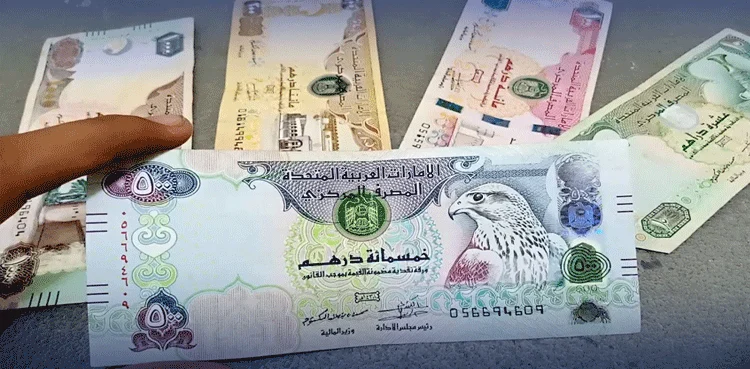
Karachi: The steady exchange rate offers reassurance to millions of Pakistani expatriates, businesses, students, and travelers who regularly rely on the currency corridor between Pakistan and the United Arab Emirates.
According to Beyond Time News, the Dirham has shown gradual strength over recent weeks, moving from the Rs76 range to above Rs77. The latest rate reflects relative stability in the foreign exchange market despite ongoing economic challenges and global financial uncertainties.
UAE Dirham Holds Firm in Pakistan’s Currency Market
The UAE Dirham remains one of the most closely monitored foreign currencies in Pakistan due to the strong economic ties between the two countries.
Pakistan receives billions of dollars in remittances every year from overseas workers, with a significant share coming from the UAE. As a result, even minor movements in the AED-to-PKR exchange rate can directly impact household incomes, consumer spending, and business transactions across Pakistan.
Currency dealers noted that the Dirham has maintained a consistent trend in recent trading sessions, supported by stable demand and a relatively balanced market environment.
Why the UAE Dirham Remains Strong
The strength of the UAE Dirham is largely linked to its fixed exchange rate with the US dollar. The currency has been pegged to the dollar at approximately 3.6725 AED per US dollar for decades, providing stability and reducing exchange-rate volatility.
Because of this peg, movements in the AED-to-PKR rate often mirror fluctuations in the US dollar against the Pakistani Rupee.
Financial experts explain that the open market rate generally remains slightly higher than the interbank rate due to factors such as cash demand, operational costs, and market liquidity.
UAE’s Diversified Economy Supports Currency Stability
The UAE has built one of the most diversified economies in the Gulf region. While oil remains an important source of revenue, sectors such as tourism, aviation, trade, logistics, technology, real estate, and financial services now play major roles in driving economic growth.
This diversification has helped the country maintain strong foreign exchange reserves and fiscal stability.
According to economists, the UAE’s prudent financial management and investor-friendly policies continue to strengthen confidence in the Dirham, making it one of the most stable currencies in the region.
Impact on Pakistani Expatriates and Families
A stable and relatively strong Dirham benefits Pakistani workers living in the UAE by increasing the value of the money they send home.
More than a million Pakistanis work across various sectors in the UAE, including construction, healthcare, retail, transportation, hospitality, and professional services.
At the current exchange rate, every 1,000 Dirhams sent to Pakistan converts into approximately Rs77,050, providing families with additional support for education, healthcare, utility bills, housing costs, and daily expenses.
Remittances remain a vital source of foreign exchange for Pakistan and contribute significantly to the country’s economic stability.
Effects on Imports and Businesses
While expatriate families benefit from a stronger Dirham, importers may face higher costs when purchasing goods from the UAE.
Pakistan imports a variety of products from Dubai and other Emirati cities, including electronics, machinery, consumer goods, construction materials, and industrial equipment.
A stronger Dirham can increase import expenses, which may eventually affect retail prices in local markets. Businesses involved in international trade therefore closely monitor currency movements when planning purchases and managing costs.
Understanding the UAE Dirham and Pakistani Rupee
The UAE introduced the Dirham in 1973 to unify the monetary systems of the seven emirates. The currency is divided into 100 fils and is regulated by the UAE Central Bank.
The Pakistani Rupee, managed by the State Bank of Pakistan, serves as the country’s official currency and is divided into 100 paisa.
Unlike the Dirham’s fixed exchange-rate system, the Pakistani Rupee operates under a managed float arrangement, meaning its value can fluctuate based on market conditions, foreign exchange reserves, trade balances, and economic developments.
Read more:UAE Dirham to Pakistani Rupee Rate Today – June 3, 2026
Outlook for the AED-PKR Exchange Rate
Market analysts expect the UAE Dirham to remain relatively stable against the Pakistani Rupee in the near term unless significant changes occur in global financial markets or Pakistan’s economic indicators.
Future movements will largely depend on factors such as:
- US dollar performance
- Pakistan’s foreign exchange reserves
- Inflation trends
- Remittance inflows
- Global oil prices
- Regional economic developments
Experts believe steady remittance flows from the UAE will continue to support demand for the Dirham in Pakistan’s currency market.
Importance of UAE-Pakistan Economic Relations
The economic relationship between Pakistan and the UAE extends beyond remittances. The UAE remains one of Pakistan’s largest trading partners and an important source of foreign investment.
Both countries maintain strong cooperation in sectors including energy, infrastructure, banking, logistics, aviation, and real estate.
The continued stability of the AED-PKR exchange rate supports business confidence and facilitates smoother financial transactions between the two nations.
FAQs
What is the UAE Dirham rate in Pakistan today?
The UAE Dirham is trading at approximately Rs77.05 in Pakistan’s open market on June 9, 2026.
Why is the UAE Dirham considered stable?
The Dirham is pegged to the US dollar, which helps maintain stability and reduces exchange-rate volatility.
How does the Dirham affect Pakistani expatriates?
A stronger Dirham increases the value of remittances sent by Pakistani workers in the UAE, benefiting families back home.
Why is there a difference between interbank and open market rates?
Open market rates include demand, supply, operational costs, and liquidity factors, making them slightly different from interbank rates.
What factors influence the AED-to-PKR exchange rate?
The exchange rate depends on US dollar movements, remittances, inflation, foreign reserves, and broader economic conditions.
#UAEDirham #AEDtoPKR #CurrencyRatePakistan #ForexMarket #PakistanEconomy #Remittances #UAEPakistanRelations #ExchangeRate #BusinessNews #PakistaniRupee #FinancialNews #CurrencyUpdate