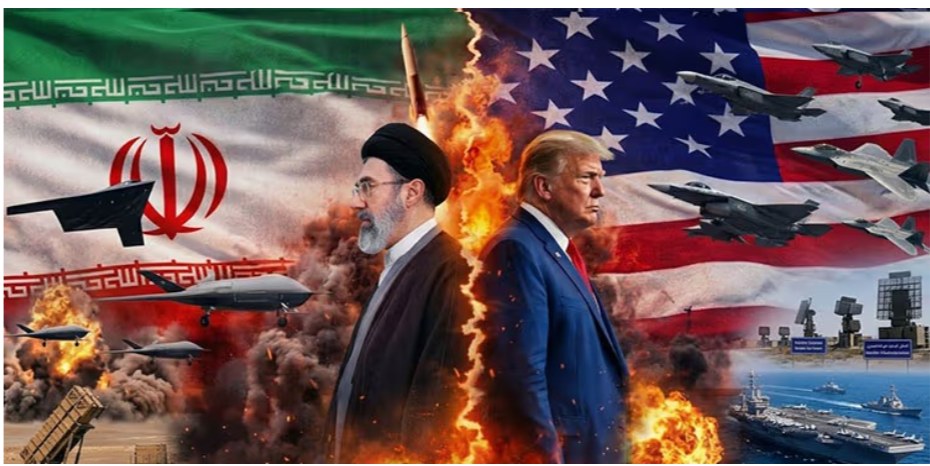
Dubai/Washington: Tensions between the United States and Iran escalated sharply on Thursday as both sides exchanged fresh military strikes for a second consecutive day, casting serious doubt on efforts to preserve a fragile ceasefire and increasing concerns about broader instability across the Middle East.
According to Beyond Time News, the latest wave of attacks has heightened fears of a prolonged conflict that could further disrupt global energy markets, threaten regional security, and complicate ongoing diplomatic efforts aimed at ending months of hostilities.
Fresh Military Strikes Deepen Crisis
The renewed confrontation follows a series of military incidents that intensified earlier this week after a US Apache helicopter was reportedly brought down near the strategically important Strait of Hormuz. The incident triggered retaliatory operations from both sides, resulting in attacks on military facilities and strategic targets across the region.
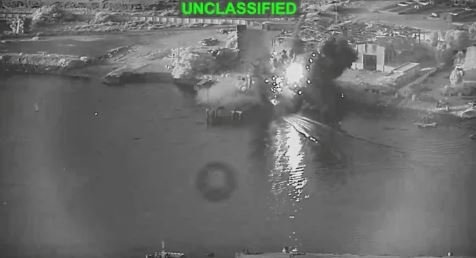
The US military announced that its latest operation targeted Iranian surveillance infrastructure, communication networks, and air defense installations. American officials described the strikes as a response to what they called continued hostile actions by Tehran.
The operation lasted several hours and concluded shortly after midnight local time in Iran. US military officials stated that the strikes were designed to weaken Iran’s military capabilities while protecting American forces and regional allies.
Trump Warns of Further Military Action
US President Donald Trump adopted a firm stance following the attacks, warning that additional military action could follow unless Iran agrees to a peace arrangement with Washington.
Speaking through media reports, Trump indicated that while current operations may pause temporarily, the United States remains prepared to resume large-scale military strikes if diplomatic progress is not achieved.
His comments immediately influenced global financial markets, with oil prices rising significantly amid concerns that further escalation could threaten energy supplies from the Gulf region.
Analysts note that uncertainty surrounding the conflict continues to create volatility in international oil markets, given the region’s crucial role in global energy exports.
Iran Launches Counterattacks on Regional Bases
In response to the US strikes, Iran’s Islamic Revolutionary Guard Corps (IRGC) announced a series of retaliatory attacks targeting American military installations in several Gulf countries.
Iranian officials claimed that military facilities in Kuwait and Bahrain were among the targets, along with locations associated with the US Navy’s Fifth Fleet. Additional missile launches were reportedly directed toward military positions in Jordan.
Regional defense systems were activated following the attacks. Authorities in Bahrain reported intercepting incoming aerial threats, while Kuwaiti defense forces confirmed that air defense units engaged hostile targets approaching the country’s airspace.
The exchange of strikes has increased security concerns across the Gulf, where several countries host US military personnel and strategic facilities.
Dispute Over the Strait of Hormuz
One of the most contentious aspects of the current crisis remains the status of the Strait of Hormuz, a critical maritime route through which a substantial portion of the world’s oil and natural gas supplies pass.
Iranian military officials warned that vessels attempting to navigate the waterway could face military action. Iranian media reports suggested that foreign ships had been targeted in the area.
However, US Central Command rejected claims that the strait had been fully closed and stated that commercial shipping continued to transit the route despite ongoing tensions.
The disagreement highlights the strategic importance of the waterway and underscores fears that any disruption could have significant economic consequences worldwide.
Explosions Reported Across Multiple Iranian Cities
Reports from Iran indicated that explosions were heard in several locations across the country, including areas near the Strait of Hormuz and other regions farther inland.
The reported incidents came amid continued military operations and heightened security measures. Authorities have not released comprehensive details regarding the extent of damage or casualties resulting from the latest attacks.
Observers say the widespread nature of the reported strikes demonstrates the expanding geographic scope of the conflict and the challenges facing diplomatic efforts to contain it.
Diplomatic Efforts Struggle to Gain Momentum
Despite repeated international calls for restraint, negotiations aimed at ending the conflict have yet to produce a breakthrough.
US officials maintain that military pressure is intended to strengthen Washington’s position at the negotiating table. Iran, meanwhile, continues to demand significant concessions, including sanctions relief and broader regional security guarantees.
The two sides have exchanged accusations regarding responsibility for the ongoing violence, making a negotiated settlement increasingly difficult to achieve.
Political analysts warn that continued escalation could further reduce the chances of a peaceful resolution and increase the risk of a wider regional confrontation.
Humanitarian and Economic Impact Growing
The conflict, now entering its fourth month, has already caused significant human and economic consequences. Thousands of people have reportedly been affected by the fighting, while disruptions to energy supplies have contributed to rising fuel prices around the world.
Shipping routes, energy infrastructure, and regional trade networks have faced growing pressure as uncertainty continues to affect international markets.
The economic fallout has also created political challenges within the United States, where rising energy costs have become a major concern for consumers and policymakers.
Read more:Naqvi Delivers Special Message to Iran’s Leadership as Pakistan Pushes US-Iran Mediation Efforts
Fighting Continues in Lebanon
Alongside the US-Iran confrontation, violence has continued in Lebanon, where clashes between Israeli forces and Hezbollah remain ongoing.
Reports indicate that Israeli airstrikes targeted locations in southern Lebanon, resulting in casualties and renewed exchanges of fire across the border region.
The parallel conflict adds another layer of complexity to an already volatile regional situation, increasing concerns among international observers about the possibility of a broader Middle East conflict.
Uncertain Path Ahead
With military operations continuing and diplomatic negotiations showing little progress, the future of the US-Iran standoff remains uncertain.
International leaders have repeatedly called for restraint and renewed dialogue, warning that further escalation could have serious consequences for regional stability, global energy security, and international peace efforts.
As both sides maintain firm positions, the coming days are expected to be critical in determining whether diplomacy can prevent a deeper and more dangerous conflict.
FAQs
Why are the United States and Iran exchanging military strikes?
The latest escalation follows the reported downing of a US Apache helicopter near the Strait of Hormuz, which triggered retaliatory actions from both sides.
Why is the Strait of Hormuz important?
The Strait of Hormuz is one of the world’s most important shipping routes for oil and natural gas exports, making it vital to global energy markets.
How has the conflict affected oil prices?
Concerns about disruptions to energy supplies have pushed oil prices higher as investors react to growing geopolitical uncertainty.
What are the main demands of both sides?
The United States seeks security guarantees and restrictions on Iran’s nuclear ambitions, while Iran has called for sanctions relief and broader regional concessions.
Could the conflict spread further across the Middle East?
Analysts warn that continued military escalation increases the risk of broader regional instability involving multiple countries and armed groups.
#USIranConflict #MiddleEastCrisis #StraitOfHormuz #GlobalOilMarkets #RegionalSecurity #IranUSTensions #WorldNews #BreakingNews #Diplomacy #EnergySecurity