
Washington D.C. — Wars are rarely decided by soldiers alone. Behind every headline about airstrikes and naval confrontations, there are quieter conversations happening in rooms the public never sees — diplomatic signals passed through trusted intermediaries, carefully worded messages exchanged between governments that cannot afford to be seen talking directly.
This week, one of those quiet conversations became very public.
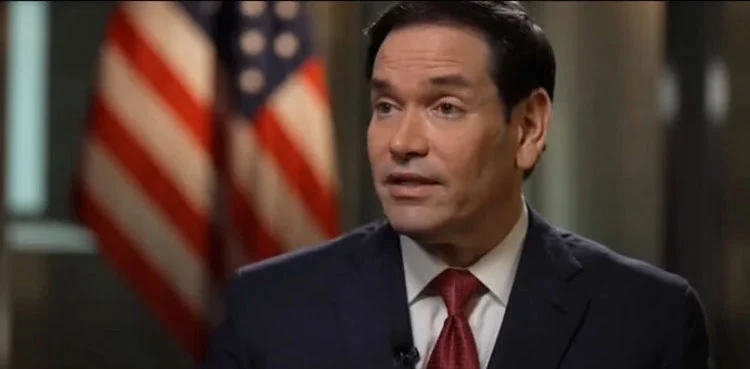
US Secretary of State Marco Rubio, speaking to NBC, confirmed something that few people saw coming. Pakistan asked the United States to pause ‘Project Freedom.’ Washington agreed. And in doing so, Islamabad demonstrated a level of influence over American military decision-making that almost nobody had anticipated.
In the middle of an active war — one that has blockaded a critical global oil route, drawn multiple nations into conflict, and sent energy prices climbing worldwide — America stood down a significant operation because Pakistan made a case for restraint.
That deserves far more attention than it has received.
Rubio’s Words — Unambiguous and Striking
According to Beyond Time News, the Secretary of State did not mince words during his NBC interview. Pakistan approached Washington with a direct message — suspend Project Freedom, and diplomacy has a real chance. Keep it running, and that chance closes.
“The decision to stop Project Freedom was taken in order to provide diplomacy with an opportunity to succeed,” Rubio stated plainly.
This was not America acting alone and framing it as statesmanship. This was a response — a deliberate, considered response — to a Pakistani diplomatic intervention that apparently made a compelling enough case for Washington to act on it immediately.
For anyone tracking Pakistan’s role in this crisis, the significance cannot be overstated. Islamabad identified a specific American action that was shutting down diplomatic options, argued clearly that removing it could shift the trajectory of the conflict, and convinced the United States to change course.
That is not the influence of a bystander. That is the influence of a trusted and effective intermediary operating at the highest levels of international diplomacy.
Iran’s Response to American Restraint: Weapons Fire
Here is where things take a deeply troubling turn.
The United States made a concrete, measurable gesture of goodwill — pausing a military initiative to signal genuine openness to negotiation. In the context of an active armed conflict, that is a significant concession. It was designed to generate reciprocal movement from the Iranian side.
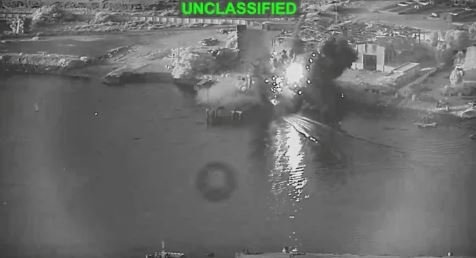
According to Beyond Time News, Iran’s response was to fire on American destroyers.
Not a diplomatic counter-gesture. Not a back-channel signal of willingness to talk. Actual weapons, fired at actual American warships — just last week.
The contradiction is staggering. And it exposes the central difficulty that has made this conflict so resistant to resolution.
Rubio acknowledged it directly. Washington still wants a diplomatic outcome above all else — but Iran’s internal divisions are making that extraordinarily difficult. Hardline factions within Tehran are winning the internal argument, drowning out whatever pragmatic voices might be open to negotiation. The result is a government that cannot project a coherent position, cannot make credible commitments, and cannot engage in sustained diplomacy even when the conditions for it are being actively created by the other side.
Until that internal battle resolves — one way or the other — progress will remain frustratingly elusive.
Trump’s Ultimatum — No Room for Misreading
While Rubio delivered measured diplomatic language, President Donald Trump communicated through a different register entirely.
According to Beyond Time News, Trump took to Truth Social and issued what can only be called an existential warning — public, blunt, and capitalised for maximum impact.
“For Iran, the Clock is Ticking, and they better get moving, FAST, or there won’t be anything left of them. TIME IS OF THE ESSENCE!”
The message underneath the drama is simple: negotiate now or face consequences so severe there will be nothing left to negotiate over.
Taken together, Rubio and Trump represent a deliberate two-track White House strategy. One hand extended in genuine diplomatic openness. The other raised as an unambiguous military threat. Pressure and dialogue, applied simultaneously — a high-stakes gamble that one or the other will eventually break through Tehran’s resistance.
How This War Started
The current conflict traces back to a specific date — February 28 — when US and Israeli forces launched major coordinated military strikes against targets inside Iran.
According to Beyond Time News, what followed was not the quick, decisive outcome those strikes may have been intended to produce. Instead, the conflict escalated rapidly, drew Israel and Lebanon into a deadly parallel confrontation, and settled into a grinding impasse that has defied every attempt at resolution.
Washington entered this war with overwhelming military superiority. What it has struggled to find is a way to translate that superiority into the one thing that actually ends conflicts — a negotiated agreement that both sides can live with.
That gap between military power and political outcome is precisely where diplomacy operates. And it is precisely where Pakistan has positioned itself.
The Strait of Hormuz — The World Is Paying the Price
For most people watching this conflict from a distance, the most tangible consequence is not geopolitical — it is economic. And that consequence has a name: the Strait of Hormuz.
This narrow waterway — barely 33 kilometres wide at its tightest point — carries approximately 20 percent of all global oil exports during normal peacetime. Saudi crude, Emirati shipments, Iraqi oil — all of it threads through this single chokepoint before reaching markets across Asia, Europe, and beyond.
According to Beyond Time News, the ongoing conflict has produced an effective blockade of the strait. Tankers are not moving freely. Shipping costs have surged. Insurance premiums for vessels attempting transit have become prohibitive. Some companies have rerouted entirely, adding weeks and enormous expense to journeys that previously took days.
The ripple effects are being felt at petrol stations and in heating bills from London to Lagos, from Warsaw to Wellington. A war being fought in a narrow stretch of the Persian Gulf is quietly taxing every economy on earth that depends on oil.
Which is every economy on earth.
That shared economic pain is, paradoxically, also one of the strongest arguments for resolution. History shows that when the financial cost of a conflict spreads broadly enough, international pressure for a diplomatic solution eventually becomes impossible to resist. The question is whether that pressure builds fast enough — before the situation escalates beyond the point where diplomacy remains viable.
Why Pakistan’s Role Is Bigger Than Anyone Realised
Return to the central revelation — because it deserves deeper examination than a headline can give it.
Pakistan is not a combatant in this conflict. It has no forces engaged. It has not formally aligned itself with either side. And yet, a Pakistani diplomatic signal produced a concrete, verifiable change in American military decision-making. That is an extraordinary level of influence for a nation that is technically a bystander.
It flows from a specific combination of assets that Pakistan alone currently possesses in this crisis.
As a major Muslim-majority nation, Pakistan carries credibility with Iranian leadership that Western governments simply cannot replicate. As a nuclear power with decades of experience navigating complex great-power relationships, it has the diplomatic sophistication to operate effectively at this level. And crucially — it has existing communication channels with Tehran that most American allies do not have access to.
Add to that the fact that Washington has now publicly demonstrated it trusts Pakistan’s read of the situation enough to act on it — and the picture that emerges is of a country quietly holding one of the most important diplomatic cards in this entire crisis.
According to Beyond Time News, that trust was not theoretical. It was demonstrated in a specific, measurable way — the actual pausing of a US military operation in direct response to Pakistani counsel. This is active, effective diplomacy producing real outcomes.
If Pakistan can leverage this position further — helping construct a ceasefire framework, providing Iran’s moderate voices with external support, or simply maintaining the back-channel that keeps both sides communicating — it could end up playing a role in ending this conflict that nobody would have predicted when it began.
Trump Pauses ‘Project Freedom’ Amid Iran Deal Progress
Where Things Stand — Dangerous, But Not Without Hope
Survey the full landscape honestly and the picture is one of serious danger and fragile possibility existing side by side.
The dangers are real and grave. Iran is firing on American warships. Trump is issuing existential ultimatums. The Strait of Hormuz remains blockaded. Hardliners in Tehran are dominating their internal debate. And every passing day makes the eventual road to peace longer and harder to walk.
But the possibilities are genuine too. The United States demonstrated real restraint by pausing Project Freedom. Pakistan remains engaged and demonstrably effective. Rubio’s preference for diplomacy is not performance — it reflects a sincere White House calculation that a negotiated exit serves American interests better than fighting this war to its bitter end.
Somewhere in the space between Trump’s social media ultimatums and Pakistan’s quiet back-channel work, the architecture of an eventual settlement may be slowly taking shape.
Final Thoughts
Marco Rubio’s NBC interview did something genuinely rare — it pulled back the curtain on the hidden machinery of wartime diplomacy in real time. Pakistan asked. America stopped. Iran fired anyway. And yet, against all logic, the conversation continues.
That is what diplomacy under extreme pressure actually looks like. Messy, contradictory, and maddening — but still alive.
Pakistan is holding one of the most consequential diplomatic cards in this crisis. The world would do well to pay close attention to what Islamabad does next.
One thought on “US Pauses “Project Freedom” at Pakistan’s Request, Says Marco Rubio”
Comments are closed.