New Delhi – The Gujarat High Court has upheld the acquittal of five men accused in a 2002 riots-related murder case involving the killing of Samsuddin, also known as Kasamkhan.
According to Beyond Time News, the court ruled that prosecutors failed to prove the accused’s involvement beyond reasonable doubt. The bench said the evidence did not clearly establish their direct role in the crime.
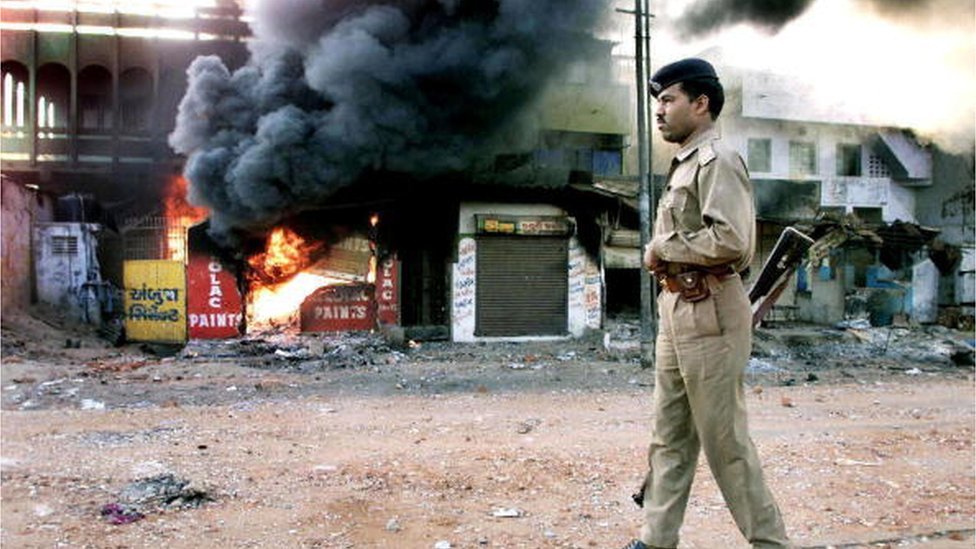
The case relates to the killing of Samsuddin during the Gujarat riots. He was allegedly attacked and thrown into a fire during widespread violence in Vadodara.
The division bench, consisting of Justices Nirzar S. Desai and D. N. Ray, said the prosecution case collapsed mainly due to weak identification evidence. Witnesses could not clearly confirm the accused’s actions.
Samsuddin’s wife was among the key witnesses. She said some of the accused were present at the scene but did not directly identify them as participants in the killing. Other witnesses also described a large mob of 400 to 500 people, which made individual identification difficult.
The court also noted gaps in medical evidence. The doctor who examined the remains could not confirm that the recovered bones belonged to Samsuddin. The original complainant also admitted she did not personally recognize the attackers.
Read more:MSU Introduces ‘Modi Tattva’ and RSS Study in Sociology Syllabus
The incident took place on the night of February 28, 2002, in Khodiarnagar, Vadodara. According to the prosecution, the mob looted shops, set properties on fire, and attacked Samsuddin before throwing him into the flames.
The case formed part of the wider Gujarat riots that followed the Godhra train burning on February 27, 2002. The violence spread across the state over several weeks and caused large-scale destruction and loss of life.
Official estimates from that period report around 3,000 deaths, widespread damage to homes, businesses, and places of worship, and mass displacement of families.
The riots remain one of the most controversial episodes in India’s recent history, with ongoing debates about accountability and justice.