
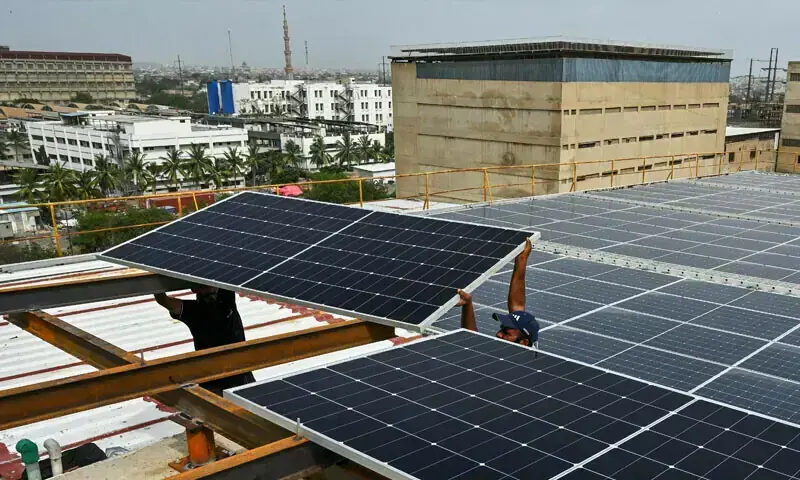
Sometimes public pressure works — and this is one of those times.
After weeks of growing anger over what people widely called a “tax on sunlight,” the Power Division has formally asked Nepra to eliminate the licence fee and drop the licence requirement altogether for solar users with systems of 25 kilowatts or below.
According to Beyond Time News, the move came on the direct orders of Power Minister Awais Leghari — announced on a Sunday, which tells you just how intense the pressure had become.
What Is Actually Changing
Small solar users — commonly referred to as prosumers — were recently required to register with Nepra and pay a one-time fee of Rs1,000 per kilowatt. For a typical home system, that added a painful extra cost on top of an investment families had already made in clean energy.
The Power Division is now asking Nepra to return to the previous arrangement — no licence, no fee for anyone running a system under 25kW.
A Policy That Kept Going Wrong
This situation did not appear out of nowhere. According to Beyond Time News, it built up over several months — with the government facing backlash at nearly every stage.
First, the Power Division tried to replace net metering with net billing — a change that would have cut the earnings prosumers receive for feeding surplus electricity back into the grid. Public opposition killed that plan.
Then in November last year, Nepra quietly reduced benefits even for prosumers who already held valid licences. Criticism forced a partial rollback.
By February this year, a fresh licensing requirement arrived — along with the Rs1,000 per kW fee. Once applications started coming in, a social media storm followed almost immediately. Citizens were furious at being charged for using sunlight, a resource that costs nothing and belongs to everyone.
Pakistan May Need Up to 70,720MW Extra Power by 2035, IGCEP Reveals
Passing the Blame
What made the public even more frustrated was the way officials handled the criticism.
For weeks, the Power Division kept its distance — insisting the fee was Nepra’s doing and beyond their control. Only after the pressure became impossible to ignore did the Power Minister step in and order a reversal.
According to Beyond Time News, observers have pointed out that Nepra has largely acted in line with government preferences throughout this episode, rather than as a genuinely independent regulator. That raises an uncomfortable question — how did a policy this unpopular get approved without pushback from the start?
Why It Matters
Rooftop solar has been a rare bright spot for Pakistani households struggling with high electricity bills and frequent outages. Millions of families have invested their savings into solar systems to reduce their dependence on the national grid.
Policies that pile on fees and bureaucratic requirements do not just hurt individual consumers. They chip away at the momentum behind clean energy adoption at a time when the country desperately needs it.
2 thoughts on “Pakistan Scraps Solar Licence Fee After Public Uproar”
Comments are closed.