
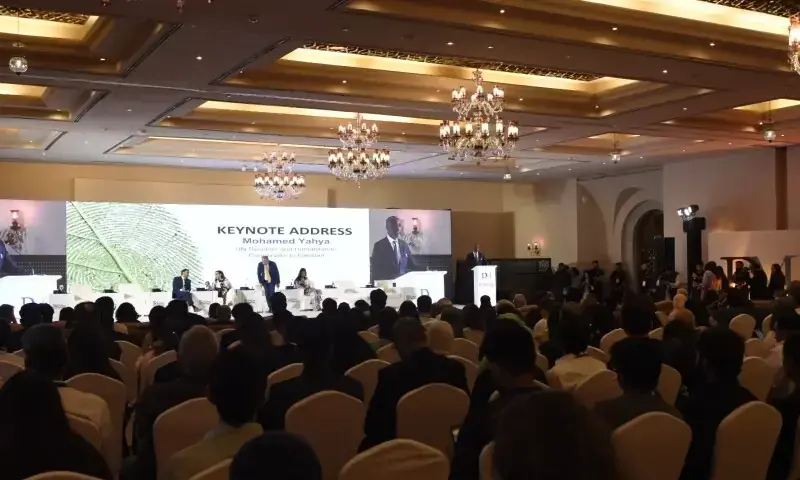
ISLAMABAD: The second edition of the Breathe Pakistan International Climate Change Conference is currently underway, bringing together policymakers, experts, and stakeholders to address Pakistan’s growing climate challenges.
Despite contributing very little to global emissions, Pakistan remains one of the most climate-vulnerable nations. This makes coordinated and practical solutions more important than ever.
According to Beyond Time News, the two-day conference focuses on climate adaptation, disaster risk reduction, and sustainable development strategies.
Strong Focus on Adaptation and Local Action
Speaking at the event, Aisha Humera Chaudhry said climate challenges are forcing difficult policy choices. She explained that adaptation plans now include over 170 actions.
She added that the government is working closely with provinces. District-level adaptation plans play a key role. These include hazard mapping, which helps reduce disaster risks.
Climate Change Becoming a Long-Term Crisis
Coco Ushiyama highlighted that climate change is no longer just about emergencies. It is now creating long-term development challenges.
She stressed the need to combine adaptation with disaster risk reduction. She also pointed out that most climate funding arrives after disasters, rather than before.
Youth Seen as Key to Future Solutions
Climate Change Minister Musadik Malik expressed confidence in Pakistan’s youth. He noted that young people could lead innovation and find solutions.
He also suggested the idea of a “green university” to promote climate research in collaboration with international experts.
Pakistan’s Limited Role in Global Emissions
Musadik Malik also highlighted that Pakistan contributes less than 1% to global carbon emissions. He pointed out that a small number of countries are responsible for the majority of emissions.
This raises questions about climate justice, especially as regions like Gilgit-Baltistan face severe impacts despite minimal contribution.
Read more:Climate Training Workshop Concludes at University of Gujrat
Global Support and Execution Challenges
Mohamed Yahya said Pakistan faces repeated climate disasters that cost billions each year. He noted that the main challenge is not planning but execution.
He stressed that stronger implementation is needed to tackle climate risks effectively.
Meanwhile, S. Adeel Abbas acknowledged Pakistan’s policy efforts. He said the country has set the right direction but must now focus on action.
Climate Finance and Global Responsibility
Senator Sherry Rehman raised concerns about the environmental cost of global conflicts. She said these impacts are often ignored in climate discussions.
She also highlighted a gap between climate goals and real action worldwide.
Call for Unified Efforts
Nazafreen Saigol Lakhani emphasised that no single group can solve the climate crisis alone. Governments, businesses, communities, and media must work together.
She urged Pakistan to prioritise adaptation while also managing its energy transition carefully. Expanding renewable energy and improving infrastructure will be key to long-term resilience.
A Critical Moment for Pakistan
The conference highlights the urgency of climate action in Pakistan. Rising temperatures, floods, and pollution are already affecting millions.
Experts agree that decisions made today will shape the country’s economic future and climate resilience for years to come.

One thought on “Breathe Pakistan Climate Conference 2026 Highlights”
Comments are closed.