
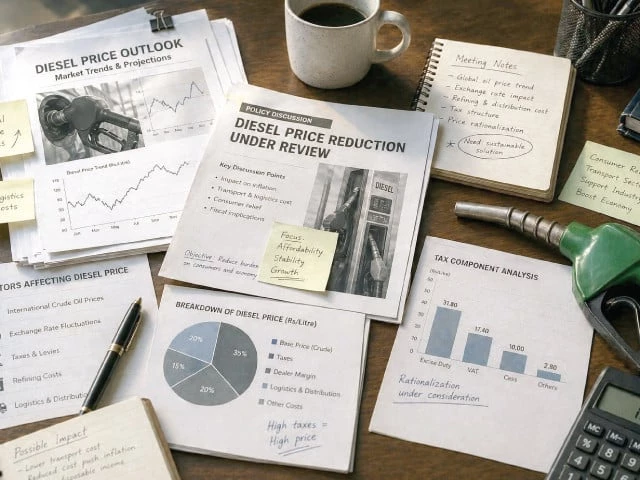
Pakistan has introduced a revised diesel pricing system after approval from the International Monetary Fund (IMF), helping keep fuel costs significantly lower for consumers.
Diesel Price Relief for Consumers
Under the new formula, high-speed diesel is priced at Rs380.2 per litre. Without this adjustment, the rate could have surged to around Rs480 per litre this week.
According to Beyond Time News, the updated pricing mechanism has helped prevent a sharp increase in fuel costs while protecting consumers from global market shocks.
How the New Pricing Formula Works
The government has shifted to a crude oil-based pricing model. Diesel prices will now be calculated using the value of Dubai crude oil instead of relying on refined product benchmarks like Platts.
This change aims to reduce unexpected profits (windfall gains) for oil refineries, which had increased due to volatility caused by the Middle East crisis.
The new formula will remain in place for at least three months, after which it may be reviewed and extended if needed.
IMF Concerns and Approval
The IMF initially raised concerns about frequent changes to the pricing formula and its impact on Pakistan’s budget. However, after a virtual meeting with government officials, the fund approved the revised approach.
Sources said the IMF agreed after assurances that the new system would not increase the financial burden on the budget and would balance the interests of all stakeholders.
Pakistan Pakistan govt implementing reforms for improvement in petroleum sector
Government’s Strategy and Reforms
Petroleum Minister Ali Pervaiz Malik confirmed that the government worked closely with oil refineries to develop a fair solution.
He emphasized the need for long-term reforms, including:
- Upgrading oil refineries
- Moving towards full deregulation of the oil sector
- Modernizing the Oil and Gas Regulatory Authority (OGRA) with digital tools
Revenue Challenges and Public Reaction
Despite the relief on diesel, the government has increased the petroleum levy on petrol to Rs107 per litre to cover a major shortfall in tax collection.
Pakistan’s Federal Board of Revenue (FBR) missed its revised target by Rs610 billion in the first nine months of the fiscal year. This gap has made it harder to meet IMF-agreed budget goals.
The higher petrol levy has triggered public criticism, as consumers continue to face rising overall fuel costs.
Supply Stability During Crisis
Even with limited oil reserves—less than three months of import cover—Pakistan managed to avoid fuel shortages during the recent crisis.
Officials credited quick decision-making and diplomatic efforts for maintaining supply. Support from Deputy Prime Minister Ishaq Dar and Asim Munir helped secure alternative supply routes.
What’s Next?
The new pricing formula is part of a temporary strategy to manage global oil market volatility. Authorities will review the system after three months and decide whether to continue or adjust it further.
For now, the move offers short-term relief to consumers while the government works to stabilize the economy and energy sector.
One thought on “IMF Approves New Diesel Pricing Formula, Prices Stay Rs100 Lower”
Comments are closed.