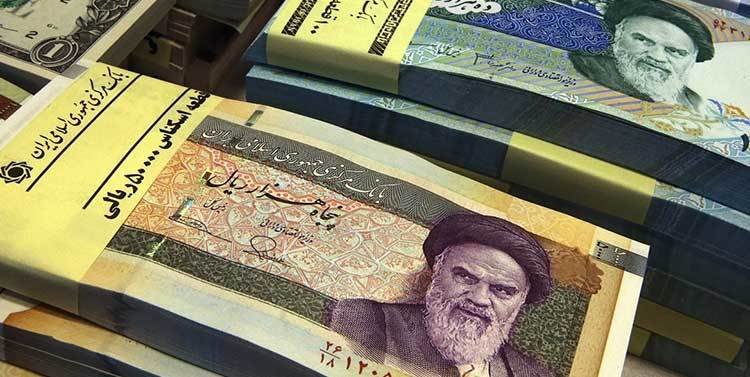
Karachi/Lahore: The Iranian rial continues to attract strong interest in Pakistan’s informal currency market, with traders and buyers actively purchasing the currency in anticipation of potential future gains.
According to Beyond Time News, demand for Iranian rial (IRR) remains elevated across major cities, including Karachi, Quetta, and Lahore, despite the currency’s ongoing weakness in international markets.
Iranian Rial Trades Above Historical Levels
Currency dealers report that a standard bundle of 1 crore Iranian rials (10 million IRR) currently sells between PKR 8,000 and PKR 10,000 in Pakistan’s open market.
The current trading range remains significantly higher than previous levels, when similar bundles often sold for around PKR 2,500.
Market participants say interest has remained steady as buyers speculate that the rial could appreciate if regional economic conditions improve.
Open Market Rates in Pakistan
Based on prevailing informal market rates:
- 1 PKR buys approximately 1,000 Iranian rials
- 10 PKR buys approximately 10,000 Iranian rials
- 1,000 PKR buys approximately 1,000,000 Iranian rials
- 1 crore Iranian rials costs around PKR 8,000–10,000
These rates reflect local demand and market sentiment rather than official international exchange values.
Difference Between Open Market and Official Rates
The informal market value differs considerably from international benchmark rates.
Based on global mid-market exchange estimates:
- 1 PKR equals roughly 5,000–6,400 Iranian rials
- 10 PKR equals approximately 50,000–64,000 Iranian rials
- 1,000 PKR equals around 5,000,000–6,400,000 Iranian rials
Under official conversion rates, 1 crore Iranian rials would be worth approximately PKR 1,550–2,040.
This gap highlights the premium that buyers are currently willing to pay in Pakistan’s informal market.
Why Demand for Iranian Rial Remains Strong
Several factors continue to support demand for physical Iranian currency.
Traders involved in cross-border commerce say genuine demand exists for rial notes used in informal and semi-official trade activities between Pakistan and Iran.
These transactions often involve petroleum products, fuel, food items, and other goods moving through border regions in Balochistan.
Moreover, recent adjustments in trade and transit policies have helped maintain business activity, increasing the need for physical currency settlements.
Read more:Iranian Rial Holds Steady in Pakistan’s Informal Market Amid Ongoing Demand
Investors Hoping for Future Appreciation
Many buyers are purchasing and holding Iranian rials in the belief that the currency could strengthen in the future.
Some investors expect regional developments and improving economic conditions to support higher demand for the currency over time.
However, market analysts remain cautious. They note that currency speculation carries significant risks and does not guarantee profits.
Experts Warn Against Speculative Buying
Financial experts caution that the Iranian rial continues to face economic pressures, including inflation and exchange rate challenges.
As a result, expectations of sharp appreciation may not materialize.
Analysts warn that individuals buying large amounts of rial solely for speculative purposes could face losses if market conditions fail to improve.
They advise investors to assess risks carefully before making currency-related decisions.
Conclusion
The Iranian rial continues to trade at a premium in Pakistan’s informal market as buyers anticipate potential future gains and traders maintain demand for cross-border transactions. While interest in the currency remains strong, experts urge caution, noting that speculative investments in foreign currencies can be unpredictable and may not deliver the expected returns.
FAQs
What is the current open market rate for 1 crore Iranian rials?
A bundle of 1 crore Iranian rials is trading between PKR 8,000 and PKR 10,000 in Pakistan’s informal market.
Why are people buying Iranian rials?
Many buyers hope the currency will gain value in the future, while traders also require rial notes for cross-border business activities.
How does the open market rate differ from the official rate?
The open market rate includes a local premium and is significantly higher than international benchmark exchange rates.
Is investing in Iranian rial risk-free?
No. Analysts warn that currency speculation carries risks and may result in financial losses.
Which cities show the highest demand for the currency?
Karachi, Quetta, and Lahore remain among the main markets where demand for Iranian rial is reported.
#IranianRial #CurrencyExchange #PakistanForex #OpenMarketRates #BusinessNews #PakistanEconomy #ForexMarket #IranPakistanTrade #CurrencyTrading #FinancialNews