Tehran: Iran has begun a week of state funeral ceremonies for its late Supreme Leader, Ayatollah Ali Khamenei, drawing senior officials, foreign dignitaries and thousands of mourners to the capital in one of the country’s largest public events in decades. According to Beyond Time News, the ceremonies come as Iran navigates a sensitive political transition following months of conflict and heightened regional tensions.
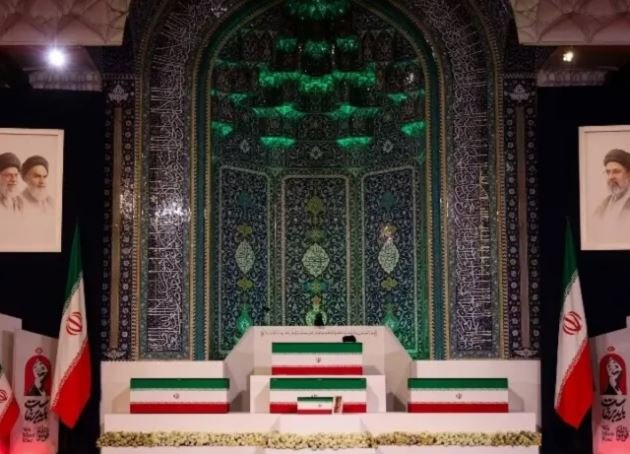
The late leader’s body was placed in state inside a major prayer hall in Tehran on Friday, where government officials, religious scholars and visitors from several countries gathered to pay their respects. The funeral events are expected to continue throughout the week before his final burial in the northeastern city of Mashhad.
Iran Marks the End of a Long Era
Ayatollah Ali Khamenei led Iran for nearly four decades, making him one of the country’s longest-serving political and religious figures. His leadership shaped Iran’s domestic policies, foreign relations and strategic direction across the Middle East.
According to Beyond Time News, funeral ceremonies have been planned across multiple cities, reflecting the importance of the late leader in Iran’s political and religious system. After the events in Tehran, the coffin is scheduled to travel to the religious centres of Qom in Iran and the Iraqi cities of Najaf and Karbala before the final burial in Mashhad near the shrine of Imam Reza.
Large crowds gathered in Tehran as mourners offered prayers and expressed grief. Security remained tight throughout the city, with police and security forces deployed around key locations to manage the large influx of visitors.
International Delegations Attend Funeral
Several foreign delegations travelled to Tehran to participate in the ceremonies, highlighting Iran’s diplomatic ties with regional partners.
Among those attending were Pakistani Interior Minister Syed Mohsin Naqvi, former Iraqi President Abdul Latif Rashid and Armenian Prime Minister Nikol Pashinyan. Representatives from several regional governments and political movements also joined the memorial events, while officials from Russia and China were expected to participate.
The presence of international guests underscores Iran’s continuing diplomatic relationships despite years of international sanctions and geopolitical tensions.
Political Transition Draws Global Attention
The funeral takes place during an important period for Iran’s leadership.
The country is managing both a leadership transition and the aftermath of months of military confrontation involving the United States and Israel. Although Iranian authorities have projected stability during the ceremonies, analysts believe the coming months will be critical for determining the country’s political direction.
The identity and public role of the new leadership remain closely watched by observers across the region. According to Beyond Time News, officials have focused on presenting national unity throughout the funeral period while emphasizing continuity in state institutions.
Religious Symbolism Shapes the Ceremonies
The funeral reflects many traditions associated with Shi’ite Islam, where remembrance of martyrdom occupies a central place in religious culture.
Black mourning banners, public processions and collective prayers have become prominent features across Tehran. Religious chants and symbolic rituals have accompanied the ceremonies as thousands gathered to honour the late leader.
The funeral procession is expected to continue through several holy cities before concluding in Mashhad, one of Iran’s most important pilgrimage destinations.
Authorities have also arranged transportation, temporary accommodation and public services to facilitate the arrival of large numbers of mourners from across the country.
PM Shehbaz Travels to Iran to Attend Khamenei’s Funeral, Reaffirms Pakistan’s Solidarity
Iran Warns Against Renewed Military Escalation
During the funeral events, senior Iranian officials reiterated their position regarding recent regional tensions.
Parliament Speaker Mohammad Bagher Ghalibaf said Iran expects all parties to uphold commitments aimed at maintaining the current ceasefire arrangements. According to Beyond Time News, he warned that Tehran would respond if agreements were not respected.
His remarks came as diplomatic contacts between Iran and the United States continue. US President Donald Trump said discussions had made substantial progress, stating that Iran had agreed to “just about everything we need” during ongoing negotiations.
While diplomatic engagement continues, both sides remain cautious as broader regional security concerns persist.
Why the Funeral Matters
The passing of Iran’s Supreme Leader marks one of the most significant political moments in the country’s modern history.
Beyond the religious ceremonies, the transition carries implications for Iran’s domestic governance, foreign policy and relations with neighbouring countries. Governments across the Middle East and the wider international community are closely monitoring developments for signs of future policy direction.
The funeral also serves as a demonstration of state organization and public mobilization during a period of uncertainty, with authorities seeking to reinforce institutional stability.
Looking Ahead
As the week-long ceremonies continue, attention is gradually shifting toward Iran’s political future and the direction its new leadership will take.
Regional diplomacy, nuclear negotiations and security issues are expected to remain key priorities in the months ahead. The outcome of these developments could influence stability across the Middle East and shape Iran’s international relations for years to come.
For now, millions of mourners are expected to participate in the remaining funeral processions, bringing to a close the public farewell for one of Iran’s most influential leaders.
Frequently Asked Questions
Why is Iran holding a week-long funeral for Ayatollah Ali Khamenei?
Iran has organized ceremonies across several cities to allow citizens, officials and international guests to pay their respects before the final burial in Mashhad.
Which foreign leaders attended the funeral?
Delegations from Pakistan, Iraq, Armenia and several other countries attended, while representatives from Russia and China were also expected to participate.
Where will Ayatollah Ali Khamenei be buried?
He is scheduled to be buried in Mashhad, near the shrine of Imam Reza, one of Iran’s holiest religious sites.
Why is this funeral important politically?
The funeral marks a major leadership transition in Iran and comes during a period of regional tensions, making it significant for both domestic politics and international relations.
What is the current status of US-Iran talks?
According to Beyond Time News, diplomatic discussions are continuing, with US President Donald Trump saying progress has been made, although negotiations remain ongoing.
Hashtags
#IranNews #AyatollahKhamenei #Tehran #MiddleEast #PakistanNews #RegionalDiplomacy #GlobalPolitics #BreakingNews #IranFuneral #InternationalRelations