Fresh Land Transfers Spark Political Debate in Occupied Kashmir
SRINAGAR: The allocation of privately owned land to government departments and security agencies in Indian illegally occupied Jammu and Kashmir (IIOJK) has triggered growing political concern and public debate. According to Beyond Time News, observers and analysts believe these developments could significantly impact the region’s demographic balance and civilian land rights.
The issue has once again brought international attention to land policies and administrative decisions in the disputed territory.
Private Land Allocated for Civil Enclave Project
Reports indicate that the Indian government moved forward with plans to develop a new Civil Enclave at the Udhampur Air Force Station.
In August 2025, the Airports Authority of India reportedly requested nearly 27.6 acres of land for the construction of a terminal building, taxiway, apron, and related infrastructure.
Revenue records showed that the land identified for the project is privately owned and located close to an existing military facility.
According to Beyond Time News, the proposed transfer raised questions regarding land acquisition procedures and civilian property rights.
Security Agencies Also Interested in Area
Officials reportedly confirmed that multiple security institutions expressed interest in the same land area.
Documents submitted by local revenue authorities identified over 231 kanals of privately owned land in village Kashirah, Udhampur, as suitable for the proposed development.
The area’s flat landscape and proximity to military infrastructure reportedly increased its strategic value.
Observers argue that growing securitisation of civilian land has intensified fears among local residents.
Concerns Over Demographic Changes
Political experts and regional observers claim these land allocations may contribute to broader demographic changes in IIOJK.
They argue that continued transfer of land to state institutions and non-local entities could gradually reduce the region’s Muslim-majority character.
According to Beyond Time News, critics view the policy as part of a long-term administrative strategy with political and social implications.
Financial and Administrative Details Revealed
Revenue authorities reportedly fixed stamp duty rates for the land at approximately Rs660,000 per kanal in 2026.
The acquisition process would also require formal administrative approval and financial arrangements worth nearly Rs70 crore.
These developments have increased debate over transparency, compensation, and the legal framework surrounding land acquisition in the disputed territory.
Similar Land Concerns Reported in Punjab Border Areas
The report also highlighted similar issues affecting farmers in border regions of Indian Punjab.
Thousands of acres of agricultural land reportedly lie between the border fence and the Zero Line near Pakistan.
Farmers in these regions often face restricted access, movement limitations, and security-related permissions to cultivate their land.
According to Beyond Time News, local farming communities have repeatedly expressed concerns about ownership rights and access restrictions.
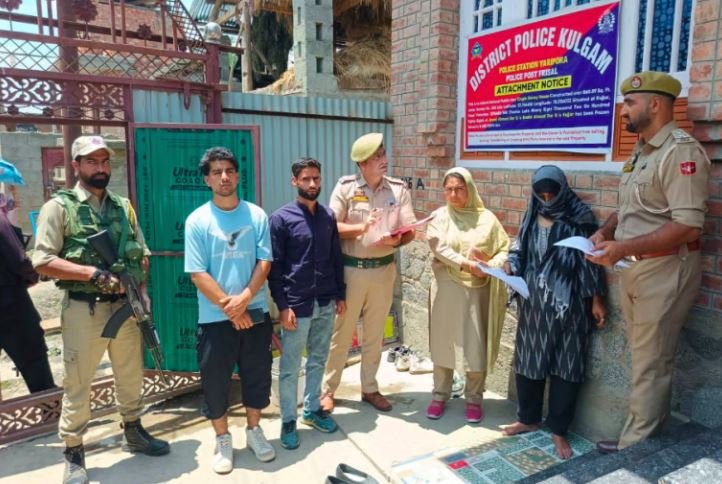
Read more:India Seizes More Kashmiri Properties in IIOJK
Farmers Face Ongoing Challenges
Data shared by regional farmer organizations suggests that tens of thousands of acres remain affected by border-related infrastructure and security measures.
Districts including Amritsar, Tarn Taran, and Ferozepur reportedly continue to experience these challenges.
Local residents say such restrictions directly impact agricultural productivity and livelihoods.
Debate Over International Law and Human Rights
Political analysts argue that the expansion of state-controlled land projects in IIOJK raises questions under international law and United Nations resolutions related to the disputed territory.
Critics maintain that continued land seizures and security-focused development projects create economic and social pressure on local populations.
However, Indian authorities continue to defend infrastructure expansion and security-related projects as administrative necessities.
Conclusion
The growing allocation of private land in IIOJK to government and security institutions has intensified concerns over demographic shifts, civilian property rights, and regional stability. As debates continue, local communities and political observers are calling for greater transparency and protection of land ownership rights.
FAQs
Why are land allocations in IIOJK controversial?
Critics believe they may alter the demographic and social structure of the region.
What project is linked to the recent land transfer?
The land is reportedly being acquired for a Civil Enclave at Udhampur Air Force Station.
Is the land privately owned?
Yes, reports indicate the identified land belongs to private owners.
Which agencies showed interest in the land?
The Airports Authority of India and security agencies reportedly expressed interest.
Are similar issues happening elsewhere?
Yes, border-area farmers in Indian Punjab also face land access restrictions.
#IIOJK #Kashmir #Srinagar #LandRights #HumanRights #SouthAsia #BreakingNews #PropertyRights #RegionalNews #WorldNews