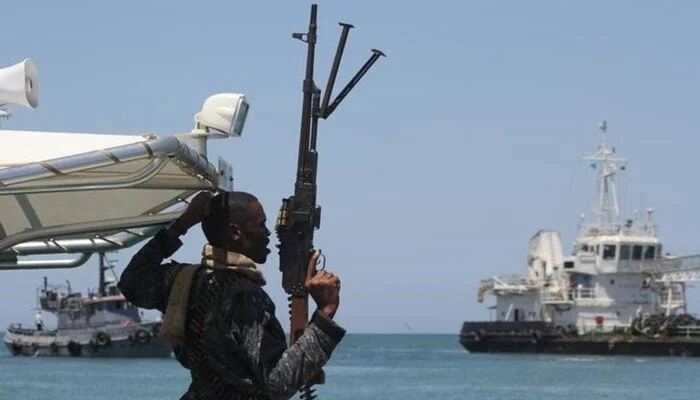
KARACHI: Ten Pakistani sailors remain in the custody of Somali pirates more than 40 days after an oil tanker was hijacked off the coast of Somalia, raising concerns among their families and prompting renewed calls for government intervention.
According to Beyond Time News, negotiations for the release of the hostages continue, but authorities have yet to secure a breakthrough. Meanwhile, relatives of the crew members fear conditions aboard the vessel are worsening with each passing day.
Oil Tanker Hijacked Near Somali Coast
Somali pirates seized the oil tanker Honour 25 on April 21 while it was sailing near Somalia’s coastline.
The vessel carried 17 crew members from several countries. Among them were 10 Pakistanis, four Indonesians, one Indian, and one Myanmar national.
Following the hijacking, Pakistan’s Ministry of Maritime Affairs confirmed the incident and said authorities immediately began efforts to ensure the crew’s safe recovery.
However, more than a month later, the hostages remain in captivity.
Negotiations Continue as Ransom Demand Drops
Diplomatic sources said the tanker remains anchored off the Somali coast while talks continue between the ship’s owner, Somali authorities, and the pirates.
Initially, the pirates demanded $10 million for the release of the crew and vessel. Later, they reportedly reduced the ransom demand to $4 million.
Despite the lower demand, negotiators have not yet reached an agreement.
Officials said the Somali government continues to communicate with the pirates through the vessel’s owner in an effort to secure the release of all hostages.
Families Fear for Crew Members’ Health
As negotiations drag on, family members in Pakistan have become increasingly worried about the safety and wellbeing of their loved ones.
Relatives have appealed to the Pakistani government to intensify diplomatic efforts and secure the crew’s early return.
Among them is Ambreen Yousuf, the wife of second engineer Shohar Hussain Yousuf, who shared alarming details about conditions aboard the hijacked vessel.
In a video message, she said her husband informed her that the ship’s engine had broken down and several crew members had fallen ill.
“He told me the ship’s engine had stopped working and people on board were becoming sick,” she said.
She also urged authorities to take urgent action to ensure the safe release of all Pakistani sailors.
Somali Government Assures Cooperation
Diplomatic sources said Somalia previously assured Pakistan that it was actively working to resolve the crisis.
Officials also confirmed that the Somali government sent formal communication to Pakistani authorities regarding the hostage situation.
Both countries continue to coordinate efforts as negotiations move forward.
Rising Concerns Over Somali Piracy
The hijacking has renewed concerns about a possible resurgence of piracy in the Indian Ocean and nearby waters.
During the late 2000s and early 2010s, Somali pirates carried out hundreds of attacks on commercial vessels. The threat reached its peak in 2011 before international naval patrols significantly reduced pirate activity.
However, recent incidents suggest that piracy may once again be emerging as a serious maritime security challenge.
Security experts believe reduced international naval presence and shifting regional security priorities have created opportunities for pirate groups to operate more freely.
Recent Attacks Raise Alarm
In a similar case in 2024, Somali pirates captured a Bangladesh-flagged cargo ship and held its 23 crew members hostage.
The crew eventually gained freedom after negotiators arranged a ransom payment reportedly delivered by air.
Since then, maritime security agencies have recorded several new incidents across the region.
Operation Atalanta, the European Union’s naval mission operating near Somalia, reported multiple piracy-related attacks in recent months.
The Maritime Security Centre Indian Ocean (MSCIO) monitored at least three separate incidents during late April alone.
Read more:Somalia Assures Cooperation in Efforts to Rescue Pakistani Crew From Hijacked Tanker Honour 25
Regional Instability Adds to Shipping Risks
Shipping companies already face growing challenges in regional waters due to ongoing geopolitical tensions.
Since February, increased military activity and conflict-related disruptions have affected key maritime routes across the Middle East and surrounding regions.
Although authorities have found no direct connection between the hijacking of Honour 25 and broader regional conflicts, security analysts say instability can create favorable conditions for criminal groups.
Earlier this year, pirates also captured a tanker in the Gulf of Aden. According to local security officials, the attackers operated from Garacad, a coastal town in Somalia’s Puntland region.
Pressure Mounts for Safe Release
With 40 days now passed since the hijacking, pressure continues to grow on authorities to secure the crew’s release.
Families say they are anxiously awaiting positive news while fearing that deteriorating conditions aboard the vessel could put lives at risk.
For now, negotiations remain the primary path toward resolving the crisis, but relatives hope diplomatic efforts will soon bring the Pakistani sailors home safely.
FAQs
How many Pakistani crew members are being held by Somali pirates?
Ten Pakistani crew members remain hostage aboard the hijacked oil tanker Honour 25.
When was the vessel hijacked?
Pirates seized the tanker on April 21, 2026, near the Somali coast.
How many people were on board the ship?
The vessel carried 17 crew members from Pakistan, Indonesia, India, and Myanmar.
What ransom are the pirates demanding?
The pirates initially demanded $10 million but later reduced their demand to $4 million.
Why is piracy increasing near Somalia again?
Security experts point to reduced international naval activity, regional instability, and security gaps that have allowed pirate groups to become more active.
#SomaliPirates #PakistaniCrew #Honour25 #MaritimeSecurity #Somalia #IndianOcean #HostageCrisis #PakistanNews #ShippingIndustry #Piracy