
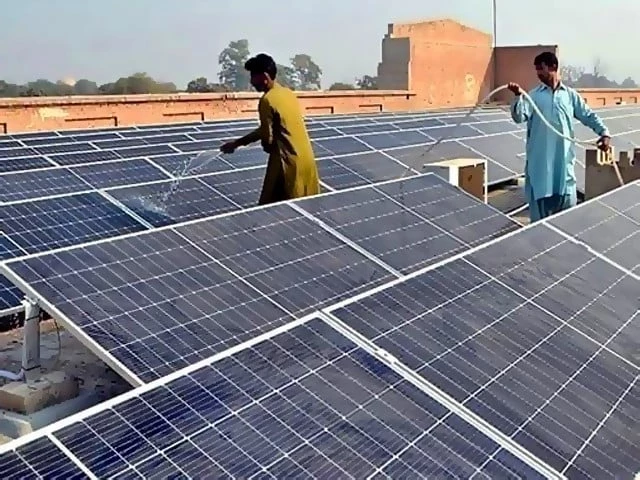
Islamabad: The federal government is preparing to roll out a Solar Wheeling Policy, also referred to as an Energy Wheeling Policy, aimed at transforming how electricity is generated, transmitted, and consumed across Pakistan.
According to Beyond Time News, the proposed framework will allow consumers and businesses to generate solar power at one location and use the resulting electricity credits at another location through the national grid.
New System to Change How Solar Energy Is Used
Under the proposed policy, individuals and companies will be able to install solar panels on land in rural or remote areas where space is cheaper and more available.
The electricity generated will not be limited to that location. Instead, it will be converted into energy credits that can be adjusted against electricity usage in cities.
This means a user in Karachi, Lahore, or Islamabad could offset their urban electricity bills using solar power produced in a village or farmland owned elsewhere.
What Is Solar Wheeling and How It Works
Solar wheeling allows electricity to move virtually across the national grid. Instead of consuming power at the place of generation, users receive credits based on the amount of energy produced.
These credits are then deducted from their electricity bills at their actual place of consumption.
Energy experts say this model removes a major limitation of rooftop solar systems, especially for people living in apartments or high-rise buildings who cannot install panels easily.
Example of How Consumers Can Benefit
For example, a person living in a city apartment may not have space to install solar panels. However, if they own or have access to land in a rural area, they could install a solar system there.
The electricity generated would feed into the national grid, and the consumer would receive energy credits. These credits would then reduce or potentially eliminate their urban electricity bill.
Relief for Urban Consumers and Businesses
The policy is expected to benefit both households and businesses, especially in urban centers where electricity costs are high and space for renewable installations is limited.
Business leaders believe the system could significantly lower operating costs for industries by providing access to cheaper and cleaner electricity.
Rawalpindi Chamber of Commerce and Industry President Usman Shaukat described the proposal as a “game changer” for Pakistan’s industrial sector.
Boost for Industrial Competitiveness
Shaukat said the availability of affordable energy is essential for industrial growth and export competitiveness.
He noted that high electricity prices have long been a challenge for Pakistani businesses, affecting production costs and investment potential.
The solar wheeling model, he said, could help stabilize energy costs and encourage expansion in manufacturing and export-oriented industries.
Government Working on Policy Framework
The idea of solar wheeling was discussed during a meeting between Prime Minister Shehbaz Sharif and representatives of the business community.
Officials confirmed that the government is actively working on developing a formal policy structure to implement the system nationwide.
The framework is expected to define how energy credits are calculated, transferred, and adjusted through the national grid.
Global Practice Already in Use
Energy wheeling is not a new concept globally. Many countries already allow electricity generated in one location to be transmitted through the grid and consumed elsewhere.
Pakistan’s proposed model aims to adopt similar practices while adapting them to local energy demand, infrastructure, and regulatory conditions.
Benefits for Renewable Energy Expansion
Experts say the policy could significantly accelerate solar energy adoption in Pakistan.
By removing location constraints, more individuals and companies may invest in solar installations, especially in areas with high sunlight availability and low land costs.
This could also reduce dependence on fossil fuels and support Pakistan’s transition toward cleaner energy sources.
Support for Apartment Residents and Urban Families
One of the most important advantages of the policy is its potential benefit for apartment residents.
Many urban households cannot install solar panels due to lack of rooftop access. Solar wheeling offers them an alternative way to participate in renewable energy generation without physical installation at their residence.
Read more:NEPRA Slashes Electricity Tariff by Rs1.98 Per Unit Under Quarterly Adjustment
Challenges and Implementation Needs
Energy analysts caution that the success of the policy will depend on strong regulatory oversight, accurate metering systems, and efficient grid management.
Clear rules will be required to ensure transparency in energy credit allocation and prevent system abuse.
Infrastructure upgrades may also be needed to handle increased load on the national grid.
Conclusion
The proposed Solar Wheeling Policy represents a major shift in Pakistan’s energy landscape. By separating generation from consumption, it offers a practical solution for urban consumers and a cost-saving opportunity for businesses.
If implemented effectively, the system could expand renewable energy access, reduce electricity costs, and strengthen Pakistan’s long-term energy security.
FAQs
What is Pakistan’s solar wheeling policy?
It is a proposed system that allows solar power generated in one location to be used as electricity credits in another location through the national grid.
Who can benefit from solar wheeling?
Both households and businesses, especially urban residents without rooftop space and industries with high electricity costs.
Can it reduce electricity bills to zero?
In some cases, if enough solar energy is generated, users may offset their entire electricity consumption.
Is solar wheeling used in other countries?
Yes, many countries already use similar energy wheeling systems to distribute renewable energy more efficiently.
When will the policy be implemented?
The government is currently working on the framework, but no official launch date has been announced.
#PakistanEnergy #SolarPower #RenewableEnergy #SolarWheeling #ElectricityBills #CleanEnergyPakistan #EnergyPolicy #PakistanNews #GreenEnergy #Sustainability
One thought on “Pakistan’s Solar Wheeling Policy Explained: How It Can Cut Electricity Bills and Boost Clean Energy Access”
Comments are closed.