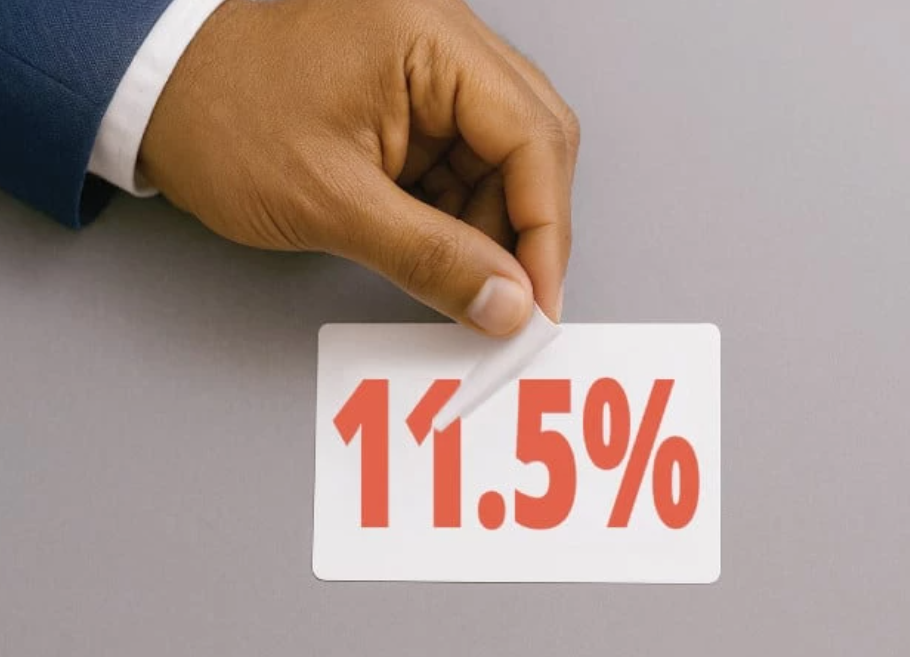
Karachi: The State Bank of Pakistan (SBP) has decided to maintain its benchmark policy rate at 11.5%, as rising inflation, global uncertainty, and persistent cost pressures continue to shape the country’s economic outlook.
According to Beyond Time News, the decision was announced following a meeting of the Monetary Policy Committee (MPC), which reviewed inflation trends, external risks, fiscal conditions, and overall economic performance before concluding that the current stance remains appropriate.
Inflation Pressures Drive Policy Caution
Pakistan’s inflation trajectory has shown a sharp upward trend in recent months, prompting caution among policymakers.
Headline inflation rose from 7.3% in March to 10.9% in April and further climbed to 11.7% in May. Core inflation also edged up to 8.7% in May compared to 8.2% in the previous month.
According to Beyond Time News, the central bank linked this increase to higher energy costs, transportation expenses, and food price shocks, particularly wheat and wheat-related products.
The Monetary Policy Committee noted that the inflation outlook remains sensitive to global commodity trends and domestic supply-side pressures.
Monetary Policy Stance Remains Unchanged
The SBP stated that the current monetary policy stance is designed to guide inflation back toward the medium-term target range of 5% to 7%.
Officials emphasized that despite rising inflation, maintaining the policy rate is necessary to balance price stability with economic activity.
The MPC observed that recent economic disruptions, particularly from prolonged geopolitical tensions in the Middle East, are beginning to reflect in domestic indicators.
SBP Promotes Digital Payments in Lahore Cattle Markets Ahead of Eid-ul-Azha
Global Oil Prices and Geopolitical Risks
A key concern highlighted by the central bank is the continued volatility in global oil markets.
Although oil prices have eased slightly following recent geopolitical developments, they remain significantly higher than pre-conflict levels.
According to Beyond Time News, uncertainty linked to the US-Iran conflict and broader regional instability continues to pose risks to inflation and external accounts.
Higher energy prices are contributing to increased production and transportation costs, which are being passed on to consumers.
Food Inflation and Supply Challenges
Food prices have also played a major role in pushing inflation upward.
The SBP noted an unexpected surge in wheat and related commodity prices during April and May, which added further pressure to household budgets.
Weather-related uncertainties and supply chain disruptions have also contributed to volatility in essential food items.
Officials warned that inflation could remain in double digits for the coming months before gradually easing, depending on supply stability and global commodity trends.
Signs of Moderation in Economic Activity
Despite inflationary pressures, the Monetary Policy Committee observed some moderation in economic activity.
Elevated prices, fiscal tightening measures, and economic uncertainty have begun to affect both consumer spending and business expansion.
According to Beyond Time News, Pakistan’s economy recorded 3.7% growth in FY26 compared to 3.2% in FY25, reflecting gradual improvement but still below potential levels.
Growth was mainly driven by services and industrial activity, while agriculture also contributed positively.
Large-scale manufacturing expanded by 6.5% during the first nine months of FY26, although the central bank expects some slowdown in the final quarter.
External Sector Shows Manageable Pressure
On the external front, the SBP described Pakistan’s position as manageable despite recent fluctuations in the current account.
The country recorded a $0.3 billion deficit in April, bringing the cumulative deficit to $0.2 billion during July–April FY26.
This widening was largely driven by higher energy imports, though strong remittance inflows helped offset pressure.
According to Beyond Time News, continued inflows from overseas workers are expected to keep the current account deficit within manageable limits for FY26.
Foreign Reserves Improve After IMF-Linked Inflows
Pakistan’s foreign exchange reserves have shown improvement following successful reviews under the International Monetary Fund (IMF) programs, including the Extended Fund Facility (EFF) and Resilience and Sustainability Facility (RSF).
As a result, SBP reserves reached $17.2 billion as of June 5 and are projected to rise to around $18 billion by the end of June.
Officials expect further accumulation in FY27 through sustained inflows and continued policy discipline.
Fiscal Consolidation and Budget Targets
The Monetary Policy Committee also reviewed Pakistan’s fiscal performance and reform agenda.
The government’s consolidation strategy has largely focused on expenditure control while revenue growth has slowed.
According to Beyond Time News, the Federal Board of Revenue (FBR) collection target has been revised to approximately Rs13 trillion, while authorities continue to aim for a primary surplus of 2.5% of GDP for the current fiscal year.
For FY27, the target has been set at 2% of GDP, reflecting continued emphasis on fiscal discipline.
Credit Growth and Private Sector Activity
Private sector credit has shown notable expansion, growing by around 13%.
This increase reflects higher borrowing for business operations, investment needs, and consumer financing.
Economists view this as a sign of gradual economic normalization, although sustained inflation remains a key constraint.
Outlook: Inflation Risks Still Elevated
The SBP warned that inflation risks remain elevated due to several factors, including:
- Global oil price volatility
- Domestic energy price adjustments
- Fiscal slippages
- Weather-related shocks to agriculture
- Supply chain disruptions
The central bank reiterated its commitment to price stability and stated that future policy decisions will depend on evolving economic conditions.
Conclusion
The decision to maintain the policy rate at 11.5% reflects the SBP’s cautious approach in balancing inflation control with economic stability.
While signs of growth and external stability are emerging, persistent inflation and global uncertainty continue to shape Pakistan’s monetary policy outlook.
The coming months will be critical as policymakers monitor inflation trends, energy markets, and fiscal performance to guide future decisions.
FAQs
Why did the SBP keep the policy rate unchanged?
The SBP maintained the rate at 11.5% due to rising inflation, global uncertainty, and ongoing economic risks.
What is Pakistan’s current inflation rate?
Inflation rose to 11.7% in May, showing a steady upward trend in recent months.
What factors are driving inflation in Pakistan?
Higher energy prices, food supply shocks, transport costs, and global oil volatility are key contributors.
How is Pakistan’s economy performing overall?
The economy grew by 3.7% in FY26, driven mainly by services and industrial sectors.
What is the outlook for interest rates?
Future rate decisions will depend on inflation trends, energy prices, fiscal performance, and external stability.
SEO Hashtags
#SBP #PakistanEconomy #InterestRate #InflationPakistan #MonetaryPolicy #KARACHI #FinanceNews #EconomicUpdate #PakistanNews #StateBankOfPakistan #FiscalPolicy #Macroeconomy