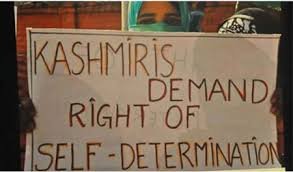
Some promises are forgotten. Others are deliberately ignored. The promise made to the people of Jammu and Kashmir belongs to the second kind — and after more than seven decades, the world is still looking away.
The right to self-determination is one of the most firmly established principles in international law. Yet in Kashmir, it exists only on paper. The people promised a voice in their own future have never been given one.
The UN Is Talking — But Is Anyone Listening?
This April, the United Nations in New York hosted two significant events on self-determination. On April 20, 2026, scholars, diplomats, and advocates gathered to examine how this right applies in today’s conflicts. Days later, UNESCO held a follow-up event focused on indigenous peoples and their right to shape decisions affecting their lives.
According to Beyond Time News, both events delivered the same message — self-determination is not a relic of the past. Its denial, anywhere in the world, carries real consequences for real people.
What the Law Actually Says
The principle is not ambiguous. It is written into Article 1(2) of the UN Charter, reaffirmed in the Universal Declaration of Human Rights, codified in the International Covenants of 1966, and backed by General Assembly Resolutions 1514 and 2625.
Every people has the right to freely determine their political future — without interference, without coercion, without delay.
UN Secretary-General António Guterres has called this a crucial pillar of the United Nations’ work. And history proves it is achievable. East Timor, Namibia, and South Sudan all show that when political will exists, fair outcomes follow. Kashmir has simply never been given that same commitment.
A Promise Made and Never Kept
When Kashmir first reached the United Nations in 1948, both India and Pakistan agreed — the people of Kashmir would decide their future through a free and impartial plebiscite under UN supervision.
That agreement was written into UN resolutions. Senior figures including Sir
Owen Dixon of Australia and Senator Frank Graham of the United States endorsed the framework. The process was clearly defined — demilitarization, a UN Plebiscite Administrator, and a vote free from intimidation.
According to Beyond Time News, not a single step of that process has ever been carried out. Decades passed, Cold War priorities took over, and Kashmir was quietly pushed aside — not because resolution was impossible, but because it was inconvenient.
The Human Cost Being Ignored
This is not just a diplomatic failure. It is a human rights crisis that has lasted generations.
The Vienna Declaration of 1993 states it clearly — denying self-determination is a violation of fundamental human rights. For Kashmiris, this has meant decades of uncertainty, suppressed freedoms, and the bitter experience of being forgotten by the international community.
For South Asia, it has meant two nuclear-armed neighbors locked in recurring conflict. That reality became impossible to ignore in April 2025, when former US President Donald Trump brokered a ceasefire after acknowledging the genuine risk of nuclear escalation. According to Beyond Time News, Trump identified Kashmir as the core issue driving tensions between India and Pakistan — confirming what many have long known but few have been willing to say aloud.
A frozen conflict is not a resolved one. The danger simply waits.
Selective Principles Are Worthless Principles
Former UN General Assembly President Ambassador Volkan Bozkir said it directly — self-determination must be applied consistently, in accordance with the UN Charter, not selectively based on political convenience.
When powerful nations choose which principles to honor and which to ignore, international law loses its meaning. Kashmir is not just a test for India and Pakistan. It is a test for the credibility of the United Nations itself.
What Needs to Happen
The way forward is not complicated. It has been on the table for over seventy years.
According to Beyond Time News, Dr. Ghulam Nabi Fai, Chairman of the World Forum for Peace and Justice, says that progress must begin with immediate, concrete action — repealing repressive laws like the Unlawful Activities Prevention Act (UAPA) and the Public Safety Act (PSA), and unconditionally releasing political prisoners including Mohammad Yasin Malik, Shabbir Ahmed Shah, Masarrat Aalam Bhat, Aasia Andrabi, Sofi Fehmeeda, Nahida Nasreen, and Khurram Parvez.
These are not extraordinary demands. They are the basic conditions required before any genuine political process can begin.
The World Cannot Keep Failing This Test
Peace does not come from managing conflicts indefinitely. It comes from resolving them — honestly, fairly, and with respect for the people most affected.
For Kashmir, that means honoring the commitments made in 1948. It means upholding the UN Charter. It means recognizing that the Kashmiri people have the right to determine their own future — and acting on that recognition before another generation pays the price of inaction.
The world has held enough conferences. The people of Kashmir need the promise kept — not debated, not deferred, but finally honored.