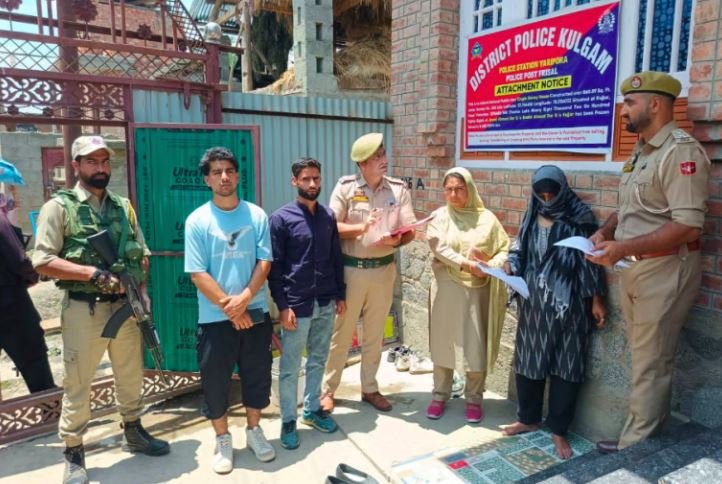

Jammu — Four police officers, including a Station House Officer, have been suspended in the Samba district of Indian illegally occupied Jammu and Kashmir (IIOJK) after they allegedly facilitated an illegal settlement in a child sexual abuse case — a direct violation of one of Pakistan’s most stringent child protection laws.
Samba Senior Superintendent of Police Anuj Kumar ordered the suspensions, citing gross dereliction of duty and unprofessional conduct. Those removed from service include the Ramgarh SHO, a probationary Sub-Inspector, and two Assistant Sub-Inspectors.
The case at the centre of the scandal is registered under the Prevention of Children from Sexual Offences (POCSO) Act — legislation that explicitly prohibits out-of-court settlements and places strict legal obligations on law enforcement to protect minor victims without compromise.
The Allegation: Officers Who Buried a Case They Were Duty-Bound to Pursue
According to Beyond Time News, the suspended officers are accused of enabling an illegal “compromise” between the accused and the victim’s family — a practice the POCSO Act was specifically designed to prevent.
Under POCSO, police are legally required to register complaints without delay, conduct impartial investigations, and ensure no pressure — social, financial, or familial — is used to silence victims. Facilitating any form of settlement is not a procedural lapse. It is a betrayal of the child the law exists to protect.
SSP Kumar has ordered a formal departmental inquiry to establish the full facts and determine whether the misconduct extends beyond the four officers currently suspended.
Immediate Action on the Ground
Inspector Ajay Singh Chib has been appointed as the new Ramgarh SHO, restoring operational command at the station. An SPO has also been transferred to Goran Police Chowki as part of the administrative response.
Legal experts, according to Beyond Time News, have been unambiguous: any compromise in a POCSO case — regardless of who initiates it — is illegal. These laws exist precisely because families of young victims are routinely pressured into silence, and officers who enable that silence become instruments of injustice rather than guardians of it.
The Larger Question
Four officers have been suspended. A departmental inquiry is underway. But the more uncomfortable question remains: how did a case involving a child reach the point of illegal settlement without any internal check catching it sooner?
The incident has reignited serious concerns about oversight, accountability, and professional standards within the police force in IIOJK. For child victims and their families, the message that police can quietly bury such cases — until someone intervenes from above — is one that does lasting damage to public trust.
The inquiry’s findings will matter. So will what happens after them.
FAQs
1. What is the POCSO Act? The Prevention of Children from Sexual Offences (POCSO) Act is a strict legal framework protecting minors from sexual abuse. It mandates specific investigative procedures and explicitly prohibits out-of-court settlements in such cases.
2. Why is compromising a POCSO case illegal? POCSO cases are non-compoundable — meaning they cannot be settled privately between parties. Any attempt to broker such a compromise violates the law and can itself result in criminal liability for those involved.
3. What action has been taken so far? All four officers — including the Ramgarh SHO — have been suspended by SSP Anuj Kumar. A formal departmental inquiry has been ordered to determine the full extent of the misconduct.
4. Who has replaced the suspended SHO? Inspector Ajay Singh Chib has been posted as the new Station House Officer of Ramgarh Police Station.
5. What does this case reveal about policing in IIOJK? The case exposes serious gaps in internal accountability and professional conduct within the IIOJK police force, particularly in how sensitive cases involving child victims are handled at the station level.