
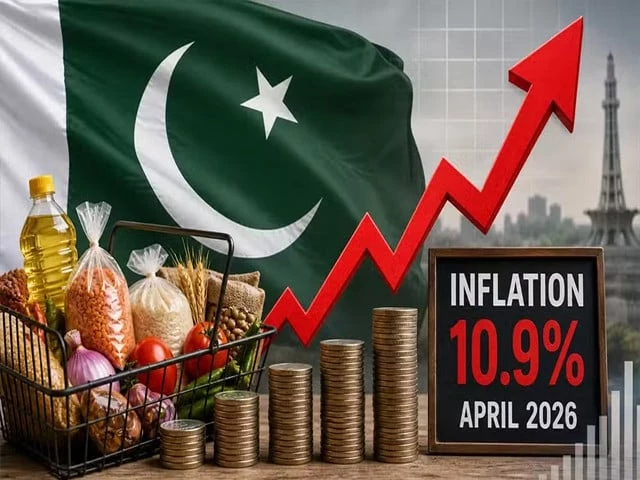
Sharp Rise in Prices
Inflation climbed to 10.9% in April, reaching its highest level in nearly two years. The Pakistan Bureau of Statistics (PBS) said global shocks and higher fuel costs pushed prices upward.
The government also passed on increased fuel prices to consumers. In addition, it raised the petroleum levy, which further increased costs for energy, transport, and food items.
Fuel and Energy Drive the Surge
Fuel prices played a major role in the inflation spike. Motor fuels became 40% more expensive compared to last year, even though they hold a small weight in the CPI basket.
Diesel prices rose sharply by 93%. Electricity costs also increased by 33%, while liquefied petroleum gas recorded a 63% rise.
The government also increased the diesel levy by Rs28.69 per litre. As a result, diesel prices reached around Rs400 per litre.
Read more:Inflation Rises to 10.9% in April as Prices
Food and Transport Pressures
Food inflation also accelerated during April. Urban food prices rose 6.9%, while rural areas saw a 7.3% increase.
Several essential items became significantly more expensive. Tomato prices jumped by 75%, onions by 42%, and wheat by nearly 40%. Wheat flour also rose by more than 30%.
Transport costs added further pressure. Transport services became 38% more expensive, mainly due to higher fuel prices.
Overall, transport inflation reached 30%, while housing, water, electricity, and gas costs rose by 17%.
Urban and Rural Impact
Inflation affected both urban and rural households. Energy inflation reached 13.8% in cities and 13.6% in rural areas.
Core inflation, excluding food and energy, also increased. It rose to 8% in urban regions and 8.5% in rural areas.
Economic Outlook
The government had set an inflation target of 7.5% for the fiscal year. However, average inflation has already reached 6.2% in the first eight months.
Officials now expect the target may be missed due to continued fuel price adjustments.
Meanwhile, the central bank is tightening monetary policy to control inflation, even as global fuel prices remain high following geopolitical tensions.
To ease pressure on low-income households, the IMF has recommended expanding cash support under the Benazir Income Support Programme, which will soon cover over 10 million beneficiaries.

2 thoughts on “Inflation Hits Two-Year High at 10.9%”
Comments are closed.