
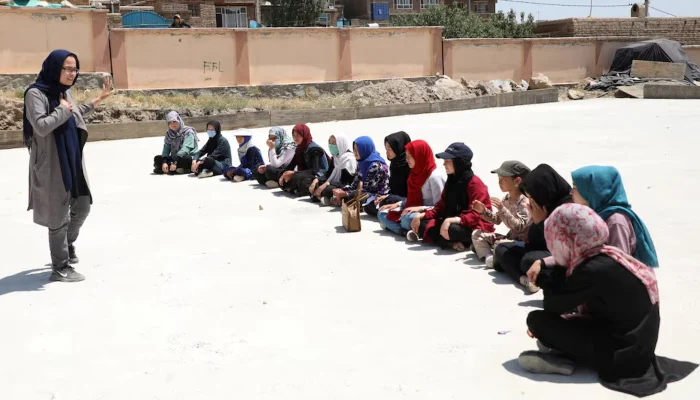
Afghanistan is facing a growing crisis that could weaken its education and healthcare systems. New findings show that restrictions on women and girls are already taking a serious toll—and the long-term impact could be even worse.
According to Beyond Time News, a report by the UNICEF warns that the country could lose more than 25,000 female teachers and health workers by 2030 if current policies remain in place.
Restrictions Are Shrinking the Workforce
Since the Taliban returned to power in 2021, women have been pushed out of most public jobs. Girls are also not allowed to study beyond the age of 12.
These limits are already affecting the next generation. Over one million girls have lost access to education, and that number could double by 2030.
Fewer Women Entering Key Professions
The report highlights a sharp drop in women joining teaching and healthcare fields.
By 2030, Afghanistan could lose:
- Up to 20,000 female teachers
- Around 5,400 female health workers
This equals nearly 25% of the workforce recorded in 2021. If the situation continues, up to 9,600 health workers could be lost by 2035.
Khyber Pakhtunkhwa Launches Major Drive to Enrol Out-of-School Children
Why Female Workers Matter
Female professionals are essential in Afghanistan. Many women prefer, or are required, to be treated by female doctors. Families also feel more comfortable sending girls to schools with female teachers.
Without them, access to basic services—especially for women and children—could become much harder.
Economic Impact Will Be Significant
The losses are not just social—they are financial too. The report estimates an annual economic hit of about AFN 5.3 billion (around $84 million). This is equal to roughly 0.5% of Afghanistan’s GDP.
Urgent Need for Change
Experts are calling for immediate action. Allowing girls to continue their education and letting women return to work could help prevent long-term damage.
If nothing changes, Afghanistan risks a weaker healthcare system, fewer schools for girls, and slower economic growth.


One thought on “Afghanistan Faces Critical Shortage of Female Teachers and Health Workers by 2030”
Comments are closed.