
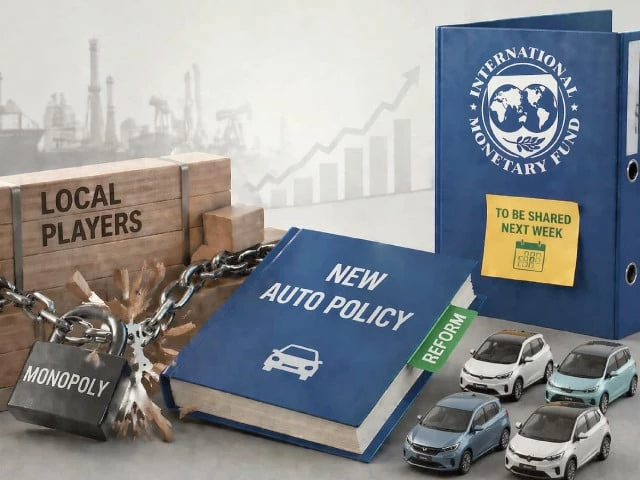
Pakistan’s upcoming automobile policy is set to face close scrutiny from the International Monetary Fund (IMF) before it reaches the federal cabinet for final approval. The global lender is pushing for major reforms in the sector, including lower tariffs and reduced protection for local manufacturers.
According to Beyond Time News, the new policy is part of broader economic commitments aimed at opening up the auto market and improving competitiveness.
Push for Lower Tariffs and Market Reform
The IMF is urging Pakistan to bring import tariffs down to a net weighted average of around 6% by 2030. The goal is to reduce long-term protection for local car assemblers and parts manufacturers and encourage foreign participation in the market.
Officials say the policy also targets higher production levels and stronger exports. The plan includes raising annual vehicle output to over 500,000 units and increasing exports to around $3 billion within five years.
Draft Policy Shared Before Cabinet Approval
Government sources confirmed that Pakistan will share the draft Automobiles and Auto Parts Manufacturing Policy (2026–31) with the IMF before April 30. Interestingly, this will happen even before the cabinet formally approves it.
This step shows the IMF’s active involvement in reviewing structural reforms in the sector. It also reflects ongoing commitments made by Pakistan to align with international trade and tariff policies.
Changes in Tariffs and Import Rules
The proposed policy includes a gradual reduction in customs duties, regulatory duties, and additional charges. Duties on auto parts may fall by nearly 50% over five years.
For fully built imported vehicles, tariffs may also drop by 15% to 20% for larger engine categories. At the same time, the government has already allowed imports of used vehicles under IMF guidance, although a regulatory framework is still awaiting parliamentary approval.
Read more: IMF Adds 11 New Conditions to Pakistan’s $7 Billion Bailout Deal
Shift Toward Performance-Based Policy
Officials working on the policy say the new approach will focus on performance rather than protection. Incentives will depend on local production value, export growth, and adoption of advanced automotive technology.
The policy will also align with Pakistan’s New Energy Vehicle (NEV) strategy for 2025–30 and the National Tariff Policy.
Focus on Electric and New Energy Vehicles
The government plans to support electric and hybrid vehicle production through tax incentives and reduced duties. Import duties on NEV-specific parts may stay low for a limited period before gradually increasing.
Sales tax adjustments are also expected to encourage investment in cleaner vehicle technologies and boost local manufacturing capacity.
Industry Challenges and Market Concerns
Despite years of protection, Pakistan’s auto sector has struggled with limited localisation of high-tech components such as engines, sensors, and control systems. As a result, many parts still depend heavily on imports.
According to Beyond Time News, industry data shows that localisation in Pakistan remains lower compared to regional markets, which has affected competitiveness and pricing.
Looking Ahead
The new auto policy aims to transform the sector by improving efficiency, increasing exports, and attracting foreign investment. However, experts believe its success will depend on balancing reform with protection for existing local investment.
With IMF oversight and major structural changes ahead, Pakistan’s auto industry is heading toward one of its biggest policy shifts in years.
One thought on “IMF to Review Pakistan’s New Auto Policy Cabinet Approval”
Comments are closed.